Advocates, former judge push for Harmony Commission to review child welfare system failures
July 22, 2025 | 2025 Legislature MA, Massachusetts
This article was created by AI summarizing key points discussed. AI makes mistakes, so for full details and context, please refer to the video of the full meeting. Please report any errors so we can fix them. Report an error »
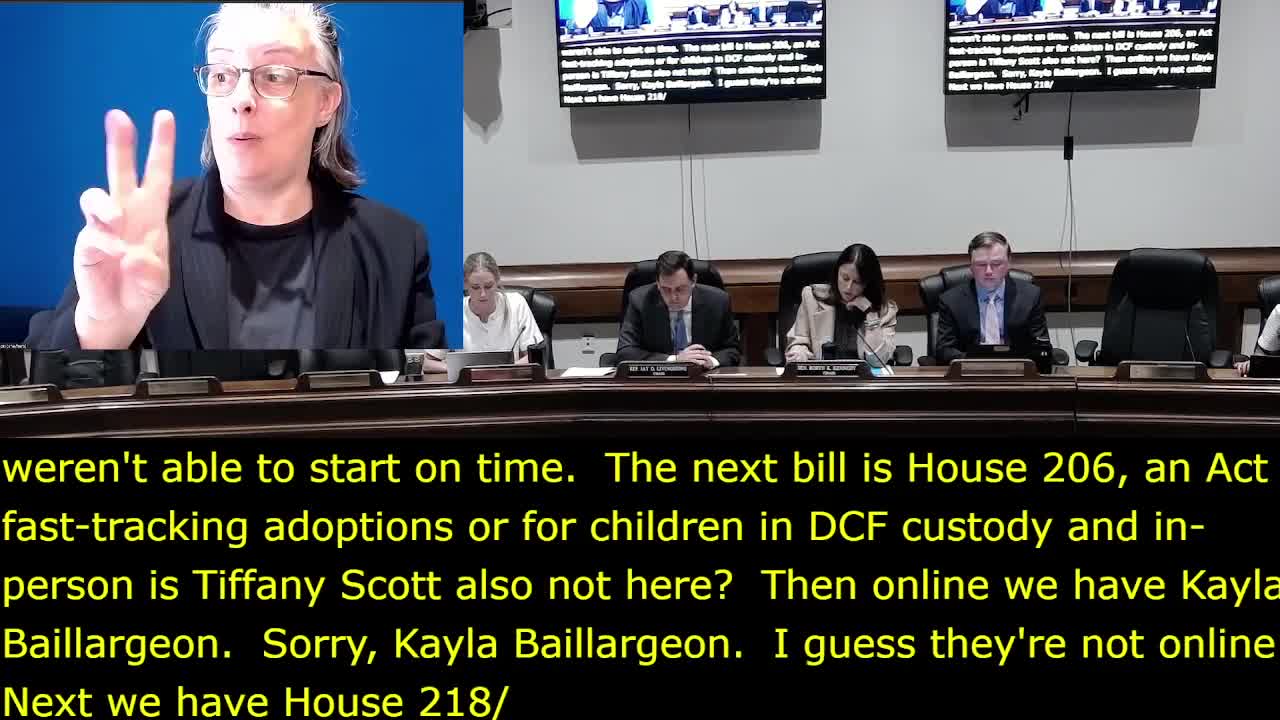
House Bill H.218 and Senate Bill S.164 would create the Harmony Commission to study and recommend reforms to the child‑welfare system, with a stated emphasis on centering people with lived experience. Multiple witnesses — including Charles Lerner of Massachusetts CASA, representatives of the Massachusetts Child Welfare Coalition, and former First Justice Carol Erskine — urged the committee to report the bill favorably and to ensure that the commission’s membership includes birth parents and other impacted people.
Why it matters: Witnesses framed the commission as a way to examine systemic failures, including the department’s decision‑making on removals and placements, representation of children in court proceedings, racial and socioeconomic disparities, and the balance between protecting children and preserving parental rights.
Charles Lerner, Massachusetts CASA state director, said systems reform “simply cannot happen without the voices of those most directly impacted” and commended the bill for including members with lived experience. Kate Neemans of the Mental Health Legal Advisors Committee and the Massachusetts Child Welfare Coalition recommended explicitly adding a birth parent with lived experience to the commission roster.
Former Worcester Juvenile Court First Justice Carol Erskine urged that the commission’s scope align with prior Office of the Child Advocate recommendations and asked that it examine what she described as “the extreme unchecked power of the Department of Children and Families,” including removals made without sufficient court authorization and failures to place children safely after removal. Erskine said she has asked federal authorities to investigate potential due‑process violations in a related New Hampshire case and urged the Legislature to act to give children a stronger voice.
Supporters also emphasized public hearings across the Commonwealth so the commission could hear geographically diverse perspectives and recommended focusing on groups disproportionately affected — children of color, immigrant children, children with disabilities and LGBTQ+ youth.
No formal committee vote was taken. Testifiers urged a favorable report and offered to provide additional written testimony and data.
Ending: Advocates asked lawmakers to limit the commission’s scope to the Office of the Child Advocate’s recommendations and to ensure the commission centers impacted parents and children in its deliberations.
Why it matters: Witnesses framed the commission as a way to examine systemic failures, including the department’s decision‑making on removals and placements, representation of children in court proceedings, racial and socioeconomic disparities, and the balance between protecting children and preserving parental rights.
Charles Lerner, Massachusetts CASA state director, said systems reform “simply cannot happen without the voices of those most directly impacted” and commended the bill for including members with lived experience. Kate Neemans of the Mental Health Legal Advisors Committee and the Massachusetts Child Welfare Coalition recommended explicitly adding a birth parent with lived experience to the commission roster.
Former Worcester Juvenile Court First Justice Carol Erskine urged that the commission’s scope align with prior Office of the Child Advocate recommendations and asked that it examine what she described as “the extreme unchecked power of the Department of Children and Families,” including removals made without sufficient court authorization and failures to place children safely after removal. Erskine said she has asked federal authorities to investigate potential due‑process violations in a related New Hampshire case and urged the Legislature to act to give children a stronger voice.
Supporters also emphasized public hearings across the Commonwealth so the commission could hear geographically diverse perspectives and recommended focusing on groups disproportionately affected — children of color, immigrant children, children with disabilities and LGBTQ+ youth.
No formal committee vote was taken. Testifiers urged a favorable report and offered to provide additional written testimony and data.
Ending: Advocates asked lawmakers to limit the commission’s scope to the Office of the Child Advocate’s recommendations and to ensure the commission centers impacted parents and children in its deliberations.
Don't Miss a Word: See the Full Meeting!
Go beyond summaries. Unlock every video, transcript, and key insight with a Founder Membership.
✓
Get instant access to full meeting videos
✓
Search and clip any phrase from complete transcripts
✓
Receive AI-powered summaries & custom alerts
✓
Enjoy lifetime, unrestricted access to government data
30-day money-back guarantee
