State committee presses for clearer "binding" rules after Summit County petition signatures disqualified
July 22, 2025 | 2025 Utah Legislature, Utah Legislature, Utah Legislative Branch, Utah
This article was created by AI summarizing key points discussed. AI makes mistakes, so for full details and context, please refer to the video of the full meeting. Please report any errors so we can fix them. Report an error »
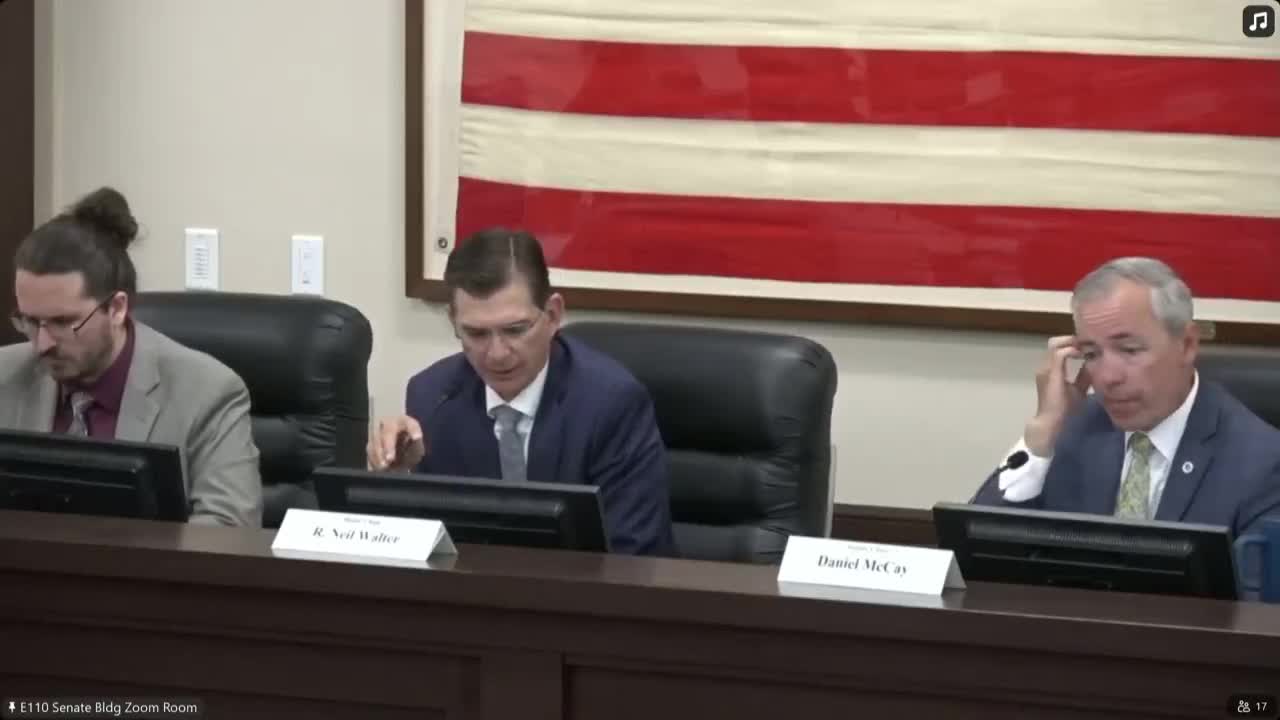
A Utah legislative committee on a July special meeting opened a bill file to clarify referendum signature-packet requirements after speakers from Summit County and petition volunteers described thousands of disqualified signatures and inconsistent application of the code’s “binding” requirement.
Reid Galen, a Summit County resident who helped gather signatures for a referendum aimed at a Dakota Pacific development, told the Rules Review and General Oversight Committee that petitioners collected “more than 6,500 signatures, well above the required threshold” but that the Summit County clerk later “determined that half our signatures were invalid” because of what Galen called a subjective interpretation of a binding requirement. Galen said petitioners had made complete packets available at signing tables but that county staff later treated spiral-bound packets differently from three-ring binders.
Chris Williams, associate general counsel for the Office of Legislative Research and General Counsel, put the legal issue before the committee and displayed statutory text that requires referendum packets to be "bound" but does not define what counts as a binding. He said the code permits signature packets to be made available “in a manner that is conveniently opened for signing,” but that the statute’s lack of definition leaves room for differing county interpretations.
Multiple members of the committee and petition volunteers argued for clarifying changes. Representative Thurston proposed changing the affidavit signer line from “I have personally read the entire statement included with this packet” to language that requires each signer to certify they had an “adequate opportunity to read and understand” the materials before signing. Senator McKay proposed a committee bill file to address several cleanup items: whether packets must be permanently bound; clarifying an opportunity-to-read requirement; reviewing affidavit wording; and considering whether referendum rules should be construed to favor counting signatures in cases of ambiguity.
Angela Mosqueda, a volunteer, described practical decisions that reduced cost and waste: petitioners used spiral binding after a print shop recommended it would save about $20 per packet. She told the panel the code “currently does not say that the packets must be permanently bound,” and asked the committee to consider specifying permanence only if that is the legislature’s intent. Jimmy May, a Summit County resident, described the disqualification as disenfranchisement and criticized the clerk’s initial approach.
Action: the committee unanimously voted to open a committee bill file to consider the cleanup items outlined by Chair McKay; the motion carried without recorded dissent. The committee asked staff to gather drafting options and return with bill language drafting proposals for an upcoming meeting. The committee also noted that Summit County’s counsel declined to comment because the matter is in active litigation.
Ending: Committee members said they will pursue narrow statutory clarifications focused on definitions of “binding,” affidavit language about opportunity to review, and rules that favor counting valid signatures when statutory text is ambiguous.
Reid Galen, a Summit County resident who helped gather signatures for a referendum aimed at a Dakota Pacific development, told the Rules Review and General Oversight Committee that petitioners collected “more than 6,500 signatures, well above the required threshold” but that the Summit County clerk later “determined that half our signatures were invalid” because of what Galen called a subjective interpretation of a binding requirement. Galen said petitioners had made complete packets available at signing tables but that county staff later treated spiral-bound packets differently from three-ring binders.
Chris Williams, associate general counsel for the Office of Legislative Research and General Counsel, put the legal issue before the committee and displayed statutory text that requires referendum packets to be "bound" but does not define what counts as a binding. He said the code permits signature packets to be made available “in a manner that is conveniently opened for signing,” but that the statute’s lack of definition leaves room for differing county interpretations.
Multiple members of the committee and petition volunteers argued for clarifying changes. Representative Thurston proposed changing the affidavit signer line from “I have personally read the entire statement included with this packet” to language that requires each signer to certify they had an “adequate opportunity to read and understand” the materials before signing. Senator McKay proposed a committee bill file to address several cleanup items: whether packets must be permanently bound; clarifying an opportunity-to-read requirement; reviewing affidavit wording; and considering whether referendum rules should be construed to favor counting signatures in cases of ambiguity.
Angela Mosqueda, a volunteer, described practical decisions that reduced cost and waste: petitioners used spiral binding after a print shop recommended it would save about $20 per packet. She told the panel the code “currently does not say that the packets must be permanently bound,” and asked the committee to consider specifying permanence only if that is the legislature’s intent. Jimmy May, a Summit County resident, described the disqualification as disenfranchisement and criticized the clerk’s initial approach.
Action: the committee unanimously voted to open a committee bill file to consider the cleanup items outlined by Chair McKay; the motion carried without recorded dissent. The committee asked staff to gather drafting options and return with bill language drafting proposals for an upcoming meeting. The committee also noted that Summit County’s counsel declined to comment because the matter is in active litigation.
Ending: Committee members said they will pursue narrow statutory clarifications focused on definitions of “binding,” affidavit language about opportunity to review, and rules that favor counting valid signatures when statutory text is ambiguous.
Don't Miss a Word: See the Full Meeting!
Go beyond summaries. Unlock every video, transcript, and key insight with a Founder Membership.
✓
Get instant access to full meeting videos
✓
Search and clip any phrase from complete transcripts
✓
Receive AI-powered summaries & custom alerts
✓
Enjoy lifetime, unrestricted access to government data
30-day money-back guarantee
