Tucumcari officials discuss updated comprehensive plan to support grant applications and infrastructure priorities
June 12, 2025 | Tucumcari, Quay County, New Mexico
This article was created by AI summarizing key points discussed. AI makes mistakes, so for full details and context, please refer to the video of the full meeting. Please report any errors so we can fix them. Report an error »
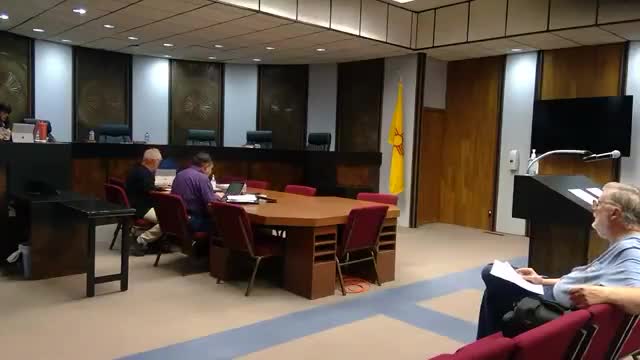
Tucumcari City Commission members and staff discussed an updated comprehensive plan during a recent meeting in Tucumcari, focusing on the plan’s role in qualifying the city for grants and guiding long-range infrastructure and development priorities.
A staff member involved in the project said the update began about a year and a half ago and is intended as a working guide rather than a project-level implementation document. The speaker said the city’s prior plan dated from 2012 and that having a current comprehensive plan is commonly required when applying for many planning and infrastructure grants.
The commissioners and staff noted the comprehensive plan is broadly scoped: it covers water and sewer improvements, transportation and tourism, housing needs and demographic data, and references ongoing projects such as the wastewater reuse work. The plan is described in the meeting as an overview that leaves specific projects to subsequent engineering work (for example, a preliminary engineering report, or PER) and more targeted planning documents.
Commissioner Ralph Lopez and another commissioner identified as Salas emphasized that the plan can be amended after adoption if needed and that adopting the plan would strengthen grant applications. A participant said that some grants and funding sources now expect or require an asset management plan in addition to a general comprehensive plan; the group discussed seeking separate funding for an asset management plan because typical $50,000 planning grants often do not cover that more detailed inventory work.
Staff outlined examples of items the comprehensive plan addresses: a proposed water line replacement and looping project east of Kmart, a sewer line to the west end of town, tourism-related infrastructure, and housing shortages noted by local stakeholders including the college. For larger projects, staff said the city uses a PER or similar targeted studies to develop project-specific designs and costs.
Meeting participants also discussed a north-side waterline project that previously received legislative funding but ran into permitting and contractor availability problems. A staff member said the city is again pursuing permits (including a railroad permit for the crossing) and legislative funds, but cautioned that repeated cycles of applying for more money have led to bids exceeding available budgets.
The group discussed the practical benefits of an asset management plan that would inventory streets, curbs, ADA ramps, water valves, manholes and hydrants, and provide condition ratings that help prioritize projects and support grant applications. Several participants said that an asset inventory, and periodic condition reports on tanks and other infrastructure, give grant writers and agency reviewers the data needed to justify funding requests.
No formal vote or adoption of the comprehensive plan was recorded in the transcript. Commissioners and staff indicated they expect the city to move forward on the plan and seek associated grant funding and permits; they also noted that elements can be added or updated later at relatively low incremental cost once the overall plan is in place.
The meeting closed with continued discussion of project permitting and funding constraints and no formal directions recorded in the transcript about an immediate adoption vote.
A staff member involved in the project said the update began about a year and a half ago and is intended as a working guide rather than a project-level implementation document. The speaker said the city’s prior plan dated from 2012 and that having a current comprehensive plan is commonly required when applying for many planning and infrastructure grants.
The commissioners and staff noted the comprehensive plan is broadly scoped: it covers water and sewer improvements, transportation and tourism, housing needs and demographic data, and references ongoing projects such as the wastewater reuse work. The plan is described in the meeting as an overview that leaves specific projects to subsequent engineering work (for example, a preliminary engineering report, or PER) and more targeted planning documents.
Commissioner Ralph Lopez and another commissioner identified as Salas emphasized that the plan can be amended after adoption if needed and that adopting the plan would strengthen grant applications. A participant said that some grants and funding sources now expect or require an asset management plan in addition to a general comprehensive plan; the group discussed seeking separate funding for an asset management plan because typical $50,000 planning grants often do not cover that more detailed inventory work.
Staff outlined examples of items the comprehensive plan addresses: a proposed water line replacement and looping project east of Kmart, a sewer line to the west end of town, tourism-related infrastructure, and housing shortages noted by local stakeholders including the college. For larger projects, staff said the city uses a PER or similar targeted studies to develop project-specific designs and costs.
Meeting participants also discussed a north-side waterline project that previously received legislative funding but ran into permitting and contractor availability problems. A staff member said the city is again pursuing permits (including a railroad permit for the crossing) and legislative funds, but cautioned that repeated cycles of applying for more money have led to bids exceeding available budgets.
The group discussed the practical benefits of an asset management plan that would inventory streets, curbs, ADA ramps, water valves, manholes and hydrants, and provide condition ratings that help prioritize projects and support grant applications. Several participants said that an asset inventory, and periodic condition reports on tanks and other infrastructure, give grant writers and agency reviewers the data needed to justify funding requests.
No formal vote or adoption of the comprehensive plan was recorded in the transcript. Commissioners and staff indicated they expect the city to move forward on the plan and seek associated grant funding and permits; they also noted that elements can be added or updated later at relatively low incremental cost once the overall plan is in place.
The meeting closed with continued discussion of project permitting and funding constraints and no formal directions recorded in the transcript about an immediate adoption vote.
Don't Miss a Word: See the Full Meeting!
Go beyond summaries. Unlock every video, transcript, and key insight with a Founder Membership.
✓
Get instant access to full meeting videos
✓
Search and clip any phrase from complete transcripts
✓
Receive AI-powered summaries & custom alerts
✓
Enjoy lifetime, unrestricted access to government data
30-day money-back guarantee
