Board clarifies attendance policy changes after state law; chronic absenteeism figures fall, district says
July 25, 2025 | Jennings County School Corporation, School Boards, Indiana
This article was created by AI summarizing key points discussed. AI makes mistakes, so for full details and context, please refer to the video of the full meeting. Please report any errors so we can fix them. Report an error »
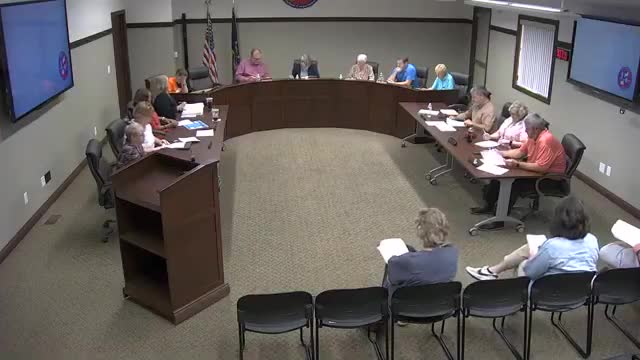
Jennings County School Corporation staff described how recent legislative changes affect the district’s attendance procedures and urged parents not to rely on social media for details. The presentation said the district had applied many of the attendance practices at the elementary level in prior years and the state law added secondary schools to the same framework.
A staff member identified as Nikki summarized the changes and the district’s approach, saying the district treats attendance as a partnership with families and prioritizes support before punitive steps. She said, “There is a lot of misinformation going on on social media. And if parents are listening and community members, I would beg you not to take information on social media, as accurate on what's going on with attendance.” Nikki said the district will send a letter to parents describing how the updated attendance process will work for Jennings County.
Nikki presented district attendance data to the board: chronic absenteeism (defined by the district in the presentation as missing 18 days or more) reportedly fell from an average of 27 percent to 11 percent; unexcused absences dropped from 3.24 percent to 1.75 percent overall. She said the percentage of absences that are categorized as habitually truant under the new law is “now down to 1.97% of all absences” in the district. Nikki emphasized that the law’s action steps apply after a student reaches a threshold of unexcused absences — she cited the legal threshold used in discussion as 10 unexcused days — and that documented excused absences (doctor’s notes, parent contact) do not count toward that threshold.
The presenter described the district’s first response as support and cites practical interventions — for example, helping families get students to bus stops or providing alarm clocks — before judicial referral is considered. Nikki said many families resolve attendance issues through those supports; the small subset of students who progress to legal action are those for whom interventions were not successful.
Board members acknowledged the clarification and the planned parent communication. No formal vote was taken on attendance at the meeting; the staff noted the board will consider updated Neola policy language at the next meeting (first reading occurred at this session).
A staff member identified as Nikki summarized the changes and the district’s approach, saying the district treats attendance as a partnership with families and prioritizes support before punitive steps. She said, “There is a lot of misinformation going on on social media. And if parents are listening and community members, I would beg you not to take information on social media, as accurate on what's going on with attendance.” Nikki said the district will send a letter to parents describing how the updated attendance process will work for Jennings County.
Nikki presented district attendance data to the board: chronic absenteeism (defined by the district in the presentation as missing 18 days or more) reportedly fell from an average of 27 percent to 11 percent; unexcused absences dropped from 3.24 percent to 1.75 percent overall. She said the percentage of absences that are categorized as habitually truant under the new law is “now down to 1.97% of all absences” in the district. Nikki emphasized that the law’s action steps apply after a student reaches a threshold of unexcused absences — she cited the legal threshold used in discussion as 10 unexcused days — and that documented excused absences (doctor’s notes, parent contact) do not count toward that threshold.
The presenter described the district’s first response as support and cites practical interventions — for example, helping families get students to bus stops or providing alarm clocks — before judicial referral is considered. Nikki said many families resolve attendance issues through those supports; the small subset of students who progress to legal action are those for whom interventions were not successful.
Board members acknowledged the clarification and the planned parent communication. No formal vote was taken on attendance at the meeting; the staff noted the board will consider updated Neola policy language at the next meeting (first reading occurred at this session).
View the Full Meeting & All Its Details
This article offers just a summary. Unlock complete video, transcripts, and insights as a Founder Member.
✓
Watch full, unedited meeting videos
✓
Search every word spoken in unlimited transcripts
✓
AI summaries & real-time alerts (all government levels)
✓
Permanent access to expanding government content
30-day money-back guarantee
