Volusia County beach safety director: 'Swim in front' of staffed towers as rip currents drive most rescues
This article was created by AI summarizing key points discussed. AI makes mistakes, so for full details and context, please refer to the video of the full meeting. Please report any errors so we can fix them. Report an error »
Volusia County’s director of beach safety told a county podcast that rip currents account for the vast majority of water rescues and urged residents and visitors to “swim in front of that staff lifeguard tower.”
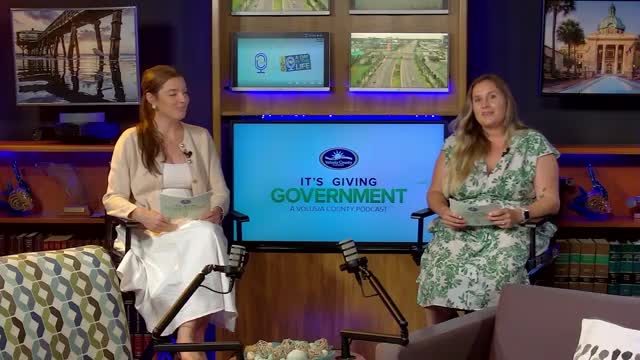
Tammy Malphurs, director of beach safety for Volusia County, spoke to hosts Kelsey Ressler and Maggie Durant in a recorded interview about how lifeguards are staffed, trained and deployed, the hazards that most commonly lead to rescues, and how the office coordinates with other emergency responders.
Why it matters: Malphurs said most drownings and water rescues in Volusia County are linked to rip currents, making tower-staffed beaches and real-time condition information a central public-safety priority for the summer season. Full-time lifeguards are required to be certified emergency medical technicians, and the county’s ocean-rescue unit is accredited by the United States Lifesaving Association (USLA).
Malphurs said the county employs about 55 full-time lifeguards who are EMTs and that seasonal lifeguard staffing has increased this year after stepped-up recruiting, higher pay and holiday/weekend bonuses. “We have about 55 full time lifeguards that are EMTs,” she said. She noted Memorial Day weekend staffing this year was about double the tower staff deployed on Memorial Day weekend 2024.
Staff and equipment: County lifeguards run daily drills, staff towers and patrol the beach by 4x4 trucks, all-wheel vehicles and ATVs; jet skis and boats are used when high tides or terrain prevent vehicle access. Malphurs described a rank structure that includes seasonal lifeguards, full-time ocean-rescue lifeguards, sergeants, captains, deputy chiefs and the director. Full-time staff must meet USLA requirements twice a year.
Rip currents and rescues: “A rip current is basically a current that pulls you into deeper water,” Malphurs said, describing them as gaps in sandbars formed or widened by storm activity. She urged swimmers to stay calm, float if needed, yell for help and swim parallel to shore rather than trying to fight straight back through a rip. “Eighty percent of our all of our water rescues are rip current related,” she said.
Hazards and flags: Malphurs described the county’s flag system and public guidance: yellow for moderate hazard, red for hazardous rip current conditions, purple for stinging marine life, and a double red for no swimming (used rarely for severe conditions or debris). She said Volusia County does not fly a green “no-risk” flag as part of its standard system.
Emergency response and coordination: Beach Safety operates as a 9-1-1 responder on dedicated radio channels and coordinates with county fire, emergency management and the sheriff’s office. Malphurs said lifeguards will automatically dispatch backup on rescue calls and that the unit sometimes assists the U.S. Coast Guard when their watercraft can reach an incident faster.
Training and staff support: The lifeguard program uses USLA-accredited training to reduce operational risk; full-time lifeguards must meet training requirements twice yearly. Malphurs said the unit provides critical-incident debriefing (CISM) and a mentor program for new recruits to address the physical and emotional demands of rescues.
Practical advice: Malphurs and the hosts emphasized swimming in front of staffed towers, checking the Volusia Beaches app for real-time flag and access information, obeying posted 4x4-only access signs, and following the county’s 10 mph radar-enforced speed limit on driving beach sections. She also recommended keeping beach gear east of the traffic lane to limit crossings with small children.
Ending: Malphurs said Volusia County lifeguards also respond to hurricanes and flooding, staff the Emergency Operations Center when needed, and deploy for mutual-aid requests beyond the local shoreline. The podcast hosts said a “Day in the Life” video with lifeguards will appear on the county’s YouTube channel; listeners were directed to the Volusia Beaches app and volusia.org for more information.
Tammy Malphurs, director of beach safety for Volusia County, spoke to hosts Kelsey Ressler and Maggie Durant in a recorded interview about how lifeguards are staffed, trained and deployed, the hazards that most commonly lead to rescues, and how the office coordinates with other emergency responders.
Why it matters: Malphurs said most drownings and water rescues in Volusia County are linked to rip currents, making tower-staffed beaches and real-time condition information a central public-safety priority for the summer season. Full-time lifeguards are required to be certified emergency medical technicians, and the county’s ocean-rescue unit is accredited by the United States Lifesaving Association (USLA).
Malphurs said the county employs about 55 full-time lifeguards who are EMTs and that seasonal lifeguard staffing has increased this year after stepped-up recruiting, higher pay and holiday/weekend bonuses. “We have about 55 full time lifeguards that are EMTs,” she said. She noted Memorial Day weekend staffing this year was about double the tower staff deployed on Memorial Day weekend 2024.
Staff and equipment: County lifeguards run daily drills, staff towers and patrol the beach by 4x4 trucks, all-wheel vehicles and ATVs; jet skis and boats are used when high tides or terrain prevent vehicle access. Malphurs described a rank structure that includes seasonal lifeguards, full-time ocean-rescue lifeguards, sergeants, captains, deputy chiefs and the director. Full-time staff must meet USLA requirements twice a year.
Rip currents and rescues: “A rip current is basically a current that pulls you into deeper water,” Malphurs said, describing them as gaps in sandbars formed or widened by storm activity. She urged swimmers to stay calm, float if needed, yell for help and swim parallel to shore rather than trying to fight straight back through a rip. “Eighty percent of our all of our water rescues are rip current related,” she said.
Hazards and flags: Malphurs described the county’s flag system and public guidance: yellow for moderate hazard, red for hazardous rip current conditions, purple for stinging marine life, and a double red for no swimming (used rarely for severe conditions or debris). She said Volusia County does not fly a green “no-risk” flag as part of its standard system.
Emergency response and coordination: Beach Safety operates as a 9-1-1 responder on dedicated radio channels and coordinates with county fire, emergency management and the sheriff’s office. Malphurs said lifeguards will automatically dispatch backup on rescue calls and that the unit sometimes assists the U.S. Coast Guard when their watercraft can reach an incident faster.
Training and staff support: The lifeguard program uses USLA-accredited training to reduce operational risk; full-time lifeguards must meet training requirements twice yearly. Malphurs said the unit provides critical-incident debriefing (CISM) and a mentor program for new recruits to address the physical and emotional demands of rescues.
Practical advice: Malphurs and the hosts emphasized swimming in front of staffed towers, checking the Volusia Beaches app for real-time flag and access information, obeying posted 4x4-only access signs, and following the county’s 10 mph radar-enforced speed limit on driving beach sections. She also recommended keeping beach gear east of the traffic lane to limit crossings with small children.
Ending: Malphurs said Volusia County lifeguards also respond to hurricanes and flooding, staff the Emergency Operations Center when needed, and deploy for mutual-aid requests beyond the local shoreline. The podcast hosts said a “Day in the Life” video with lifeguards will appear on the county’s YouTube channel; listeners were directed to the Volusia Beaches app and volusia.org for more information.
Don't Miss a Word: See the Full Meeting!
Go beyond summaries. Unlock every video, transcript, and key insight with a Founder Membership.
✓
Get instant access to full meeting videos
✓
Search and clip any phrase from complete transcripts
✓
Receive AI-powered summaries & custom alerts
✓
Enjoy lifetime, unrestricted access to government data
30-day money-back guarantee
