RCTC approves $4.3 million amendment to I‑15 cross‑county toll cooperative agreement with SBCTA
July 28, 2025 | Riverside County, California
This article was created by AI summarizing key points discussed. AI makes mistakes, so for full details and context, please refer to the video of the full meeting. Please report any errors so we can fix them. Report an error »
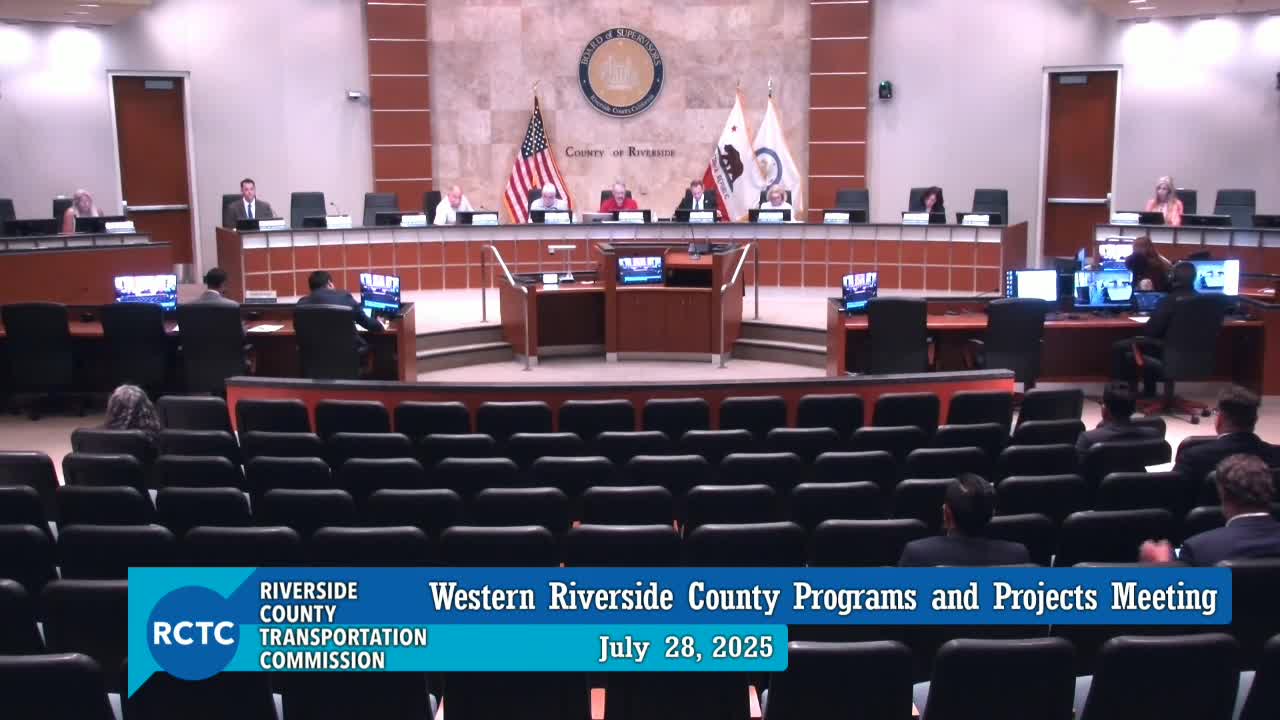
The Riverside County Transportation Commission on a unanimous voice vote approved an amendment to its cooperative agreement with the San Bernardino County Transportation Authority to update and pay for betterment costs on the I‑15 Cross County toll segment.
The amendment actualizes line‑item capital and supporting contract costs after SBCTA received construction bids higher than earlier engineer estimates. “Costs went up for the betterment by approximately $4,300,000,” said Jeff Dietzler, capital project manager with RCTC’s tolling group, adding the commission would cover the increase using an additional transfer of unobligated CMAQ funds.
The action matters because SBCTA’s project extends express lanes north from south of SR‑60 through Foothill Boulevard, including a southern “cross county” segment of about three miles, roughly two of which are inside Riverside County. The cooperative agreement and related assignments and toll‑and‑facilities changes define which agency will operate and collect tolls on the overlapping segments and how revenue impacts are handled.
Dietzler summarized responsibilities under the cooperative agreement: SBCTA will design, construct and operate the new segment and collect toll revenue; SBCTA will operate the corridor consistent with RCTC toll rules; and SBCTA will reimburse RCTC for modeled revenue loss during and after construction. “The very first dollars made go to RCTC until such time as the yearly revenue of that lost segment is made whole,” he said, describing the repayment mechanism built into the contract.
Jurupa Valley’s representative pressed staff on how toll surplus — revenue above modeled payments to RCTC — would be treated and whether Riverside County cities could request surplus investments. “So most of the frontage is now being operated by SBCTA,” the commissioner said, urging clarity on whether Eastvale or Jurupa Valley could access surplus funding. RCTC staff responded that the agreements require SBCTA to reimburse RCTC for the modeled revenue loss first and that the current contracts do not obligate SBCTA to expend any corridor surplus within Riverside County. Staff said mutual agreements between agencies (for example, similar cooperation already seen with OCTA and RCTC on other corridors) remain possible but are not required by the executed terms.
Staff also noted an operating agreement for day‑to‑day coordination remains to be negotiated; it must be in place at least one year before SBCTA opens the lanes. The cooperative agreement amendment before the commission was limited to actualizing betterment costs based on received bids and negotiated supporting contract costs with the toll vendor, described in the staff exhibit.
The vote to approve the amendment was taken by roll call; commissioners representing District 1, District 2, Banning, Eastvale, Hemet, Norco, Wildomar and other member cities voted in favor and the item passed.
The amendment adjusts capital and supporting costs in the cooperative agreement’s exhibit and authorizes a CMAQ transfer of approximately $4.3 million of unobligated funds to cover RCTC’s increased share of the betterments. Staff said they will return with additional detail if member cities request further clarification about surplus treatment or corridor investments.
The amendment actualizes line‑item capital and supporting contract costs after SBCTA received construction bids higher than earlier engineer estimates. “Costs went up for the betterment by approximately $4,300,000,” said Jeff Dietzler, capital project manager with RCTC’s tolling group, adding the commission would cover the increase using an additional transfer of unobligated CMAQ funds.
The action matters because SBCTA’s project extends express lanes north from south of SR‑60 through Foothill Boulevard, including a southern “cross county” segment of about three miles, roughly two of which are inside Riverside County. The cooperative agreement and related assignments and toll‑and‑facilities changes define which agency will operate and collect tolls on the overlapping segments and how revenue impacts are handled.
Dietzler summarized responsibilities under the cooperative agreement: SBCTA will design, construct and operate the new segment and collect toll revenue; SBCTA will operate the corridor consistent with RCTC toll rules; and SBCTA will reimburse RCTC for modeled revenue loss during and after construction. “The very first dollars made go to RCTC until such time as the yearly revenue of that lost segment is made whole,” he said, describing the repayment mechanism built into the contract.
Jurupa Valley’s representative pressed staff on how toll surplus — revenue above modeled payments to RCTC — would be treated and whether Riverside County cities could request surplus investments. “So most of the frontage is now being operated by SBCTA,” the commissioner said, urging clarity on whether Eastvale or Jurupa Valley could access surplus funding. RCTC staff responded that the agreements require SBCTA to reimburse RCTC for the modeled revenue loss first and that the current contracts do not obligate SBCTA to expend any corridor surplus within Riverside County. Staff said mutual agreements between agencies (for example, similar cooperation already seen with OCTA and RCTC on other corridors) remain possible but are not required by the executed terms.
Staff also noted an operating agreement for day‑to‑day coordination remains to be negotiated; it must be in place at least one year before SBCTA opens the lanes. The cooperative agreement amendment before the commission was limited to actualizing betterment costs based on received bids and negotiated supporting contract costs with the toll vendor, described in the staff exhibit.
The vote to approve the amendment was taken by roll call; commissioners representing District 1, District 2, Banning, Eastvale, Hemet, Norco, Wildomar and other member cities voted in favor and the item passed.
The amendment adjusts capital and supporting costs in the cooperative agreement’s exhibit and authorizes a CMAQ transfer of approximately $4.3 million of unobligated funds to cover RCTC’s increased share of the betterments. Staff said they will return with additional detail if member cities request further clarification about surplus treatment or corridor investments.
Don't Miss a Word: See the Full Meeting!
Go beyond summaries. Unlock every video, transcript, and key insight with a Founder Membership.
✓
Get instant access to full meeting videos
✓
Search and clip any phrase from complete transcripts
✓
Receive AI-powered summaries & custom alerts
✓
Enjoy lifetime, unrestricted access to government data
30-day money-back guarantee
