EL PASO ISD hears Region 19 briefing on 89th Legislature: HB 2 adds $8.5 billion, major changes for special education, teacher pay and discipline
July 29, 2025 | EL PASO ISD, School Districts, Texas
This article was created by AI summarizing key points discussed. AI makes mistakes, so for full details and context, please refer to the video of the full meeting. Please report any errors so we can fix them. Report an error »
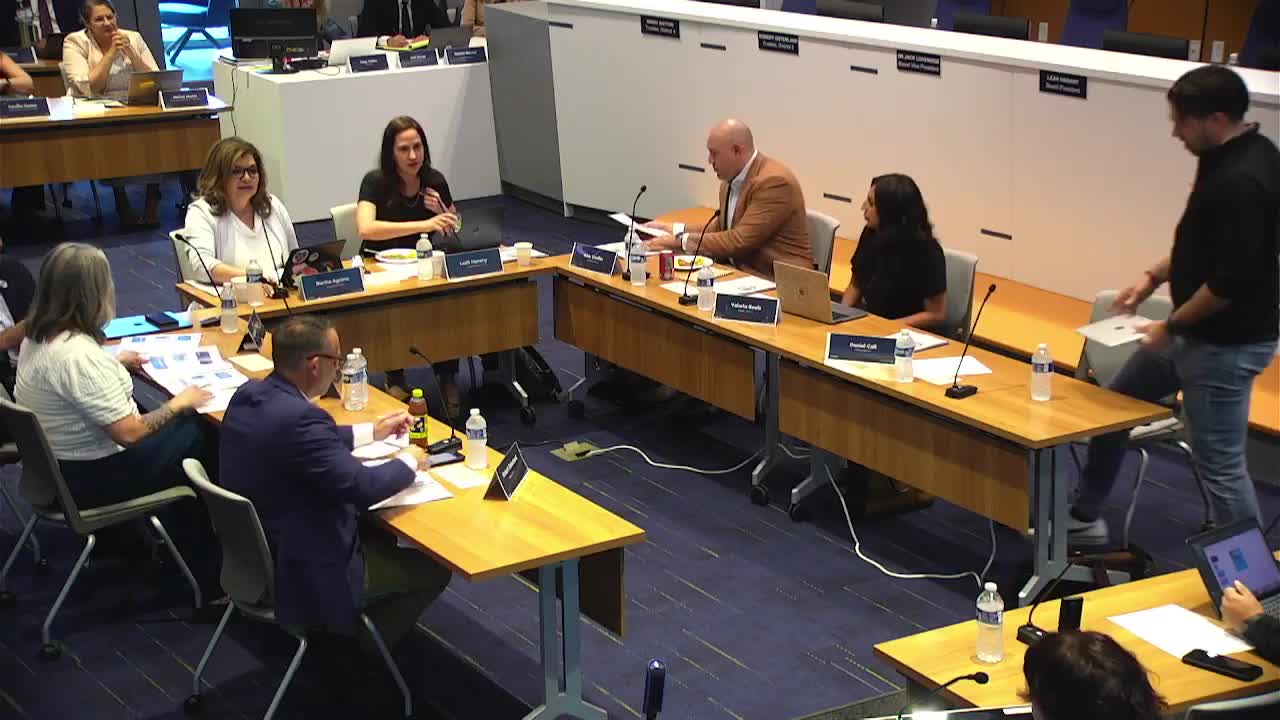
EL PASO — El Paso ISD trustees received a July 29 briefing from Education Service Center Region 19 on legislation enacted by the 89th Texas Legislature, including House Bill 2, which the presenters said added about $8.5 billion to school funding and contains multiple new requirements districts must implement for the 2025–26 school year.
Region 19 professional development consultant Rachel Grama Anderson and assistant director Eduardo Inojos told the board that HB 2 is an omnibus public education and school finance bill covering basic allotments, teacher compensation, early education, school safety and special education. "It added $8,500,000,000 in new funding," Grama Anderson said during the presentation, and she noted TEA rulemaking is expected before Sept. 1, 2025, to translate statute into enforceable agency rules.
The presentation summarized the funding and program changes trustees will need to address. Key finance and personnel items described included:
- Teacher retention allotment (TRA): Grama Anderson said small districts (fewer than 5,000 students) are allocated $4,000 raises for teachers with three to under five years' experience and $8,000 for teachers with five or more years; large districts (more than 5,000 students) are allocated $2,500 and $5,000 respectively. Presenters said districts must update 2025–26 salary schedules to reflect the TRA.
- Support staff retention allotment (SSRA): Districts will receive $45 per student to boost pay for paraprofessionals, bus drivers and cafeteria staff; presenters said the SSRA does not apply to campus or district administrators and contains an annual requirement to maintain the increase beyond 2026.
- Basic allotment and targeted funding: Presenters said the basic allotment rose by about $220 per student (to about $6,380) and that HB 2 expanded teacher incentive allotments tied to student outcomes.
- Special education: Grama Anderson and Inojos described a shift from a settings/time-based funding model to a tiered, service‑intensity model (citing HB 2 Article 4 and related SB 568). They said the session added roughly $850 million for special programs and about $615 million specifically for special education in the coming year, removed the prior 8.5% identification cap, and created service group allotments and transitional funding (including approximately an $800 million increase in 2025–26 under section 48.1022). The presenters also noted funding for initial evaluation reimbursements (at least $500 per student for initial evaluations in the prior year) and grants to recruit and retain special education staff.
- Campus safety and equipment: Presenters said campus safety allotments received $430 million and that HB 33 requires standardized crisis communication protocols, minimum campus security equipment (for example, a breaching tool and a ballistic shield at each campus), and training templates to be developed by Dec. 1, 2025. They also cited requirements for public information officers to receive emergency communications certification by Sept. 1, 2026.
Presenters reviewed other bills likely to affect district operations and policy drafting, with brief summaries as provided in the presentation:
- Senate Bill creating an Education Savings Account (ESA) program to be administered by the comptroller, with implementation rules due by May 15, 2026 and the program beginning in school year 2026–27; presenters said districts must still perform special education evaluations and develop IEPs for students whose families apply for an ESA.
- House Bill 6 (student discipline): Increases allowable in‑school suspension from three to 10 days, creates the campus behavior coordinator (CBC) role to monitor referrals and coordinate returns to class, and changes teacher removal/return procedures and appeal rights.
- House Bill 1481 (cell phone policy): Requires boards to adopt a policy prohibiting student use of personal communication devices on school property, with 90 days after the effective date to adopt a policy (presenters calculated an approximate compliance date of Sept. 15, 2025) and TEA required to provide a model policy.
- House Bill 401 (UIL participation): Changes rules for otherwise eligible non‑enrolled students to participate in UIL activities, while permitting boards to adopt policies declining participation.
- Senate Bill 1314 (mytexasfuture.org): Requires annual parent notification and opt‑out/opt‑in choices for MyTexasFuture.gov accounts and student data sharing; students must decide whether to establish an account before graduation.
- Senate Bill 843 (procurement): Raises the competitive procurement threshold to $100,000 (excluding fuel) before a competitive bid is required.
- Senate Bill 13 (library material procedures) and related instructional materials rules: Clarifies parental access to library catalogs, requires local procedures for material challenges, and ties some restrictions to definitions in statute and the Texas Penal Code.
- Curriculum and graduation changes: New social studies TEKS additions (including instruction on communist regimes), a new applied science pathway (HB 20) with 20 specified pathways and district–IHE partnership authority, and a personal financial literacy graduation requirement (HB 27) were described. Presenters said TEKS revisions and other rulemaking will be posted in the Texas Register and the Texas Administrative Code once adopted.
During the Q&A, Trustee Cuellar asked about “hot button” items in the ongoing special session; presenters pointed to several items including consideration of abolishing the STAAR exam and other proposals. Trustee Sutton asked whether Region 19 staff or district representatives had attended the legislative sessions; presenters said they had not attended in person and rely on state associations and legislative partners for tracking and advocacy, and that some information was provided through consultants (the presenters referenced Paul Colbert as a legislative contact who provided updates).
Region 19 and El Paso ISD administration told trustees they will monitor agency rulemaking closely (TEA and other agencies) and follow up with district staff about drafting policies and updating salary schedules, budgets and emergency plans. Grama Anderson directed trustees to rulemaking notices in the Texas Register and to TEA communications for implementation timelines.
No formal board motions or votes on these topics were recorded during the meeting; the session was a briefing and question period. Several statutory implementation timelines and TEA rulemaking deadlines noted by presenters will determine when districts must finalize policies and budget changes.
Region 19 professional development consultant Rachel Grama Anderson and assistant director Eduardo Inojos told the board that HB 2 is an omnibus public education and school finance bill covering basic allotments, teacher compensation, early education, school safety and special education. "It added $8,500,000,000 in new funding," Grama Anderson said during the presentation, and she noted TEA rulemaking is expected before Sept. 1, 2025, to translate statute into enforceable agency rules.
The presentation summarized the funding and program changes trustees will need to address. Key finance and personnel items described included:
- Teacher retention allotment (TRA): Grama Anderson said small districts (fewer than 5,000 students) are allocated $4,000 raises for teachers with three to under five years' experience and $8,000 for teachers with five or more years; large districts (more than 5,000 students) are allocated $2,500 and $5,000 respectively. Presenters said districts must update 2025–26 salary schedules to reflect the TRA.
- Support staff retention allotment (SSRA): Districts will receive $45 per student to boost pay for paraprofessionals, bus drivers and cafeteria staff; presenters said the SSRA does not apply to campus or district administrators and contains an annual requirement to maintain the increase beyond 2026.
- Basic allotment and targeted funding: Presenters said the basic allotment rose by about $220 per student (to about $6,380) and that HB 2 expanded teacher incentive allotments tied to student outcomes.
- Special education: Grama Anderson and Inojos described a shift from a settings/time-based funding model to a tiered, service‑intensity model (citing HB 2 Article 4 and related SB 568). They said the session added roughly $850 million for special programs and about $615 million specifically for special education in the coming year, removed the prior 8.5% identification cap, and created service group allotments and transitional funding (including approximately an $800 million increase in 2025–26 under section 48.1022). The presenters also noted funding for initial evaluation reimbursements (at least $500 per student for initial evaluations in the prior year) and grants to recruit and retain special education staff.
- Campus safety and equipment: Presenters said campus safety allotments received $430 million and that HB 33 requires standardized crisis communication protocols, minimum campus security equipment (for example, a breaching tool and a ballistic shield at each campus), and training templates to be developed by Dec. 1, 2025. They also cited requirements for public information officers to receive emergency communications certification by Sept. 1, 2026.
Presenters reviewed other bills likely to affect district operations and policy drafting, with brief summaries as provided in the presentation:
- Senate Bill creating an Education Savings Account (ESA) program to be administered by the comptroller, with implementation rules due by May 15, 2026 and the program beginning in school year 2026–27; presenters said districts must still perform special education evaluations and develop IEPs for students whose families apply for an ESA.
- House Bill 6 (student discipline): Increases allowable in‑school suspension from three to 10 days, creates the campus behavior coordinator (CBC) role to monitor referrals and coordinate returns to class, and changes teacher removal/return procedures and appeal rights.
- House Bill 1481 (cell phone policy): Requires boards to adopt a policy prohibiting student use of personal communication devices on school property, with 90 days after the effective date to adopt a policy (presenters calculated an approximate compliance date of Sept. 15, 2025) and TEA required to provide a model policy.
- House Bill 401 (UIL participation): Changes rules for otherwise eligible non‑enrolled students to participate in UIL activities, while permitting boards to adopt policies declining participation.
- Senate Bill 1314 (mytexasfuture.org): Requires annual parent notification and opt‑out/opt‑in choices for MyTexasFuture.gov accounts and student data sharing; students must decide whether to establish an account before graduation.
- Senate Bill 843 (procurement): Raises the competitive procurement threshold to $100,000 (excluding fuel) before a competitive bid is required.
- Senate Bill 13 (library material procedures) and related instructional materials rules: Clarifies parental access to library catalogs, requires local procedures for material challenges, and ties some restrictions to definitions in statute and the Texas Penal Code.
- Curriculum and graduation changes: New social studies TEKS additions (including instruction on communist regimes), a new applied science pathway (HB 20) with 20 specified pathways and district–IHE partnership authority, and a personal financial literacy graduation requirement (HB 27) were described. Presenters said TEKS revisions and other rulemaking will be posted in the Texas Register and the Texas Administrative Code once adopted.
During the Q&A, Trustee Cuellar asked about “hot button” items in the ongoing special session; presenters pointed to several items including consideration of abolishing the STAAR exam and other proposals. Trustee Sutton asked whether Region 19 staff or district representatives had attended the legislative sessions; presenters said they had not attended in person and rely on state associations and legislative partners for tracking and advocacy, and that some information was provided through consultants (the presenters referenced Paul Colbert as a legislative contact who provided updates).
Region 19 and El Paso ISD administration told trustees they will monitor agency rulemaking closely (TEA and other agencies) and follow up with district staff about drafting policies and updating salary schedules, budgets and emergency plans. Grama Anderson directed trustees to rulemaking notices in the Texas Register and to TEA communications for implementation timelines.
No formal board motions or votes on these topics were recorded during the meeting; the session was a briefing and question period. Several statutory implementation timelines and TEA rulemaking deadlines noted by presenters will determine when districts must finalize policies and budget changes.
Don't Miss a Word: See the Full Meeting!
Go beyond summaries. Unlock every video, transcript, and key insight with a Founder Membership.
✓
Get instant access to full meeting videos
✓
Search and clip any phrase from complete transcripts
✓
Receive AI-powered summaries & custom alerts
✓
Enjoy lifetime, unrestricted access to government data
30-day money-back guarantee
