Board upholds prohibition on occupancy at 410 Aurora Lane over flood-elevation code violations
June 18, 2025 | Daytona Beach City, Volusia County, Florida
This article was created by AI summarizing key points discussed. AI makes mistakes, so for full details and context, please refer to the video of the full meeting. Please report any errors so we can fix them. Report an error »
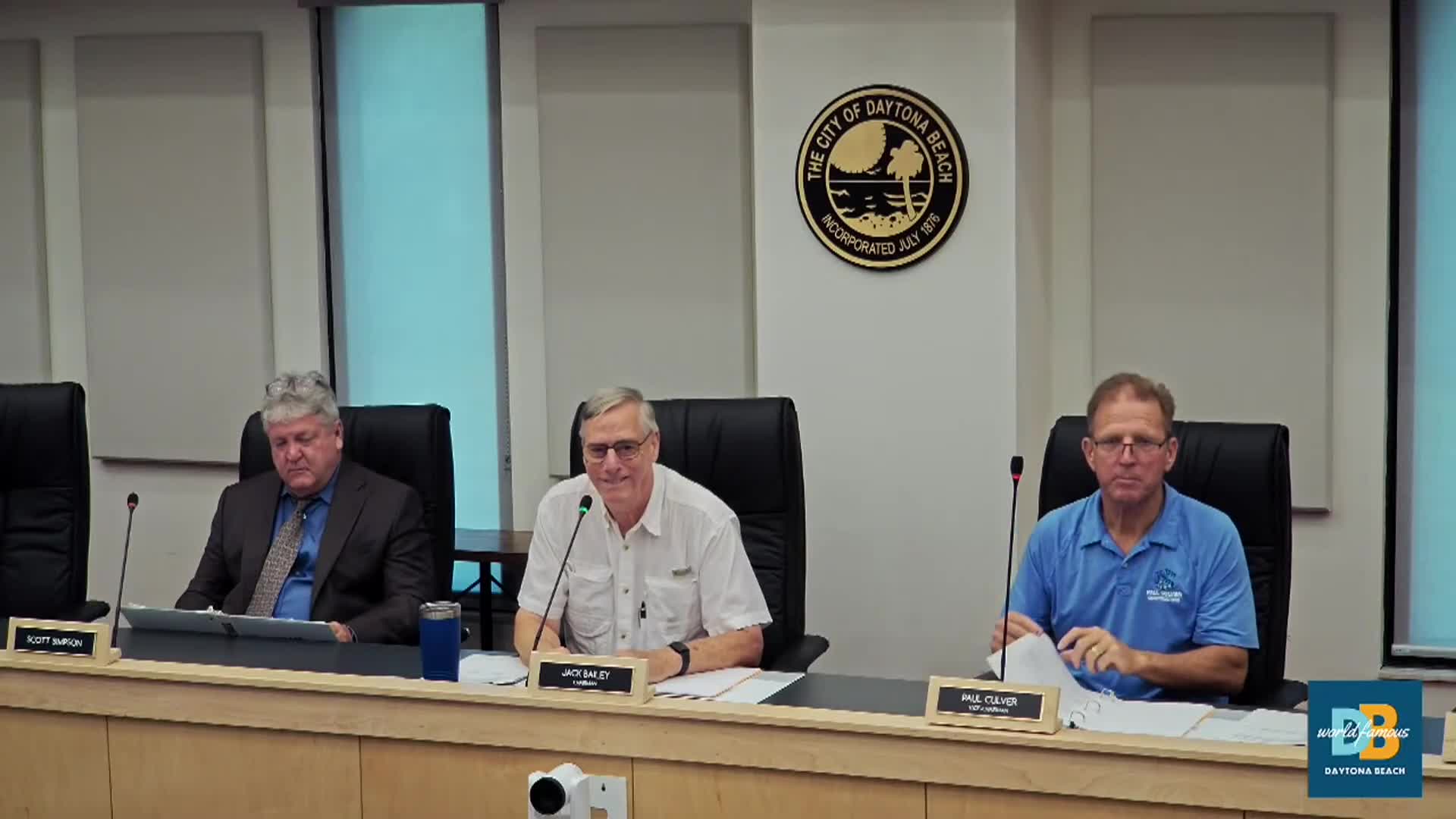
The Daytona Beach Building Board denied an appeal by the current owners of 410 Aurora Lane and upheld a notice of prohibited occupancy after city staff said the renovated structure fails to meet the city's flood-elevation standard.
City project manager Kim Flaherty explained the basis for the order: “Our land development code requires that when you renovate a structure, exceeding 50% of the value, you have to meet all code requirements. Our code requires that the structure be elevated to a minimum 12 inches above the base flood,” and told the board staff determined the property's base flood elevation for the site is 8 feet while the house's finished-floor elevation measures about 6.35 feet on staff's elevation certificates.
Why it matters: staff said allowing occupancy below the required elevation could affect flood insurance ratings and wider insurance implications for Daytona Beach. Glenn Urquhart, chief building official, warned that occupancy would be unlawful: “They'd be, unlawfully occupying,” and said the city cannot issue a certificate of occupancy until code requirements are met.
City staff presented a timeline showing building permit activity and photos: inspectors cited images taken June 1, 2022 and later photos from December 2023 and May 30, 2025. Kim Flaherty said a building permit application had been submitted on July 14, 2022 but that at the time of the initial inspection there was no permit on file; the title company had contacted staff during the closing to check the permit status.
The owners said they purchased the home in good faith through a bank loan and that the title company had cleared the transaction. Owner Raul Hernandez told the board through a translator, “we purchased the house, with the intention of being our primary home for our family with good faith,” and described hardship from paying two mortgages while unable to occupy the house.
The owners said a local engineer advised an elevation would cost roughly $8,000 to $10,000 and cautioned that lifting a 1924 house could pose structural risks. Staff told the owners a FEMA elevation certificate provided by the owners does not satisfy Daytona Beach's land-development requirement of base flood elevation plus at least 12 inches.
Legal and practical remedies discussed included title-insurance claims, possible remedies against the seller, appeals to the city commission and pursuing evidence that the 50% valuation threshold was not exceeded (staff said the assessed value used to evaluate the 50% test would be the 2022 assessed value when the permit was pulled). Board counsel said no contrary elevation evidence had been provided at the hearing to rebut staff's determination. The board voted to uphold the notice of prohibited occupancy; members voted "aye."
Staff told the owners they will be mailed and emailed a formal order and that the owners do not need to return to the board unless they seek further action; staff also said there is no authority to allow temporary occupancy or a temporary certificate of occupancy while the elevation issue remains unresolved.
City project manager Kim Flaherty explained the basis for the order: “Our land development code requires that when you renovate a structure, exceeding 50% of the value, you have to meet all code requirements. Our code requires that the structure be elevated to a minimum 12 inches above the base flood,” and told the board staff determined the property's base flood elevation for the site is 8 feet while the house's finished-floor elevation measures about 6.35 feet on staff's elevation certificates.
Why it matters: staff said allowing occupancy below the required elevation could affect flood insurance ratings and wider insurance implications for Daytona Beach. Glenn Urquhart, chief building official, warned that occupancy would be unlawful: “They'd be, unlawfully occupying,” and said the city cannot issue a certificate of occupancy until code requirements are met.
City staff presented a timeline showing building permit activity and photos: inspectors cited images taken June 1, 2022 and later photos from December 2023 and May 30, 2025. Kim Flaherty said a building permit application had been submitted on July 14, 2022 but that at the time of the initial inspection there was no permit on file; the title company had contacted staff during the closing to check the permit status.
The owners said they purchased the home in good faith through a bank loan and that the title company had cleared the transaction. Owner Raul Hernandez told the board through a translator, “we purchased the house, with the intention of being our primary home for our family with good faith,” and described hardship from paying two mortgages while unable to occupy the house.
The owners said a local engineer advised an elevation would cost roughly $8,000 to $10,000 and cautioned that lifting a 1924 house could pose structural risks. Staff told the owners a FEMA elevation certificate provided by the owners does not satisfy Daytona Beach's land-development requirement of base flood elevation plus at least 12 inches.
Legal and practical remedies discussed included title-insurance claims, possible remedies against the seller, appeals to the city commission and pursuing evidence that the 50% valuation threshold was not exceeded (staff said the assessed value used to evaluate the 50% test would be the 2022 assessed value when the permit was pulled). Board counsel said no contrary elevation evidence had been provided at the hearing to rebut staff's determination. The board voted to uphold the notice of prohibited occupancy; members voted "aye."
Staff told the owners they will be mailed and emailed a formal order and that the owners do not need to return to the board unless they seek further action; staff also said there is no authority to allow temporary occupancy or a temporary certificate of occupancy while the elevation issue remains unresolved.
View the Full Meeting & All Its Details
This article offers just a summary. Unlock complete video, transcripts, and insights as a Founder Member.
✓
Watch full, unedited meeting videos
✓
Search every word spoken in unlimited transcripts
✓
AI summaries & real-time alerts (all government levels)
✓
Permanent access to expanding government content
30-day money-back guarantee
