Greenland ZBA approves variance to allow house on landlocked 130 Tuttle Lane
June 17, 2025 | Greenland Conservation Commission, Greenland, Rockingham County, New Hampshire
This article was created by AI summarizing key points discussed. AI makes mistakes, so for full details and context, please refer to the video of the full meeting. Please report any errors so we can fix them. Report an error »
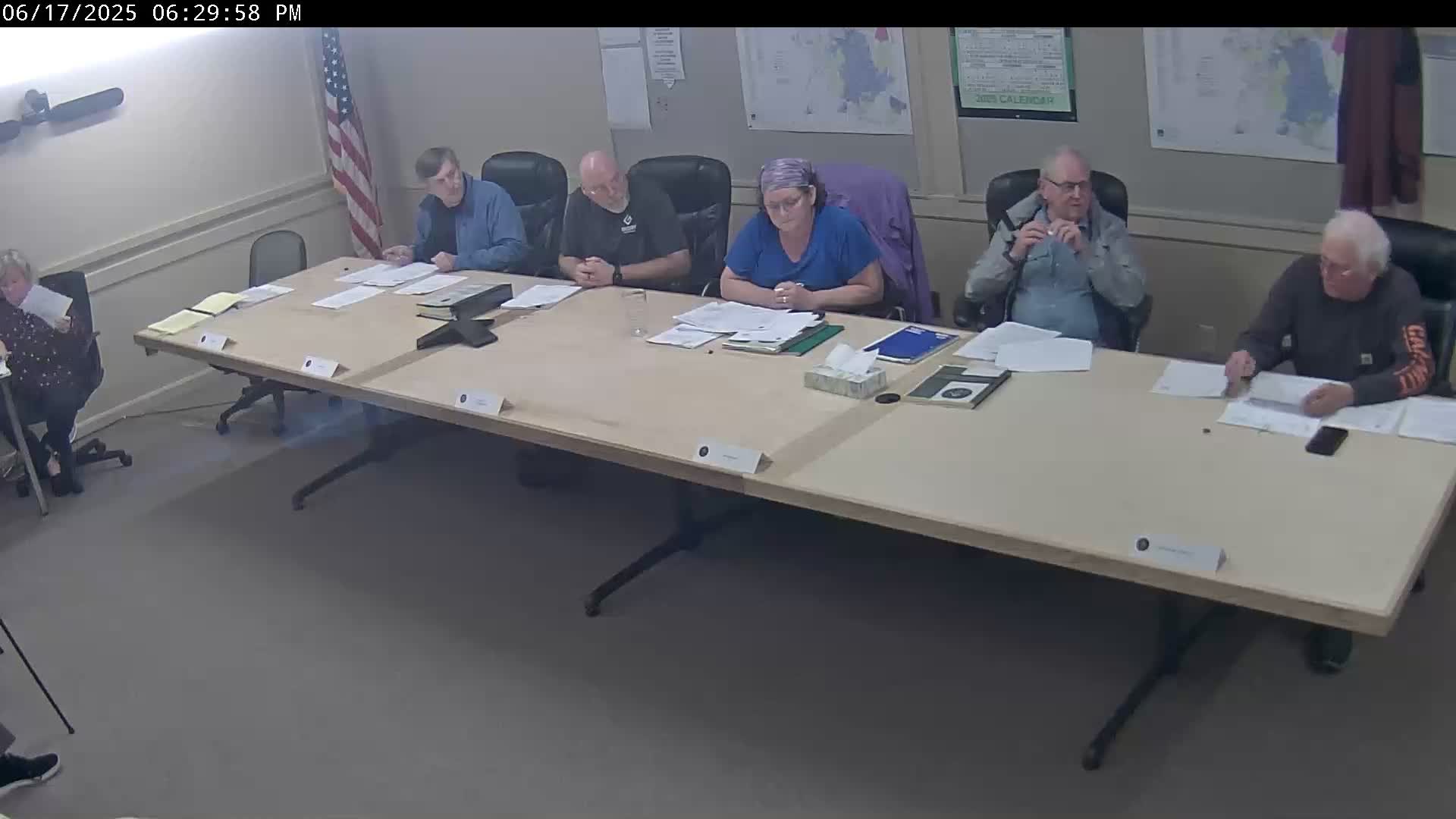
The Greenland Zoning Board of Adjustment on June 17 approved a variance allowing development of a landlocked lot at 130 Tuttle Lane, permitting a single-family home to be built on about 3.57 acres of uplands accessed by a recorded easement from Tuttle Lane.
The variance matter mattered to the property’s owners and prospective buyers because the lot has “0 feet of frontage” on a town road and the town ordinance requires 200 feet of frontage in that zone, attorney Tim Phoenix told the board. He said the deed records and a 1957 subdivision plan show a recorded right-of-way to the road that has been used to provide access for decades.
Phoenix, representing prospective buyers Colton and Megan Gold and speaking for owners David and Suzanne Sanderson, argued the five statutory variance factors are met: the unique site history, the practical access provided by a 50-foot right-of-way, minimal impact on surrounding property values, and the public interest in returning the parcel to residential use. “Colton and Megan are intending to purchase this lot…which is about 11 acres,” Phoenix said, and he added the plan shows “3.57 acres” of uplands suitable for a home.
Board members asked about emergency access, driveway width and length, and conservation concerns. Phoenix said the right-of-way is “50 feet wide at least through its length,” that the proposed driveway would be constructed to provide access for emergency vehicles, and that the applicants will go to the Planning Board for wetland-buffer and subdivision-related reviews. A commenter who identified themself as a member of the Greenland Conservation Commission noted that much of the parcel falls within the state’s high-ranking wildlife habitat.
The board motion to grant the variance described the request as permitting development of an existing lot of record with no frontage using the recorded easement for the purpose of constructing a single-family home on 3.57 acres according to the submitted plan. The motion was seconded and approved by voice vote.
Next steps noted in the hearing record: the applicants must complete required Planning Board reviews for buffers and any other subdivision/driveway approvals, and any conservation or state permitting (for example septic and driveway work crossing wetlands) must be obtained before construction. The hearing record also notes the property is currently in current-use taxation and that removal from current use would trigger the town’s customary procedures and any state penalty processes described by counsel.
The variance matter mattered to the property’s owners and prospective buyers because the lot has “0 feet of frontage” on a town road and the town ordinance requires 200 feet of frontage in that zone, attorney Tim Phoenix told the board. He said the deed records and a 1957 subdivision plan show a recorded right-of-way to the road that has been used to provide access for decades.
Phoenix, representing prospective buyers Colton and Megan Gold and speaking for owners David and Suzanne Sanderson, argued the five statutory variance factors are met: the unique site history, the practical access provided by a 50-foot right-of-way, minimal impact on surrounding property values, and the public interest in returning the parcel to residential use. “Colton and Megan are intending to purchase this lot…which is about 11 acres,” Phoenix said, and he added the plan shows “3.57 acres” of uplands suitable for a home.
Board members asked about emergency access, driveway width and length, and conservation concerns. Phoenix said the right-of-way is “50 feet wide at least through its length,” that the proposed driveway would be constructed to provide access for emergency vehicles, and that the applicants will go to the Planning Board for wetland-buffer and subdivision-related reviews. A commenter who identified themself as a member of the Greenland Conservation Commission noted that much of the parcel falls within the state’s high-ranking wildlife habitat.
The board motion to grant the variance described the request as permitting development of an existing lot of record with no frontage using the recorded easement for the purpose of constructing a single-family home on 3.57 acres according to the submitted plan. The motion was seconded and approved by voice vote.
Next steps noted in the hearing record: the applicants must complete required Planning Board reviews for buffers and any other subdivision/driveway approvals, and any conservation or state permitting (for example septic and driveway work crossing wetlands) must be obtained before construction. The hearing record also notes the property is currently in current-use taxation and that removal from current use would trigger the town’s customary procedures and any state penalty processes described by counsel.
Don't Miss a Word: See the Full Meeting!
Go beyond summaries. Unlock every video, transcript, and key insight with a Founder Membership.
✓
Get instant access to full meeting videos
✓
Search and clip any phrase from complete transcripts
✓
Receive AI-powered summaries & custom alerts
✓
Enjoy lifetime, unrestricted access to government data
30-day money-back guarantee
