Deltona officials move to issue RFP for citywide TNR program; volunteers and residents urge aggressive approach
July 29, 2025 | Deltona, Volusia County, Florida
This article was created by AI summarizing key points discussed. AI makes mistakes, so for full details and context, please refer to the video of the full meeting. Please report any errors so we can fix them. Report an error »
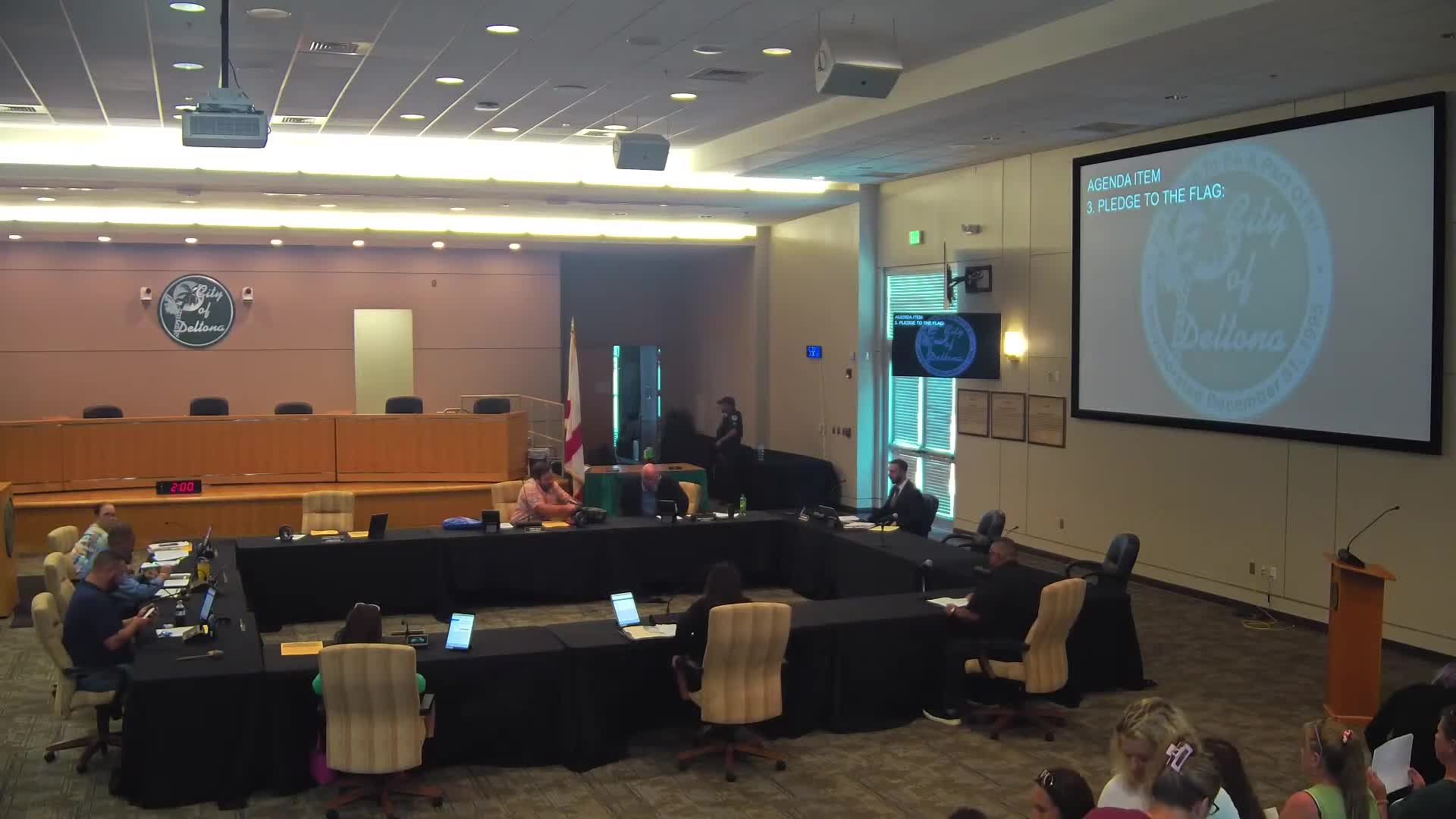
City Manager and staff said July 28 that they will prepare a request for proposals and work with the commission on ordinance and contracting language to put Deltona's Trap-Neuter-Return program (TNR) out to bid, using the city's $60,000 annual budget and specified contract terms as a starting point. Public commenters and several commissioners urged stronger enforcement of the city's feeding ban, higher sterilization targets and preference for trusted local nonprofits.
The commission workshop drew about 11 public commenters and lengthy discussion among commissioners, city staff and animal-welfare volunteers about how to standardize reporting, monitor colonies and ensure a contracted provider can run the program day-to-day. The action needed now, city staff said, is an RFP plus clearer code language so the program has measurable objectives and enforceable rules.
City staff presented draft contract terms that would: require all cats served to live within Deltona city limits; require a dedicated phone and email for citizen requests with a two-business-day acknowledgement; produce monthly written activity reports and quarterly presentations to the commission; list registered colonies and prohibit formation of new colonies in certain sensitive locations; set a minimum of 130 cats spayed or neutered per quarter (about 10 per week); establish a three-year contract with two optional one-year renewals and a six-month probationary period; set an annual compensation line of $60,000 with a $5,000 first-year supplies allowance; and create a $10-per-cat performance bonus for feral Deltona cats above the 130-per-quarter minimum after the probationary period. The staff presentation also said the city has memoranda of understanding (MOUs) with two clinics: Central Florida Community Pet Clinic (15 cats per week) and Spay and Save (12 per month). "We may also award multiple vendors, not just one, if appropriate," staff said in the presentation.
Volunteers and residents urged the commission to push for a more aggressive sterilization rate, and to use local nonprofits that already run trapping, fostering and adoptions. "I really feel that what is in place right now is working the best," said Laurie Wernicke, a resident and commenter. Volunteer Patricia Stevenson told the commission: "In order for TNR to be effective, you have to have 70% of your colony TNR that is neutered in order to stabilize the population." Several volunteers—including Robin McClintic, who identified herself as project manager for Not Their Fault Feline Foundation and as part of the DeBary TNR effort—said volunteers currently cover transportation and testing costs from donated funds and asked the city to allow contracted providers to adopt out animals to help offset program costs.
Commissioners emphasized the need for measurable policy. "When I first started looking to this after I was elected, I think the biggest issue of all is that the current ordinance as written ... is not very much of an ordinance," said Commissioner Lully, noting the existing code is a single paragraph with little objective standard. Several commissioners asked staff and legal to draft an ordinance or resolution with measurable objectives but not so prescriptive that the city loses flexibility. The city attorney suggested a resolution for measurable policy and an ordinance to authorize the program so updates can be made more quickly.
Commissioners and staff discussed enforcement of the city's long-standing feeding ban, civil citation options for repeat illegal feeders, and a registry of approved feeders and feeders participating in the program. Commissioner Howington and others said staff will still handle animal-control complaints but that a contracted provider should perform the bulk of trapping, surgery coordination and colony administration. City staff said monthly reports from the provider should include colony locations, number of cats, where animals were taken for surgery and whether animals were returned or adopted.
Public commenters asked whether multiple nonprofits could share duties and how coordination would work. Staff said procurement would be via an RFP, and the city could accept multiple providers if appropriate; certain commenters asked that local organizations be given priority. Commenters also raised clinic-capacity concerns: Heidi Herzberg noted that the draft minimum (130 cats per quarter) corresponds to 216 available appointment slots per quarter in the city's clinic MOUs and asked staff to avoid holding surgery time without clear scheduling.
No formal commission motion or vote occurred during the workshop. Instead, city staff took direction to draft an RFP, work with legal on ordinance/resolution language, and include contract terms and reporting requirements discussed at the workshop. The city manager said staff would begin drafting the RFP immediately if the commission gave the go-ahead.
The discussion closed with a request that the RFP require the provider to present quarterly to the commission and provide monthly written reports listing colony addresses, numbers of cats trapped and sterilized, clinic destinations and final disposition (returned, adopted, or other). The commission left open where the final vendor selection and contract award would be placed on a future meeting agenda for formal action.
The commission workshop drew about 11 public commenters and lengthy discussion among commissioners, city staff and animal-welfare volunteers about how to standardize reporting, monitor colonies and ensure a contracted provider can run the program day-to-day. The action needed now, city staff said, is an RFP plus clearer code language so the program has measurable objectives and enforceable rules.
City staff presented draft contract terms that would: require all cats served to live within Deltona city limits; require a dedicated phone and email for citizen requests with a two-business-day acknowledgement; produce monthly written activity reports and quarterly presentations to the commission; list registered colonies and prohibit formation of new colonies in certain sensitive locations; set a minimum of 130 cats spayed or neutered per quarter (about 10 per week); establish a three-year contract with two optional one-year renewals and a six-month probationary period; set an annual compensation line of $60,000 with a $5,000 first-year supplies allowance; and create a $10-per-cat performance bonus for feral Deltona cats above the 130-per-quarter minimum after the probationary period. The staff presentation also said the city has memoranda of understanding (MOUs) with two clinics: Central Florida Community Pet Clinic (15 cats per week) and Spay and Save (12 per month). "We may also award multiple vendors, not just one, if appropriate," staff said in the presentation.
Volunteers and residents urged the commission to push for a more aggressive sterilization rate, and to use local nonprofits that already run trapping, fostering and adoptions. "I really feel that what is in place right now is working the best," said Laurie Wernicke, a resident and commenter. Volunteer Patricia Stevenson told the commission: "In order for TNR to be effective, you have to have 70% of your colony TNR that is neutered in order to stabilize the population." Several volunteers—including Robin McClintic, who identified herself as project manager for Not Their Fault Feline Foundation and as part of the DeBary TNR effort—said volunteers currently cover transportation and testing costs from donated funds and asked the city to allow contracted providers to adopt out animals to help offset program costs.
Commissioners emphasized the need for measurable policy. "When I first started looking to this after I was elected, I think the biggest issue of all is that the current ordinance as written ... is not very much of an ordinance," said Commissioner Lully, noting the existing code is a single paragraph with little objective standard. Several commissioners asked staff and legal to draft an ordinance or resolution with measurable objectives but not so prescriptive that the city loses flexibility. The city attorney suggested a resolution for measurable policy and an ordinance to authorize the program so updates can be made more quickly.
Commissioners and staff discussed enforcement of the city's long-standing feeding ban, civil citation options for repeat illegal feeders, and a registry of approved feeders and feeders participating in the program. Commissioner Howington and others said staff will still handle animal-control complaints but that a contracted provider should perform the bulk of trapping, surgery coordination and colony administration. City staff said monthly reports from the provider should include colony locations, number of cats, where animals were taken for surgery and whether animals were returned or adopted.
Public commenters asked whether multiple nonprofits could share duties and how coordination would work. Staff said procurement would be via an RFP, and the city could accept multiple providers if appropriate; certain commenters asked that local organizations be given priority. Commenters also raised clinic-capacity concerns: Heidi Herzberg noted that the draft minimum (130 cats per quarter) corresponds to 216 available appointment slots per quarter in the city's clinic MOUs and asked staff to avoid holding surgery time without clear scheduling.
No formal commission motion or vote occurred during the workshop. Instead, city staff took direction to draft an RFP, work with legal on ordinance/resolution language, and include contract terms and reporting requirements discussed at the workshop. The city manager said staff would begin drafting the RFP immediately if the commission gave the go-ahead.
The discussion closed with a request that the RFP require the provider to present quarterly to the commission and provide monthly written reports listing colony addresses, numbers of cats trapped and sterilized, clinic destinations and final disposition (returned, adopted, or other). The commission left open where the final vendor selection and contract award would be placed on a future meeting agenda for formal action.
Don't Miss a Word: See the Full Meeting!
Go beyond summaries. Unlock every video, transcript, and key insight with a Founder Membership.
✓
Get instant access to full meeting videos
✓
Search and clip any phrase from complete transcripts
✓
Receive AI-powered summaries & custom alerts
✓
Enjoy lifetime, unrestricted access to government data
30-day money-back guarantee
