Tag reviews townhouse separation, continuity and common-wall wording; members request clearer figures and historical check
July 30, 2025 | Building Code Council, Governor's Office - Boards & Commissions, Executive, Washington
This article was created by AI summarizing key points discussed. AI makes mistakes, so for full details and context, please refer to the video of the full meeting. Please report any errors so we can fix them. Report an error »
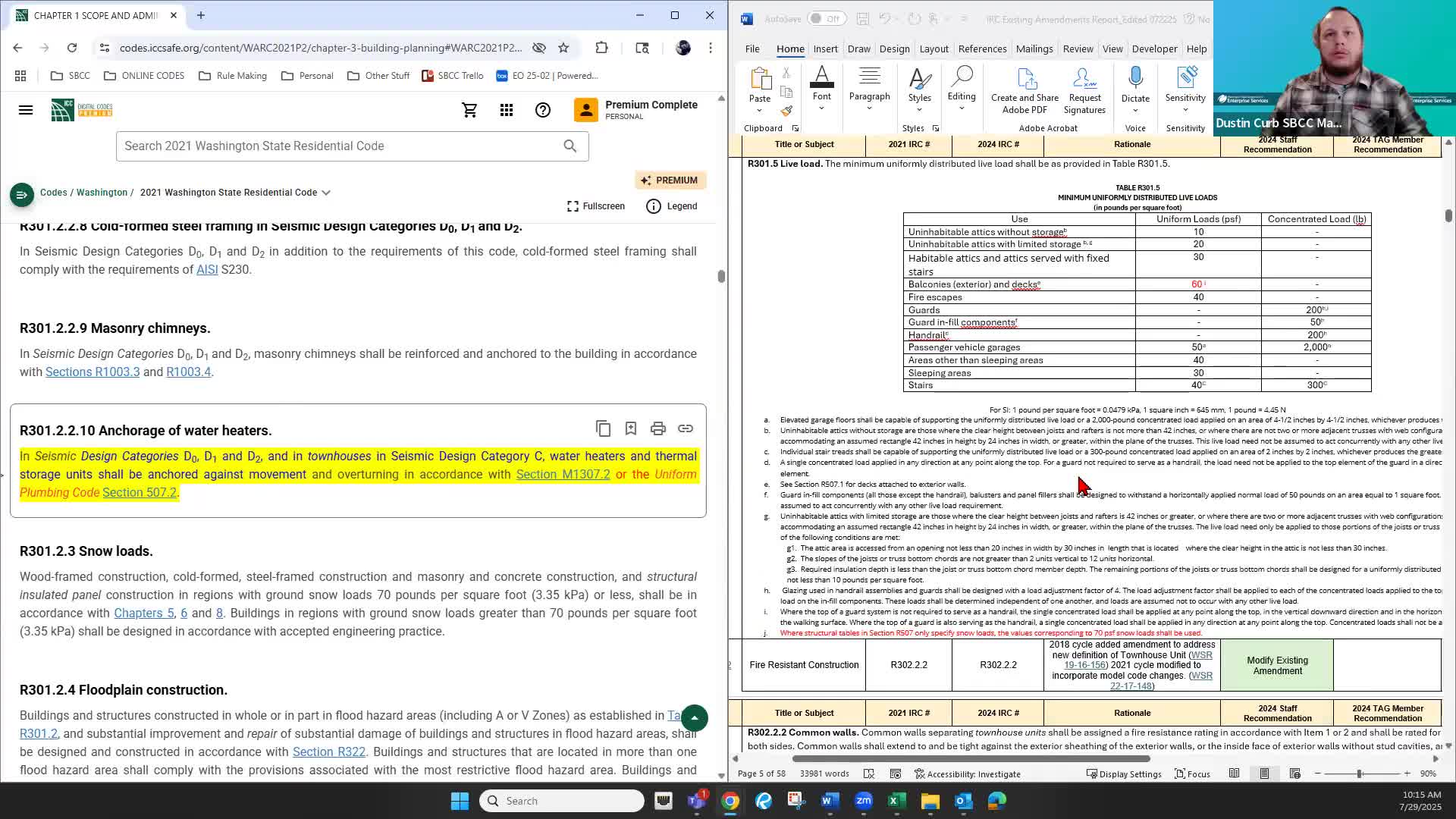
Members considered several interconnected townhouse provisions: structural independence, fire separation distance, continuity and the placement/numbering of illustrative figures. Josh Mergans and other practitioners reported recurring confusion about the term 'both sides' in the common-wall language—whether that phrase requires a fully independent one-hour assembly per side or a single one-hour rated common assembly. Hoyt and other practitioners explained the intent is a one-hour-rated common wall assembly (fire exposure on both sides), noting that the IRC’s prescriptive approach uses assemblies of specific materials (for example, Type X gypsum).
On structural independence, staff recalled that a 2018 change struck the state amendment requiring structural independence for townhouses in favor of the model code language; some tag members said they had previously sought an interpretation because requiring structural independence is difficult in seismic areas without a designed seismic gap. One participant explained that in seismic categories D/E, independent foundations and diaphragms without a seismic gap would be impractical and that the separation language often came originally from IBC firewall provisions intended for fire performance, not seismic behavior.
The tag also found figure numbering and placement problems: figures intended to illustrate the continuity rules appear before the numbered text and need to be renumbered/renested to match the new 2024 section numbering. Staff agreed to renumber figures for clarity and to add a note calling out that the figures illustrate the two continuity options under the code text. The group asked staff to research the rule-making history where the townhouse structural-independence amendment was removed (2018 CR103) and return with a clear recommendation outlining whether the state should retain a unique Washington amendment or accept the model-code approach.
Next steps: staff will confirm the 2018 CR103 rationale, renumber and relocate the illustrative figures to match the text, and produce a draft amendment (or recommendation to repeal) that resolves the structural-independence question and clarifies the 'both sides' language.
On structural independence, staff recalled that a 2018 change struck the state amendment requiring structural independence for townhouses in favor of the model code language; some tag members said they had previously sought an interpretation because requiring structural independence is difficult in seismic areas without a designed seismic gap. One participant explained that in seismic categories D/E, independent foundations and diaphragms without a seismic gap would be impractical and that the separation language often came originally from IBC firewall provisions intended for fire performance, not seismic behavior.
The tag also found figure numbering and placement problems: figures intended to illustrate the continuity rules appear before the numbered text and need to be renumbered/renested to match the new 2024 section numbering. Staff agreed to renumber figures for clarity and to add a note calling out that the figures illustrate the two continuity options under the code text. The group asked staff to research the rule-making history where the townhouse structural-independence amendment was removed (2018 CR103) and return with a clear recommendation outlining whether the state should retain a unique Washington amendment or accept the model-code approach.
Next steps: staff will confirm the 2018 CR103 rationale, renumber and relocate the illustrative figures to match the text, and produce a draft amendment (or recommendation to repeal) that resolves the structural-independence question and clarifies the 'both sides' language.
Don't Miss a Word: See the Full Meeting!
Go beyond summaries. Unlock every video, transcript, and key insight with a Founder Membership.
✓
Get instant access to full meeting videos
✓
Search and clip any phrase from complete transcripts
✓
Receive AI-powered summaries & custom alerts
✓
Enjoy lifetime, unrestricted access to government data
30-day money-back guarantee
