Northfield officials authorize emergency repairs to Slaughterhouse Road covered bridge
August 04, 2025 | Northfield Town, Washington County, Vermont
This article was created by AI summarizing key points discussed. AI makes mistakes, so for full details and context, please refer to the video of the full meeting. Please report any errors so we can fix them. Report an error »
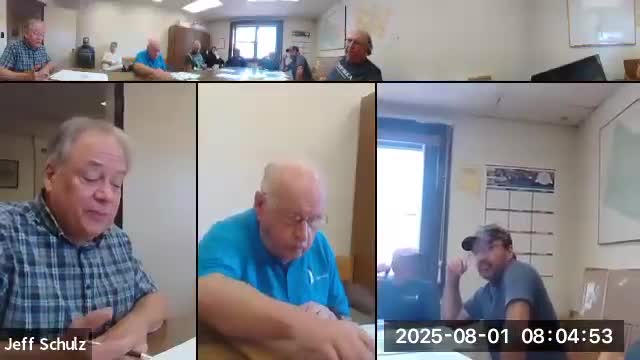
Northfield town officials on Monday authorized emergency repairs to the Slaughterhouse Road covered bridge and voted to award a contract to Vermont Heavy Timber to shore and repair the structure, the town manager said at a public meeting.
The action follows local and state inspections that identified rotten members on the downstream (river) side of the bridge and recommended reducing the vehicle weight limit. The town manager said state inspectors advised lowering the posted limit to 6,000 pounds; a local contractor who inspected the bridge had recommended an even stricter limit or closure.
Town Manager (name not specified) told the meeting that he considers the situation an emergency and that he is authorized under the town purchase policy to hire contractors and use capital funds for urgent work. "I think we're at an emergency situation. So as the manager, I'm authorized to make the needed improvements," he said.
Miles, a bridge contractor who inspected the structure, described the downstream bottom cord as "quite rotten" and outlined a two-stage plan: first shore the bridge with heavy structural staging and steel so the downstream truss stops carrying live loads, then return in the fall to replace rotten bearing and bolster beams and re-side the downstream face. Miles said the initial stabilization and shoring work can be completed quickly and that the larger repair work would be scheduled to avoid spring river pressures. He added, "I feel fine going back up to 16,000," referring to the structure's rated capacity once properly supported with iron and any necessary engineering.
John, the town highway foreman, proposed immediate, low-cost measures to keep silt and runoff off the bridge deck while permanent fixes are planned. He suggested using a buried conveyor belt or regrading the approach to deflect water off the bridge, saying such measures could reduce the routine deposition of fines and mud that is accelerating deterioration.
Selectboard member Dennis Donahue and other property owners discussed temporary alternate access across private land while repairs proceed; Donahue offered access from his property but board members said preparing and accepting that route for public use would require easements and construction standards and would not solve the bridge's long-term condition.
At the meeting the board authorized emergency spending and instructed the manager to execute a contract with Vermont Heavy Timber to shore and repair the Slaughterhouse Road covered bridge. The contract amount discussed at the meeting for the immediate stabilization and follow-up repairs was approximately $142,000; the town said the work will be paid from the town's bridge capital fund and that the fund will be replenished later. The manager said the contract will be sent electronically and the contractor will mobilize as soon as paperwork and materials are in place.
Meeting participants also discussed longer-term options: installing iron (steel) members beneath the timber structure to raise rating and resilience, designing a new adjacent vehicular bridge while preserving the covered bridge for pedestrians and history, and seeking historic-bridge funding. The town manager said state historic-preservation funds may be available and that the town will pursue engineering and funding options for a permanent solution.
Concerns raised at the meeting included emergency-service access (fire and ambulance weights and turning radius), the angle and height of the bridge approaches that limit large vehicles, and the pace of previous maintenance: several participants said rotten members were visible in earlier inspections and any prior repairs had not addressed all structural rot. Board members stressed that while historical value matters, residents' need for safe, reliable vehicle access and emergency response is paramount.
The board voted to proceed immediately with the contractor's shoring plan and to return to longer-term planning and engineering for a permanent solution. Work is expected to start as soon as the contract is signed and materials are available; a larger repair effort would be scheduled later to avoid carrying staging through the spring runoff.
The town will also continue to consult VTrans (Vermont Agency of Transportation) and the state's historic-bridge contacts about funding and technical requirements. The manager said the town will balance immediate stabilization with a planning process for an engineered, long-term fix that could include installing iron members beneath the bridge or constructing a new vehicular bridge alongside the historic structure.
The action follows local and state inspections that identified rotten members on the downstream (river) side of the bridge and recommended reducing the vehicle weight limit. The town manager said state inspectors advised lowering the posted limit to 6,000 pounds; a local contractor who inspected the bridge had recommended an even stricter limit or closure.
Town Manager (name not specified) told the meeting that he considers the situation an emergency and that he is authorized under the town purchase policy to hire contractors and use capital funds for urgent work. "I think we're at an emergency situation. So as the manager, I'm authorized to make the needed improvements," he said.
Miles, a bridge contractor who inspected the structure, described the downstream bottom cord as "quite rotten" and outlined a two-stage plan: first shore the bridge with heavy structural staging and steel so the downstream truss stops carrying live loads, then return in the fall to replace rotten bearing and bolster beams and re-side the downstream face. Miles said the initial stabilization and shoring work can be completed quickly and that the larger repair work would be scheduled to avoid spring river pressures. He added, "I feel fine going back up to 16,000," referring to the structure's rated capacity once properly supported with iron and any necessary engineering.
John, the town highway foreman, proposed immediate, low-cost measures to keep silt and runoff off the bridge deck while permanent fixes are planned. He suggested using a buried conveyor belt or regrading the approach to deflect water off the bridge, saying such measures could reduce the routine deposition of fines and mud that is accelerating deterioration.
Selectboard member Dennis Donahue and other property owners discussed temporary alternate access across private land while repairs proceed; Donahue offered access from his property but board members said preparing and accepting that route for public use would require easements and construction standards and would not solve the bridge's long-term condition.
At the meeting the board authorized emergency spending and instructed the manager to execute a contract with Vermont Heavy Timber to shore and repair the Slaughterhouse Road covered bridge. The contract amount discussed at the meeting for the immediate stabilization and follow-up repairs was approximately $142,000; the town said the work will be paid from the town's bridge capital fund and that the fund will be replenished later. The manager said the contract will be sent electronically and the contractor will mobilize as soon as paperwork and materials are in place.
Meeting participants also discussed longer-term options: installing iron (steel) members beneath the timber structure to raise rating and resilience, designing a new adjacent vehicular bridge while preserving the covered bridge for pedestrians and history, and seeking historic-bridge funding. The town manager said state historic-preservation funds may be available and that the town will pursue engineering and funding options for a permanent solution.
Concerns raised at the meeting included emergency-service access (fire and ambulance weights and turning radius), the angle and height of the bridge approaches that limit large vehicles, and the pace of previous maintenance: several participants said rotten members were visible in earlier inspections and any prior repairs had not addressed all structural rot. Board members stressed that while historical value matters, residents' need for safe, reliable vehicle access and emergency response is paramount.
The board voted to proceed immediately with the contractor's shoring plan and to return to longer-term planning and engineering for a permanent solution. Work is expected to start as soon as the contract is signed and materials are available; a larger repair effort would be scheduled later to avoid carrying staging through the spring runoff.
The town will also continue to consult VTrans (Vermont Agency of Transportation) and the state's historic-bridge contacts about funding and technical requirements. The manager said the town will balance immediate stabilization with a planning process for an engineered, long-term fix that could include installing iron members beneath the bridge or constructing a new vehicular bridge alongside the historic structure.
View the Full Meeting & All Its Details
This article offers just a summary. Unlock complete video, transcripts, and insights as a Founder Member.
✓
Watch full, unedited meeting videos
✓
Search every word spoken in unlimited transcripts
✓
AI summaries & real-time alerts (all government levels)
✓
Permanent access to expanding government content
30-day money-back guarantee
