Coastal lab recommends special medical needs shelter at Welcome Middle School; county to seek FEMA HMGP funds
August 06, 2025 | Pitt County, North Carolina
This article was created by AI summarizing key points discussed. AI makes mistakes, so for full details and context, please refer to the video of the full meeting. Please report any errors so we can fix them. Report an error »
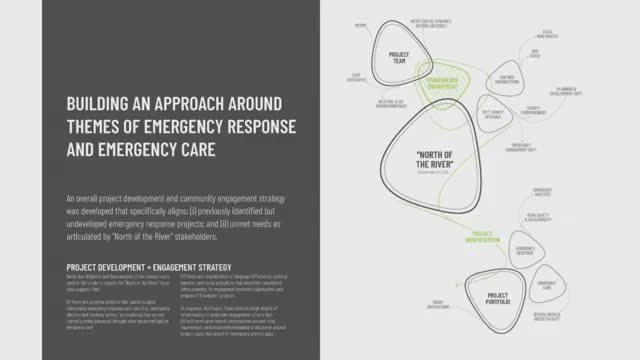
An NC State research team recommended constructing a dedicated special medical needs shelter at Welcome Middle School to serve flood-vulnerable communities north of the Tar River, and county staff said they will seek FEMA mitigation funding to implement the concept.
"This is a flood print report that we created for Pitt County," Travis Klondek, associate director of the NC State Coastal Dynamics Design Lab, told commissioners while introducing the analysis. The lab used public engagement, geospatial analysis and hydraulic modeling to identify priority locations and a facility concept.
The team said areas north of the Tar River show elevated flood vulnerability, and demographic analysis indicated higher prevalence of disability — more than twice the state average in some tracts — making proximity to a special medical needs shelter an important planning consideration. Klondek said the gymnasium at Welcome Middle School could come back online as a primary shelter after recent roof and wall repairs and that a flat site adjacent to the gym offers direct parking access and proximity to the populations identified.
The Coastal Dynamics Design Lab presented two schematic options for an auxiliary building that could function as a special medical needs facility and also serve everyday school needs. The options included features sized to meet FEMA cost-effectiveness and design standards; one recommended option would be sized to meet a 50-year useful life and a 200-mile-per-hour wind design to improve the project's benefit-cost ratio for HMGP eligibility.
Klondek noted a change to FEMA's Benefit-Cost Tool in April made it harder for some projects to meet cost-effectiveness thresholds; the presentation showed a previous maximum budget figure of about $4.8 million versus a current threshold closer to $2.6 million, which affected design and scoping decisions.
County staff recommended accepting the Floodprint report and authorized seeking funding through the North Carolina Hazard Mitigation Grant Program and FEMA HMGP. The HMGP application would not require a county match, staff said. Commissioners moved and seconded the action and the clerk recorded a vote in the public record without a roll-call tally.
During discussion a commissioner asked about flood-insurance availability and rising premiums; county staff said national changes in premium calculations have made flood insurance more expensive for many property owners and that some insurers are restricting coverage.
Staff said the Floodprint report and related materials will go to the North Carolina Office of Recovery and Resiliency and to the North Carolina Department of Public Safety, and will be used as collateral for grant applications.
"This is a flood print report that we created for Pitt County," Travis Klondek, associate director of the NC State Coastal Dynamics Design Lab, told commissioners while introducing the analysis. The lab used public engagement, geospatial analysis and hydraulic modeling to identify priority locations and a facility concept.
The team said areas north of the Tar River show elevated flood vulnerability, and demographic analysis indicated higher prevalence of disability — more than twice the state average in some tracts — making proximity to a special medical needs shelter an important planning consideration. Klondek said the gymnasium at Welcome Middle School could come back online as a primary shelter after recent roof and wall repairs and that a flat site adjacent to the gym offers direct parking access and proximity to the populations identified.
The Coastal Dynamics Design Lab presented two schematic options for an auxiliary building that could function as a special medical needs facility and also serve everyday school needs. The options included features sized to meet FEMA cost-effectiveness and design standards; one recommended option would be sized to meet a 50-year useful life and a 200-mile-per-hour wind design to improve the project's benefit-cost ratio for HMGP eligibility.
Klondek noted a change to FEMA's Benefit-Cost Tool in April made it harder for some projects to meet cost-effectiveness thresholds; the presentation showed a previous maximum budget figure of about $4.8 million versus a current threshold closer to $2.6 million, which affected design and scoping decisions.
County staff recommended accepting the Floodprint report and authorized seeking funding through the North Carolina Hazard Mitigation Grant Program and FEMA HMGP. The HMGP application would not require a county match, staff said. Commissioners moved and seconded the action and the clerk recorded a vote in the public record without a roll-call tally.
During discussion a commissioner asked about flood-insurance availability and rising premiums; county staff said national changes in premium calculations have made flood insurance more expensive for many property owners and that some insurers are restricting coverage.
Staff said the Floodprint report and related materials will go to the North Carolina Office of Recovery and Resiliency and to the North Carolina Department of Public Safety, and will be used as collateral for grant applications.
Don't Miss a Word: See the Full Meeting!
Go beyond summaries. Unlock every video, transcript, and key insight with a Founder Membership.
✓
Get instant access to full meeting videos
✓
Search and clip any phrase from complete transcripts
✓
Receive AI-powered summaries & custom alerts
✓
Enjoy lifetime, unrestricted access to government data
30-day money-back guarantee
