Board opens lengthy review of wetlands ordinance; debate centers on dock rules and 'relief valve'
August 04, 2025 | Winchester Town, Litchfield County, Connecticut
This article was created by AI summarizing key points discussed. AI makes mistakes, so for full details and context, please refer to the video of the full meeting. Please report any errors so we can fix them. Report an error »
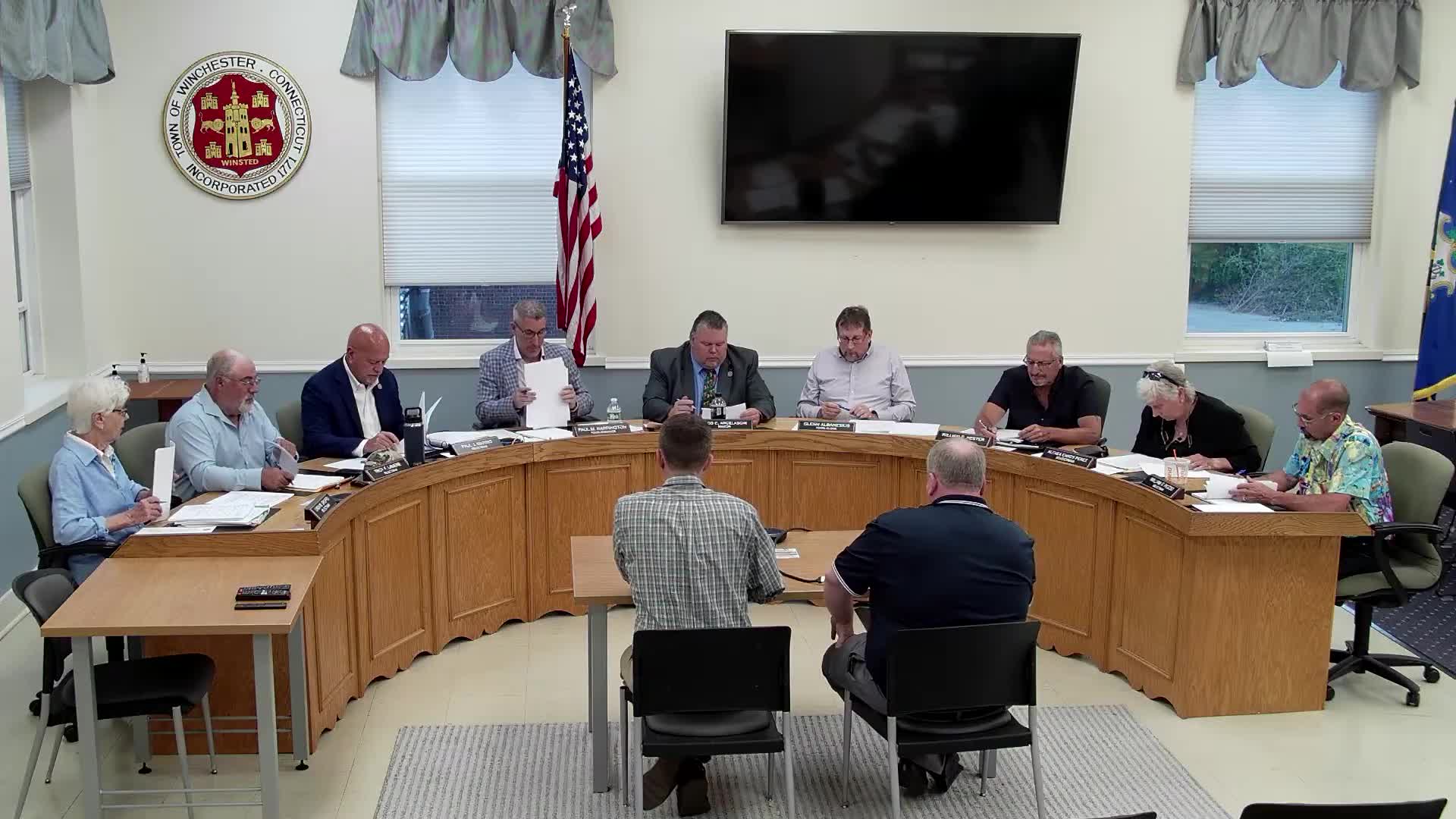
Winchester — Board members and staff spent more than an hour Thursday debating proposed changes to the town’s Inland Wetlands and Watercourses ordinance, with the most contentious discussion focused on docks, moorings, shoreline markers and a proposed "waiver" or "relief valve" provision.
Assistant Planner Jeff Green and consultant Jeremy DeCarli presented a redlined draft of changes and called attention to edits such as reducing the required setback from shore for some devices from 50 to 40 feet and clarifying terminology for lifts and personal watercraft. Green said the updated draft also adds a new waiver section for limited relief in particular cases.
Selectwoman Candy Perez and other board members expressed concern about vesting waiver authority in a "local traffic authority" (LTA) or another body that lacks the technical training of the Inland Wetlands and Watercourses Agency (IWWA). Resident and longtime ordinance volunteer Shirley All (documented in the packet) told the board she believes state statutes (chapter 22a provisions cited in discussion) give the municipal IWWA the authority over regulated activities and that delegating certain powers could conflict with state law. "I don't believe putting a waiver in is necessary or appropriate," a packet excerpt attributed to Shirley read, urging attorney review.
Discussion highlighted practical problems residents report on the lake: unauthorized line markers and private buoys are proliferating, sometimes well beyond the 40‑foot or 50‑foot limits in current rules; it can be difficult to determine whether a marker has a state permit; and enforcement responsibility was unclear. "Well, that's what I'm asking. Is there do we have something in there that we're gonna to take care of this problem?" one board member asked. Green and others noted that DEP ultimately issues permits for some markers but that local enforcement — police and the Inland Wetlands Agency — typically handle day‑to‑day issues.
The board asked staff to obtain a legal opinion from the town attorney about whether the proposed waiver language would conflict with Connecticut General Statutes (discussion referenced 22a‑38 and 22a‑42) and to work with the IWWA before initiating the three‑meeting ordinance adoption process. Members suggested moving any waiver or "relief" language into the same section that already governs new structures or docks so the provision would be clearly dock‑specific rather than broad.
No vote was taken on the ordinance. Town staff said they would prepare a revised 95‑to‑100% draft for the board, circulate it to the IWWA and the town attorney, and then begin the required three‑meeting adoption process once the board is satisfied with the language. The selectmen asked staff to schedule IWWA review in advance of the board’s September meeting so the process can proceed in early fall.
Why it matters: Lakefront owners, boaters and waterfront visitors could see rules clarified or tightened on dock length, swim‑area markers and private moorings. Board members repeatedly emphasized they did not want to rush a change that could invite legal challenges or inconsistent enforcement.
Assistant Planner Jeff Green and consultant Jeremy DeCarli presented a redlined draft of changes and called attention to edits such as reducing the required setback from shore for some devices from 50 to 40 feet and clarifying terminology for lifts and personal watercraft. Green said the updated draft also adds a new waiver section for limited relief in particular cases.
Selectwoman Candy Perez and other board members expressed concern about vesting waiver authority in a "local traffic authority" (LTA) or another body that lacks the technical training of the Inland Wetlands and Watercourses Agency (IWWA). Resident and longtime ordinance volunteer Shirley All (documented in the packet) told the board she believes state statutes (chapter 22a provisions cited in discussion) give the municipal IWWA the authority over regulated activities and that delegating certain powers could conflict with state law. "I don't believe putting a waiver in is necessary or appropriate," a packet excerpt attributed to Shirley read, urging attorney review.
Discussion highlighted practical problems residents report on the lake: unauthorized line markers and private buoys are proliferating, sometimes well beyond the 40‑foot or 50‑foot limits in current rules; it can be difficult to determine whether a marker has a state permit; and enforcement responsibility was unclear. "Well, that's what I'm asking. Is there do we have something in there that we're gonna to take care of this problem?" one board member asked. Green and others noted that DEP ultimately issues permits for some markers but that local enforcement — police and the Inland Wetlands Agency — typically handle day‑to‑day issues.
The board asked staff to obtain a legal opinion from the town attorney about whether the proposed waiver language would conflict with Connecticut General Statutes (discussion referenced 22a‑38 and 22a‑42) and to work with the IWWA before initiating the three‑meeting ordinance adoption process. Members suggested moving any waiver or "relief" language into the same section that already governs new structures or docks so the provision would be clearly dock‑specific rather than broad.
No vote was taken on the ordinance. Town staff said they would prepare a revised 95‑to‑100% draft for the board, circulate it to the IWWA and the town attorney, and then begin the required three‑meeting adoption process once the board is satisfied with the language. The selectmen asked staff to schedule IWWA review in advance of the board’s September meeting so the process can proceed in early fall.
Why it matters: Lakefront owners, boaters and waterfront visitors could see rules clarified or tightened on dock length, swim‑area markers and private moorings. Board members repeatedly emphasized they did not want to rush a change that could invite legal challenges or inconsistent enforcement.
View the Full Meeting & All Its Details
This article offers just a summary. Unlock complete video, transcripts, and insights as a Founder Member.
✓
Watch full, unedited meeting videos
✓
Search every word spoken in unlimited transcripts
✓
AI summaries & real-time alerts (all government levels)
✓
Permanent access to expanding government content
30-day money-back guarantee
