PSC hears Saint Agnes request to reduce $2.47 million BGE penalty after boiler failures left hospital unable to curtail gas
August 07, 2025 | Public Service Commission, Organizations, Executive, Maryland
This article was created by AI summarizing key points discussed. AI makes mistakes, so for full details and context, please refer to the video of the full meeting. Please report any errors so we can fix them. Report an error »
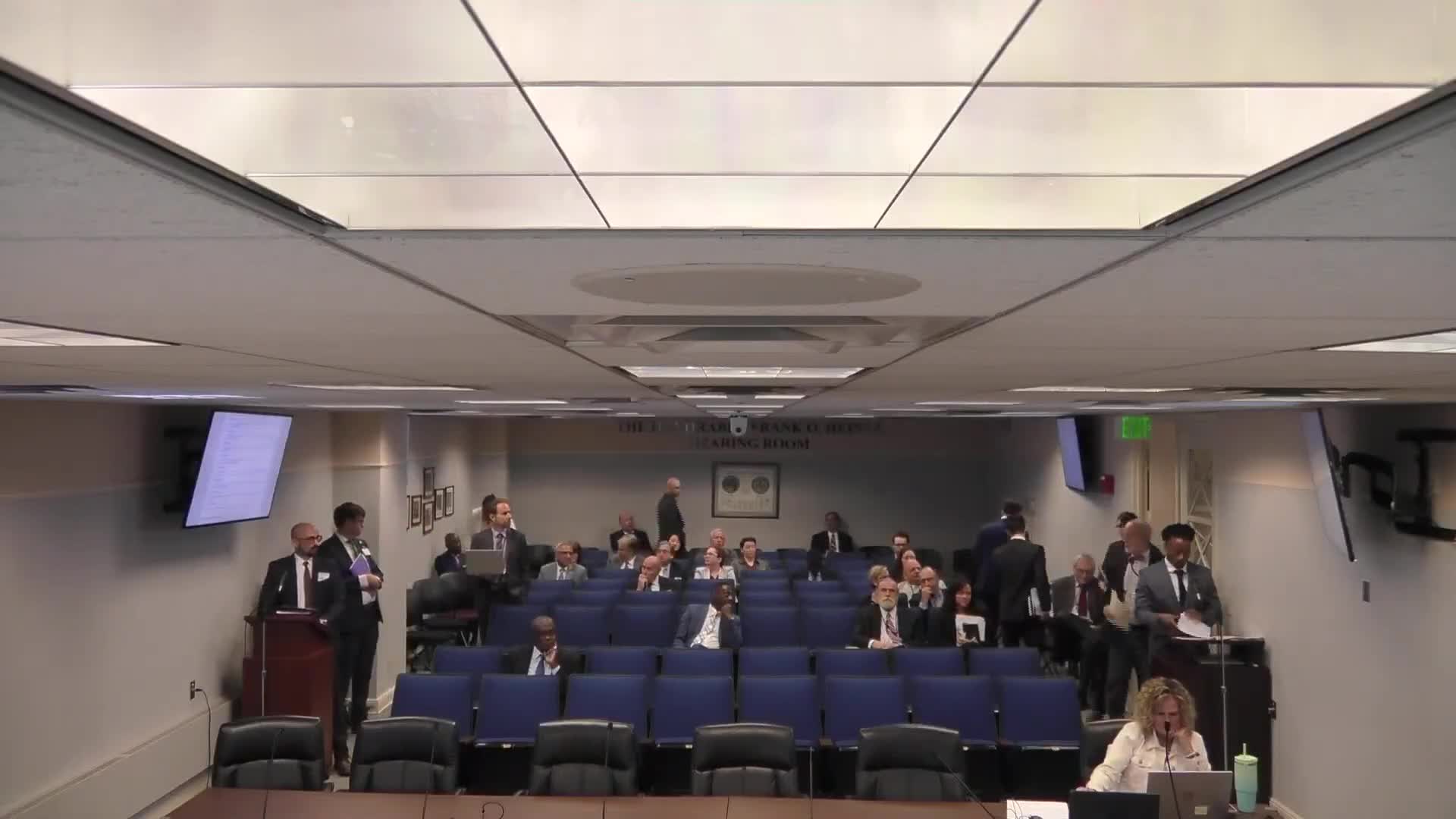
On Aug. 6, 2025, the Maryland Public Service Commission (PSC) heard arguments over whether to reduce or waive a $2,473,566 penalty Baltimore Gas and Electric Co. (BGE) assessed to Ascension Saint Agnes Hospital for failing to curtail natural gas during a Jan. 20–23, 2025 curtailment event.
Why it matters: The penalty, staff said, would move the hospital from a modest profit into an operational loss and could affect services for underserved Southwest Baltimore residents. The commission did not rule at the meeting and took the matter under advisement.
Staff summary and recommendation
Cameron Walton of PSC staff summarized the timeline and staff’s calculation. Staff said Saint Agnes experienced a catastrophic boiler failure Nov. 20, 2024; the hospital passed a physical interruption test on Dec. 10, 2024; and during the Jan. 20–23, 2025 interruption the hospital was unable to switch boilers and failed to stop gas usage for 71 hours. Staff said the hospital has spent more than $590,000 on repairs with costs expected to reach about $670,000 and that the hospital ordered about $2,025,000 in fuel oil ahead of the curtailment. Staff recommended a 47% reduction of the assessed penalty, yielding a proposed final penalty of $1,250,326, based on documented repair costs, fuel purchases and estimated system benefits from the hospital’s partial curtailments.
Office of People's Counsel
Mark Sheebas of the Office of People's Counsel (OPC) said OPC supported staff’s 47% recommendation but asked for additional information from the hospital on two points: (1) evidence showing that the hospital substantially reduced gas usage during the interruption period, and (2) more detail about why the boilers failed five weeks after passing the December physical interruption test. Sheebas said, “OPC supports staff’s recommendation for a 47% reduction in the penalty provided that the hospital Ascension can provide more information and explanation on 2 points.”
Hospital account and request
Michael Finnegan, chief operating officer for Ascension Saint Agnes Hospital, described the hospital's circumstances and asked the commission for a larger reduction or full waiver. Finnegan said the hospital serves a high-need community, that patient care continued during the curtailment and that the hospital has invested “almost $700,000 in our fuel switching technology, both before, during, and after the curtailment event.” He said the hospital “acted in good faith” and asked the commission to consider a full waiver or, at minimum, a reduction substantially larger than staff’s recommendation. Later in the hearing Finnegan proposed a reduction equal to the hospital’s annual savings from participating in interruptible service — about $480,000 — if the commission would not grant a full waiver.
BGE and testing procedure
A BGE representative explained the utility’s physical interruption test (PIT) process and said the company is not on-site for PITs but monitors real-time meter data; if a customer fails the first PIT the utility schedules a second test. The BGE representative noted that Saint Agnes failed the first November test and passed the December test. On the possibility of a full waiver, the BGE representative said, “BGE would be against full waiver for any or a complete waiver for any customer because, again, that to me negates the whole purpose of having it.”
Points of dispute
Participants debated whether the hospital performed adequate due diligence when it replaced a subcontractor (NextGen) that staff says misrepresented its capabilities, and whether the PIT as currently designed provides sufficient assurance that a facility will be able to switch fuels in a multi‑day interruption. OPC and several commissioners asked for clearer documentation about the hospital’s curtailment attempts, the timing and nature of the November failure, and details of the December PIT and the subsequent January failure.
Outcome and next steps
The commission did not vote on a final disposition. Chair Hoover said the matter would be taken under advisement and the commission would issue a written decision. Staff and OPC were asked to obtain and review additional documentation: usage data for the full interruption window, the November PIT failure record, and details of the hospital’s post‑event repairs and vendor selection.
Ending note
Because commissioners asked for more documentation and written analysis, the PSC did not adopt a final waiver or reduction at the Aug. 6 meeting. The record shows competing priorities: the tariff’s penalty structure to preserve system reliability, and the hospital’s assertion that the failure was a contractor‑caused, sudden equipment/software breakdown. The commission signaled that it will weigh operational records, the PIT protocol, and the hospital’s corrective actions before issuing a decision.
Why it matters: The penalty, staff said, would move the hospital from a modest profit into an operational loss and could affect services for underserved Southwest Baltimore residents. The commission did not rule at the meeting and took the matter under advisement.
Staff summary and recommendation
Cameron Walton of PSC staff summarized the timeline and staff’s calculation. Staff said Saint Agnes experienced a catastrophic boiler failure Nov. 20, 2024; the hospital passed a physical interruption test on Dec. 10, 2024; and during the Jan. 20–23, 2025 interruption the hospital was unable to switch boilers and failed to stop gas usage for 71 hours. Staff said the hospital has spent more than $590,000 on repairs with costs expected to reach about $670,000 and that the hospital ordered about $2,025,000 in fuel oil ahead of the curtailment. Staff recommended a 47% reduction of the assessed penalty, yielding a proposed final penalty of $1,250,326, based on documented repair costs, fuel purchases and estimated system benefits from the hospital’s partial curtailments.
Office of People's Counsel
Mark Sheebas of the Office of People's Counsel (OPC) said OPC supported staff’s 47% recommendation but asked for additional information from the hospital on two points: (1) evidence showing that the hospital substantially reduced gas usage during the interruption period, and (2) more detail about why the boilers failed five weeks after passing the December physical interruption test. Sheebas said, “OPC supports staff’s recommendation for a 47% reduction in the penalty provided that the hospital Ascension can provide more information and explanation on 2 points.”
Hospital account and request
Michael Finnegan, chief operating officer for Ascension Saint Agnes Hospital, described the hospital's circumstances and asked the commission for a larger reduction or full waiver. Finnegan said the hospital serves a high-need community, that patient care continued during the curtailment and that the hospital has invested “almost $700,000 in our fuel switching technology, both before, during, and after the curtailment event.” He said the hospital “acted in good faith” and asked the commission to consider a full waiver or, at minimum, a reduction substantially larger than staff’s recommendation. Later in the hearing Finnegan proposed a reduction equal to the hospital’s annual savings from participating in interruptible service — about $480,000 — if the commission would not grant a full waiver.
BGE and testing procedure
A BGE representative explained the utility’s physical interruption test (PIT) process and said the company is not on-site for PITs but monitors real-time meter data; if a customer fails the first PIT the utility schedules a second test. The BGE representative noted that Saint Agnes failed the first November test and passed the December test. On the possibility of a full waiver, the BGE representative said, “BGE would be against full waiver for any or a complete waiver for any customer because, again, that to me negates the whole purpose of having it.”
Points of dispute
Participants debated whether the hospital performed adequate due diligence when it replaced a subcontractor (NextGen) that staff says misrepresented its capabilities, and whether the PIT as currently designed provides sufficient assurance that a facility will be able to switch fuels in a multi‑day interruption. OPC and several commissioners asked for clearer documentation about the hospital’s curtailment attempts, the timing and nature of the November failure, and details of the December PIT and the subsequent January failure.
Outcome and next steps
The commission did not vote on a final disposition. Chair Hoover said the matter would be taken under advisement and the commission would issue a written decision. Staff and OPC were asked to obtain and review additional documentation: usage data for the full interruption window, the November PIT failure record, and details of the hospital’s post‑event repairs and vendor selection.
Ending note
Because commissioners asked for more documentation and written analysis, the PSC did not adopt a final waiver or reduction at the Aug. 6 meeting. The record shows competing priorities: the tariff’s penalty structure to preserve system reliability, and the hospital’s assertion that the failure was a contractor‑caused, sudden equipment/software breakdown. The commission signaled that it will weigh operational records, the PIT protocol, and the hospital’s corrective actions before issuing a decision.
View the Full Meeting & All Its Details
This article offers just a summary. Unlock complete video, transcripts, and insights as a Founder Member.
✓
Watch full, unedited meeting videos
✓
Search every word spoken in unlimited transcripts
✓
AI summaries & real-time alerts (all government levels)
✓
Permanent access to expanding government content
30-day money-back guarantee
