UMass Amherst Hillel leaders and students describe harassment, vandalism and exclusion on campus
August 07, 2025 | 2025 Legislature MA, Massachusetts
This article was created by AI summarizing key points discussed. AI makes mistakes, so for full details and context, please refer to the video of the full meeting. Please report any errors so we can fix them. Report an error »
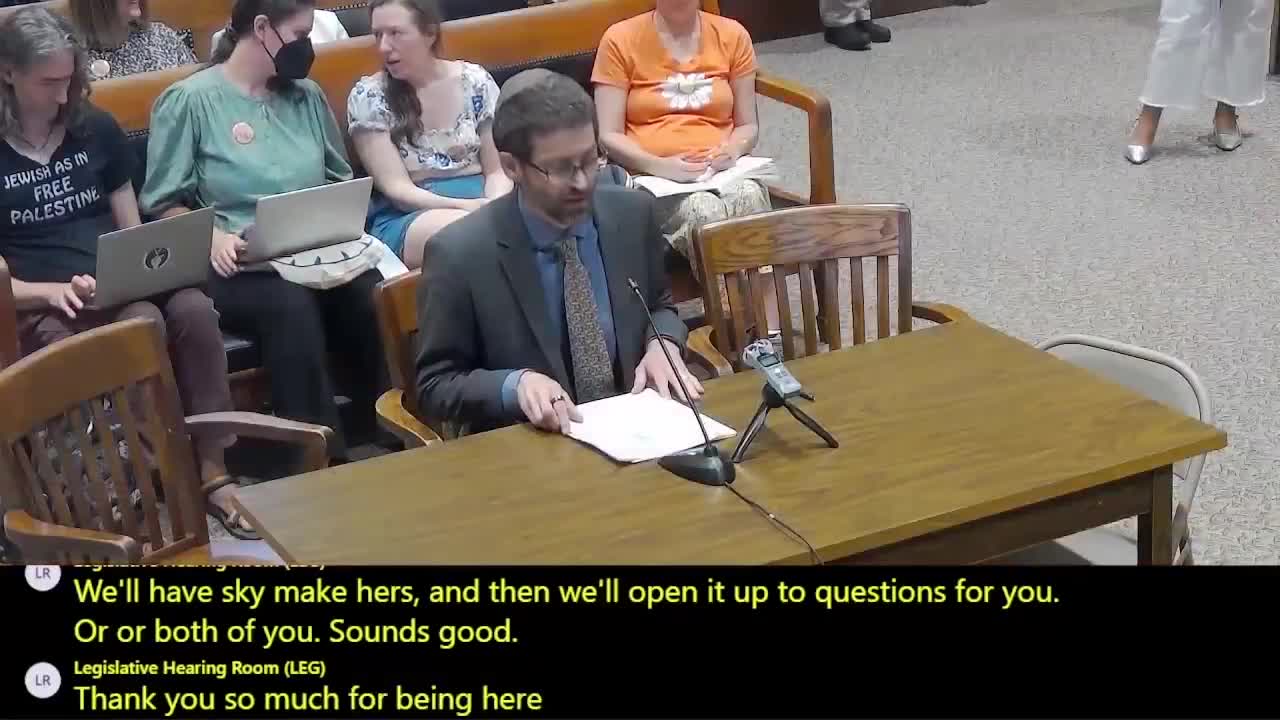
Rabbi Daniel Fine, executive director of UMass Amherst Hillel, and student leader Skye Landau told the special commission on Aug. 5 that Jewish life at the flagship state university remains resilient but that many students have experienced repeated antisemitic harassment and, in several cases, physical violence.
Rabbi Fine said Hillel serves about 1,500 students a year and noted two parallel stories: a thriving Jewish communal life and, simultaneously, a campus climate where too many Jewish students and some faculty feel targeted or unsafe. He said some incidents predate 2023 but that the Israel‑Gaza war and ensuing campus protests have “had profoundly negative impacts” for many Jewish students.
Rabbi Fine listed examples he said the Hillel Office had documented: swastika graffiti on campus buildings and dorm whiteboards; pro‑Hamas chants at a protest shortly after Oct. 7; disruption of memorials and vigil events; and several instances he described as physical assaults (one November 2023 episode at a vigil, a concussion sustained at a May encampment counter‑protest, and a serious off‑campus unprovoked assault). He also said classroom incidents occurred, including an example where a musical selection with Jewish content was removed from a concert to avoid “sending a political message.”
Student witness Skye Landau, a rising senior who serves as a Jewish student leader and as co‑president of the Student Alliance for Israel, described repeated harassment and exclusion: she said Jewish students were crowded into a corner at student government meetings on a BDS motion that had been scheduled on a Friday afternoon when many observant students could not attend, that Jewish students were policed more strictly by meeting moderators, and that social pressure sometimes led Jewish students to hide Jewish symbols or avoid events.
Landau described anonymous Instagram accounts that she said targeted Jewish students, doxxed names, and encouraged “militancy” toward Jewish students and campus leaders. She recounted classmates who joked about the Holocaust and, in at least one instance she described, told a Jewish student she “should be sent to a gas chamber.” Landau said Hillel remains the only campus space where she feels fully safe and urged stronger administrative follow‑through when incidents are reported.
Rabbi Fine said UMass administration leaders, including Chancellor Javier Reyes and Vice Chancellor Marcia McGriff (Office of Diversity, Equity and Inclusion), have engaged with Hillel and he described a growing set of faculty and staff affinity groups as part of a relationship‑building approach. He urged investment in ongoing education and training about civil discourse and “sacred disagreement” rather than punitive, top‑down measures that he said could harm free speech and civil rights protections.
Why it matters: The testimony provided concrete examples and described both direct safety incidents and broader social pressures that Jewish students reported. Witnesses urged improved reporting pathways, more culturally competent behavioral‑health support, and administrative action to make non‑Jewish campus spaces safer in addition to preserving Hillel as a safe hub.
What the university said: Rabbi Fine said his organization has an ongoing working relationship with Vice Chancellor McGriff and other administrators and that UMass responded to many incidents with care; he said more grassroots relationship building among faculty, staff and students is underway and needs sustained support.
Next steps: Commissioners asked whether the university had clarified reporting pathways and suggested multiple reporting options, confidential reporting and a clearer “warm handoff” for students who come forward. Rabbi Fine and Landau said some reporting pathways exist but that students can be confused by multiple options; they urged the university to make routes to reporting and resources more visible and accessible.
Rabbi Fine said Hillel serves about 1,500 students a year and noted two parallel stories: a thriving Jewish communal life and, simultaneously, a campus climate where too many Jewish students and some faculty feel targeted or unsafe. He said some incidents predate 2023 but that the Israel‑Gaza war and ensuing campus protests have “had profoundly negative impacts” for many Jewish students.
Rabbi Fine listed examples he said the Hillel Office had documented: swastika graffiti on campus buildings and dorm whiteboards; pro‑Hamas chants at a protest shortly after Oct. 7; disruption of memorials and vigil events; and several instances he described as physical assaults (one November 2023 episode at a vigil, a concussion sustained at a May encampment counter‑protest, and a serious off‑campus unprovoked assault). He also said classroom incidents occurred, including an example where a musical selection with Jewish content was removed from a concert to avoid “sending a political message.”
Student witness Skye Landau, a rising senior who serves as a Jewish student leader and as co‑president of the Student Alliance for Israel, described repeated harassment and exclusion: she said Jewish students were crowded into a corner at student government meetings on a BDS motion that had been scheduled on a Friday afternoon when many observant students could not attend, that Jewish students were policed more strictly by meeting moderators, and that social pressure sometimes led Jewish students to hide Jewish symbols or avoid events.
Landau described anonymous Instagram accounts that she said targeted Jewish students, doxxed names, and encouraged “militancy” toward Jewish students and campus leaders. She recounted classmates who joked about the Holocaust and, in at least one instance she described, told a Jewish student she “should be sent to a gas chamber.” Landau said Hillel remains the only campus space where she feels fully safe and urged stronger administrative follow‑through when incidents are reported.
Rabbi Fine said UMass administration leaders, including Chancellor Javier Reyes and Vice Chancellor Marcia McGriff (Office of Diversity, Equity and Inclusion), have engaged with Hillel and he described a growing set of faculty and staff affinity groups as part of a relationship‑building approach. He urged investment in ongoing education and training about civil discourse and “sacred disagreement” rather than punitive, top‑down measures that he said could harm free speech and civil rights protections.
Why it matters: The testimony provided concrete examples and described both direct safety incidents and broader social pressures that Jewish students reported. Witnesses urged improved reporting pathways, more culturally competent behavioral‑health support, and administrative action to make non‑Jewish campus spaces safer in addition to preserving Hillel as a safe hub.
What the university said: Rabbi Fine said his organization has an ongoing working relationship with Vice Chancellor McGriff and other administrators and that UMass responded to many incidents with care; he said more grassroots relationship building among faculty, staff and students is underway and needs sustained support.
Next steps: Commissioners asked whether the university had clarified reporting pathways and suggested multiple reporting options, confidential reporting and a clearer “warm handoff” for students who come forward. Rabbi Fine and Landau said some reporting pathways exist but that students can be confused by multiple options; they urged the university to make routes to reporting and resources more visible and accessible.
View the Full Meeting & All Its Details
This article offers just a summary. Unlock complete video, transcripts, and insights as a Founder Member.
✓
Watch full, unedited meeting videos
✓
Search every word spoken in unlimited transcripts
✓
AI summaries & real-time alerts (all government levels)
✓
Permanent access to expanding government content
30-day money-back guarantee
