Researchers: campus antisemitism rose after Oct. 7; study authors urge education‑based solutions
August 07, 2025 | 2025 Legislature MA, Massachusetts
This article was created by AI summarizing key points discussed. AI makes mistakes, so for full details and context, please refer to the video of the full meeting. Please report any errors so we can fix them. Report an error »
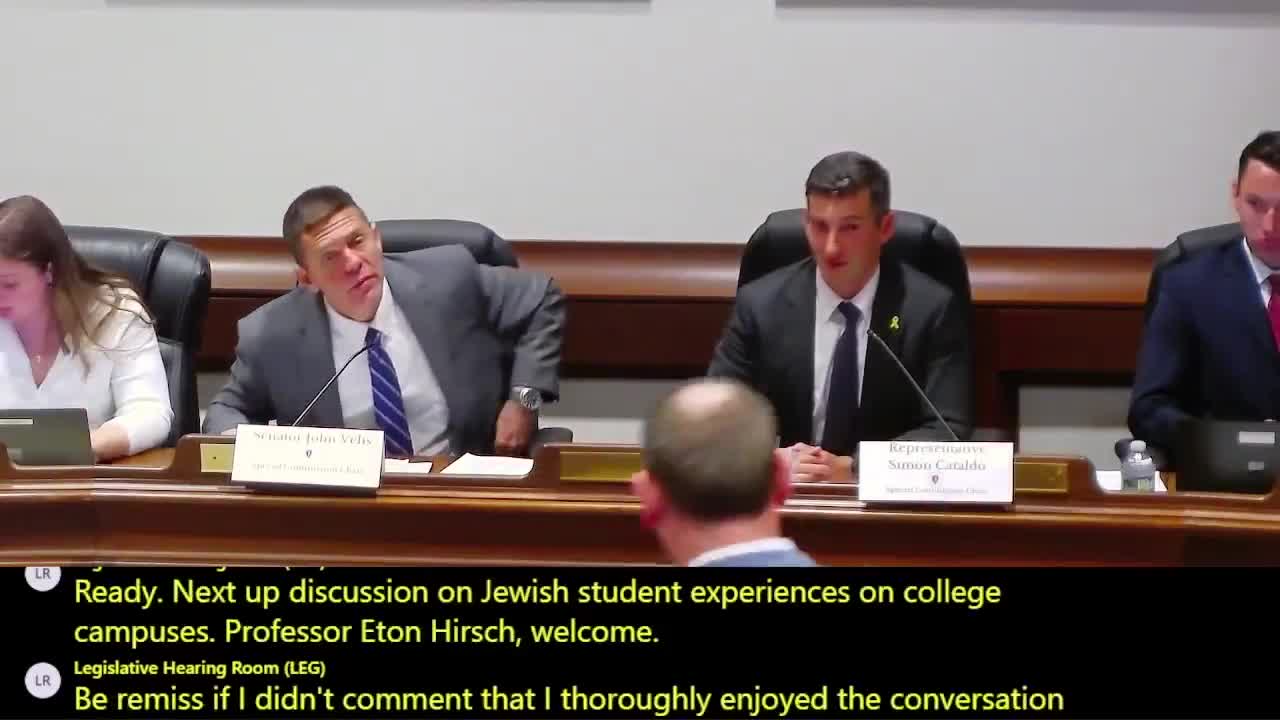
A panel of researchers and faculty presented quantitative and qualitative findings to the Massachusetts Special Commission on Combating Antisemitism, describing broad changes in campus climate since Oct. 7, 2023, and urging education‑focused responses.
Professor Etan Hirsch (Tufts) summarized a longitudinal student survey his team ran before and after the outbreak of war in 2023. Hirsch said three patterns emerged: Jewish and non‑Jewish students hold sharply different views of Israel; a minority of non‑Jewish students express social avoidance of Jewish peers tied to views about Israel (Hirsch cited figures reported to the commission: roughly 1 in 5 non‑Jewish students reported they would not want to be friends with someone who supports Israel as a Jewish state; 1 in 12 reported avoiding Jewish students); and a marked increase in Jewish students saying they hide their Jewish identity and pay a social penalty for attending Jewish events.
Professor Leonard Sachs (Brandeis) described recent research on faculty attitudes and argued the data show that the majority of faculty are not antisemitic; he urged leveraging the large majority of faculty who want to teach with academic rigor as partners in solutions. Sachs cautioned against punitive, broad federal measures that would risk collateral harms to research and higher‑education missions; instead he recommended university‑led enforcement of existing conduct codes, clearer Title VI application and institutionally led reforms.
Dr. Rachel Fish, a historian and founder of a higher‑education think‑action initiative, said several structural dynamics feed campus tensions: intellectual frameworks (postcolonialism, postmodernism and power‑focused critiques) when used as a single interpretive lens; foreign funding that lacks transparency (panelists discussed concerns about Qatari funding and materials created by outside nonprofits); and insufficient trustee and presidential oversight. Fish recommended targeted interventions: trustee and senior‑administrator training, faculty professional development in intellectual pluralism and transparency requirements for foreign funding that support campus programming and professional development for K–12 educators.
Why it matters: Researchers presented empirical evidence that antisemitic attitudes on some campuses—and social pressure on Jewish students—rose notably after the 2023 outbreak of war. The academics asked the commission to prioritize educational remedies (teacher/faculty training, curricular improvements, trustee involvement and clearer Title VI guidance) rather than singularly punitive regulatory strategies.
Key recommended actions from researchers and witnesses
- Strengthen faculty and graduate student training in how to facilitate contentious issues and to present multiple perspectives in the classroom.
- Increase transparency and oversight of foreign funding for campus programs and K–12 professional development providers.
- Encourage trustees and presidents to prioritize academic integrity and implement time‑place‑manner and conduct policies when they are violated.
- Improve campus reporting pathways, culturally competent student mental health services and data collection to measure campus climate.
Speakers emphasized that the problem is concentrated among a minority of actors but that the harms to Jewish students and campus life are substantial; several researchers said empirical monitoring and targeted education are the most practicable paths forward.
Professor Etan Hirsch (Tufts) summarized a longitudinal student survey his team ran before and after the outbreak of war in 2023. Hirsch said three patterns emerged: Jewish and non‑Jewish students hold sharply different views of Israel; a minority of non‑Jewish students express social avoidance of Jewish peers tied to views about Israel (Hirsch cited figures reported to the commission: roughly 1 in 5 non‑Jewish students reported they would not want to be friends with someone who supports Israel as a Jewish state; 1 in 12 reported avoiding Jewish students); and a marked increase in Jewish students saying they hide their Jewish identity and pay a social penalty for attending Jewish events.
Professor Leonard Sachs (Brandeis) described recent research on faculty attitudes and argued the data show that the majority of faculty are not antisemitic; he urged leveraging the large majority of faculty who want to teach with academic rigor as partners in solutions. Sachs cautioned against punitive, broad federal measures that would risk collateral harms to research and higher‑education missions; instead he recommended university‑led enforcement of existing conduct codes, clearer Title VI application and institutionally led reforms.
Dr. Rachel Fish, a historian and founder of a higher‑education think‑action initiative, said several structural dynamics feed campus tensions: intellectual frameworks (postcolonialism, postmodernism and power‑focused critiques) when used as a single interpretive lens; foreign funding that lacks transparency (panelists discussed concerns about Qatari funding and materials created by outside nonprofits); and insufficient trustee and presidential oversight. Fish recommended targeted interventions: trustee and senior‑administrator training, faculty professional development in intellectual pluralism and transparency requirements for foreign funding that support campus programming and professional development for K–12 educators.
Why it matters: Researchers presented empirical evidence that antisemitic attitudes on some campuses—and social pressure on Jewish students—rose notably after the 2023 outbreak of war. The academics asked the commission to prioritize educational remedies (teacher/faculty training, curricular improvements, trustee involvement and clearer Title VI guidance) rather than singularly punitive regulatory strategies.
Key recommended actions from researchers and witnesses
- Strengthen faculty and graduate student training in how to facilitate contentious issues and to present multiple perspectives in the classroom.
- Increase transparency and oversight of foreign funding for campus programs and K–12 professional development providers.
- Encourage trustees and presidents to prioritize academic integrity and implement time‑place‑manner and conduct policies when they are violated.
- Improve campus reporting pathways, culturally competent student mental health services and data collection to measure campus climate.
Speakers emphasized that the problem is concentrated among a minority of actors but that the harms to Jewish students and campus life are substantial; several researchers said empirical monitoring and targeted education are the most practicable paths forward.
Don't Miss a Word: See the Full Meeting!
Go beyond summaries. Unlock every video, transcript, and key insight with a Founder Membership.
✓
Get instant access to full meeting videos
✓
Search and clip any phrase from complete transcripts
✓
Receive AI-powered summaries & custom alerts
✓
Enjoy lifetime, unrestricted access to government data
30-day money-back guarantee
