Inyo County staff propose limited use of cannabis tax trust to help cover strategic priorities
August 06, 2025 | Inyo County, California
This article was created by AI summarizing key points discussed. AI makes mistakes, so for full details and context, please refer to the video of the full meeting. Please report any errors so we can fix them. Report an error »
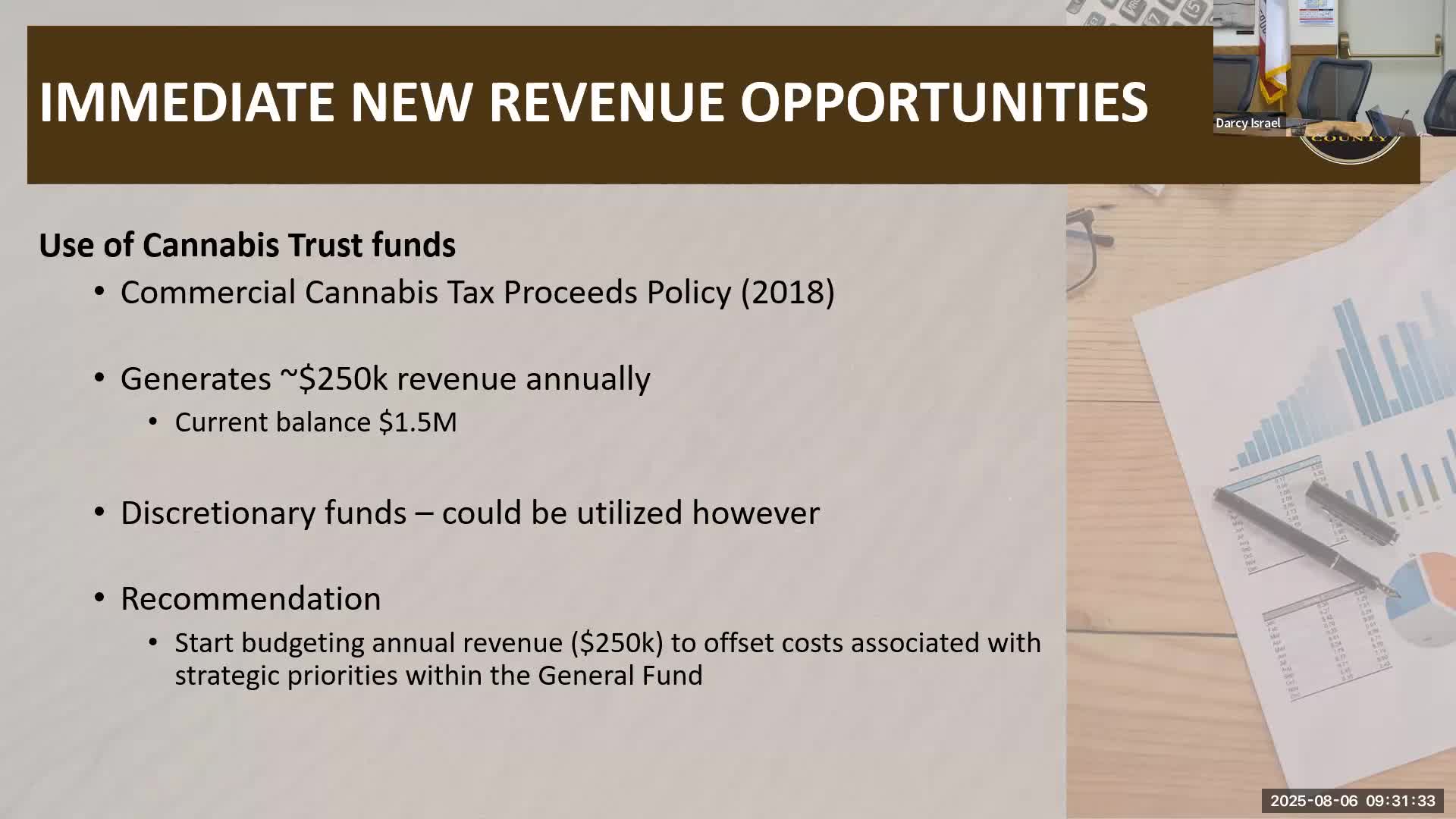
Inyo County staff on Aug. 6 told supervisors the five-year moratorium on using the county's commercial cannabis-tax proceeds has expired and that the county now faces a policy choice about whether to begin programming those proceeds into strategic priorities or keep the bulk in the trust.
Why it matters: County staff estimate the cannabis trust holds about $1.5 million and that the annual receipts average roughly $250,000. The trust's revenue has been cited as a potential recurring income stream to offset ongoing general-fund costs tied to tourism, economic development and public-safety subsidies.
County Administrator Nate summarized the policy context: the board adopted a commercial cannabis tax policy in 2018 that placed a temporary moratorium on spending proceeds while the county watched revenue patterns. "We've now exited out the back end of the sunset period on that policy, which opens up the use of those funds to your board and the organization," he said.
Amy, the county's finance staff, provided approximate figures during the discussion: the trust contains about $1.5 million and brings in roughly a quarter-million dollars per year. Staff offered one option: budget a rolling multi-year average of annual receipts as a regular discretionary revenue line while allowing any years of excess to continue to build the trust. "Anything in excess of that would continue to go into the trust," Amy said.
Board members expressed caution about relying on the cannabis receipts as fixed revenue. One department head observed that the retail market accounts for most of the receipts and that those retail businesses have been established since the initial licensing period in 2019, which staff said supports the view that receipts should be fairly consistent while remaining exposed to market fluctuations.
Staff noted the county's existing ordinance sets the current tax rate at 5% and gives the board authority to change the rate annually by up to 2.5% up to a 12.5% maximum. Any change to the tax rate would be a policy decision for the board.
Ending: Supervisors did not adopt a specific spending plan for the cannabis trust at the workshop, but staff said they will return with options. The CAO's team suggested using a multi-year rolling average of the annual receipts as a possible regular contribution to the general fund while retaining the remainder of the trust for one-time projects or future needs.
Why it matters: County staff estimate the cannabis trust holds about $1.5 million and that the annual receipts average roughly $250,000. The trust's revenue has been cited as a potential recurring income stream to offset ongoing general-fund costs tied to tourism, economic development and public-safety subsidies.
County Administrator Nate summarized the policy context: the board adopted a commercial cannabis tax policy in 2018 that placed a temporary moratorium on spending proceeds while the county watched revenue patterns. "We've now exited out the back end of the sunset period on that policy, which opens up the use of those funds to your board and the organization," he said.
Amy, the county's finance staff, provided approximate figures during the discussion: the trust contains about $1.5 million and brings in roughly a quarter-million dollars per year. Staff offered one option: budget a rolling multi-year average of annual receipts as a regular discretionary revenue line while allowing any years of excess to continue to build the trust. "Anything in excess of that would continue to go into the trust," Amy said.
Board members expressed caution about relying on the cannabis receipts as fixed revenue. One department head observed that the retail market accounts for most of the receipts and that those retail businesses have been established since the initial licensing period in 2019, which staff said supports the view that receipts should be fairly consistent while remaining exposed to market fluctuations.
Staff noted the county's existing ordinance sets the current tax rate at 5% and gives the board authority to change the rate annually by up to 2.5% up to a 12.5% maximum. Any change to the tax rate would be a policy decision for the board.
Ending: Supervisors did not adopt a specific spending plan for the cannabis trust at the workshop, but staff said they will return with options. The CAO's team suggested using a multi-year rolling average of the annual receipts as a possible regular contribution to the general fund while retaining the remainder of the trust for one-time projects or future needs.
Don't Miss a Word: See the Full Meeting!
Go beyond summaries. Unlock every video, transcript, and key insight with a Founder Membership.
✓
Get instant access to full meeting videos
✓
Search and clip any phrase from complete transcripts
✓
Receive AI-powered summaries & custom alerts
✓
Enjoy lifetime, unrestricted access to government data
30-day money-back guarantee
