Commission hears state and federal policy notices that could affect local harm reduction, provider directories and counselor certification
August 06, 2025 | Plumas County, California
This article was created by AI summarizing key points discussed. AI makes mistakes, so for full details and context, please refer to the video of the full meeting. Please report any errors so we can fix them. Report an error »
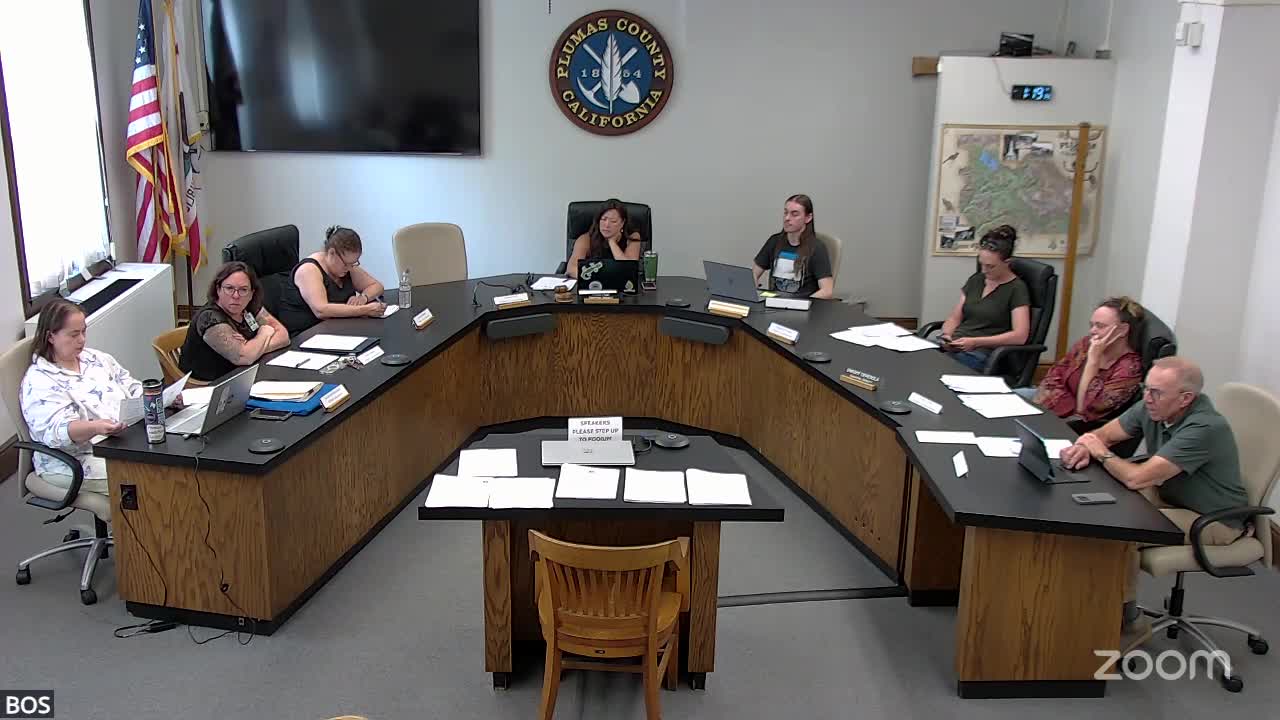
PLUMAS COUNTY, Calif. — Plumas County behavioral health commissioners on Aug. 6 heard several policy and regulatory updates that staff said could affect local programs, workforce planning and data practices.
Kendra (first name only in the transcript), a commissioner who summarized federal notices she received, said the White House issued an executive action that took effect July 24 and that, in her reading, included limits on the use of some federal SUD and SAMHSA grants for harm reduction activities and safe consumption sites; she said the executive action also included requirements that could require HUD‑funded providers to share certain health‑related data with law enforcement. Kendra described the changes as potentially significant for local partners and said she would forward the state and federal notices to commission members.
Christie Tucker, behavioral health staff, reviewed several state Behavioral Health Information Notices (BHINs) and related requirements. She reported BHIN 25‑026 (identified in the meeting as "25‑026") supersedes previous instructions and clarifies how provider directories must be displayed and updated — including language capabilities, specialties and whether a provider is accepting new patients — and that directories must be updated every 30 days. She also discussed a BHIN implementing High‑Fidelity Wraparound aftercare services for youth (Family First Prevention Services Act guidance) that will require local planning and a certified team for youth transitioning from short‑term residential therapeutic programs.
Darius Anderson, the county's substance use services administrator, summarized BHIN 20‑529 (as cited in the meeting) and Assembly Bill 2473, which revise alcohol and other drug counselor education and internship timelines. He said the changes increase minimum education requirements for interns and extend the certification timeframe to 6.5 years to reflect the new annual education minimums. Anderson told commissioners he was concerned about the counselor workforce statewide, writing that extended internship certification timelines without commensurate pay increases could create retention and recruitment challenges.
Commissioners discussed prevention funding under the state's BHSA transition. Christie Tucker said prevention funding previously under the Mental Health Services Act will move to a state‑level prevention initiative under BHSA, and that the state has been taking a percentage of county allocations "off the top" (reported in the meeting as increasing from 3% to 10%) to fund statewide administration and prevention efforts. She cautioned that counties have not yet been given full details about how a statewide prevention program will address different local needs.
Staff asked commissioners to be aware of these developments as the county prepares its BHSA three‑year plan and related procurement, partner contracts and quality‑assurance work.
Follow up: staff will circulate the cited notices and BHIN numbers to commissioners and stakeholders so local programs can assess compliance needs and potential funding changes.
Kendra (first name only in the transcript), a commissioner who summarized federal notices she received, said the White House issued an executive action that took effect July 24 and that, in her reading, included limits on the use of some federal SUD and SAMHSA grants for harm reduction activities and safe consumption sites; she said the executive action also included requirements that could require HUD‑funded providers to share certain health‑related data with law enforcement. Kendra described the changes as potentially significant for local partners and said she would forward the state and federal notices to commission members.
Christie Tucker, behavioral health staff, reviewed several state Behavioral Health Information Notices (BHINs) and related requirements. She reported BHIN 25‑026 (identified in the meeting as "25‑026") supersedes previous instructions and clarifies how provider directories must be displayed and updated — including language capabilities, specialties and whether a provider is accepting new patients — and that directories must be updated every 30 days. She also discussed a BHIN implementing High‑Fidelity Wraparound aftercare services for youth (Family First Prevention Services Act guidance) that will require local planning and a certified team for youth transitioning from short‑term residential therapeutic programs.
Darius Anderson, the county's substance use services administrator, summarized BHIN 20‑529 (as cited in the meeting) and Assembly Bill 2473, which revise alcohol and other drug counselor education and internship timelines. He said the changes increase minimum education requirements for interns and extend the certification timeframe to 6.5 years to reflect the new annual education minimums. Anderson told commissioners he was concerned about the counselor workforce statewide, writing that extended internship certification timelines without commensurate pay increases could create retention and recruitment challenges.
Commissioners discussed prevention funding under the state's BHSA transition. Christie Tucker said prevention funding previously under the Mental Health Services Act will move to a state‑level prevention initiative under BHSA, and that the state has been taking a percentage of county allocations "off the top" (reported in the meeting as increasing from 3% to 10%) to fund statewide administration and prevention efforts. She cautioned that counties have not yet been given full details about how a statewide prevention program will address different local needs.
Staff asked commissioners to be aware of these developments as the county prepares its BHSA three‑year plan and related procurement, partner contracts and quality‑assurance work.
Follow up: staff will circulate the cited notices and BHIN numbers to commissioners and stakeholders so local programs can assess compliance needs and potential funding changes.
Don't Miss a Word: See the Full Meeting!
Go beyond summaries. Unlock every video, transcript, and key insight with a Founder Membership.
✓
Get instant access to full meeting videos
✓
Search and clip any phrase from complete transcripts
✓
Receive AI-powered summaries & custom alerts
✓
Enjoy lifetime, unrestricted access to government data
30-day money-back guarantee
