City-hosted FOIA and ethics workshop covers open-meetings, records and Public Integrity Commission rules
August 06, 2025 | Milford, Sussex County, Delaware
This article was created by AI summarizing key points discussed. AI makes mistakes, so for full details and context, please refer to the video of the full meeting. Please report any errors so we can fix them. Report an error »
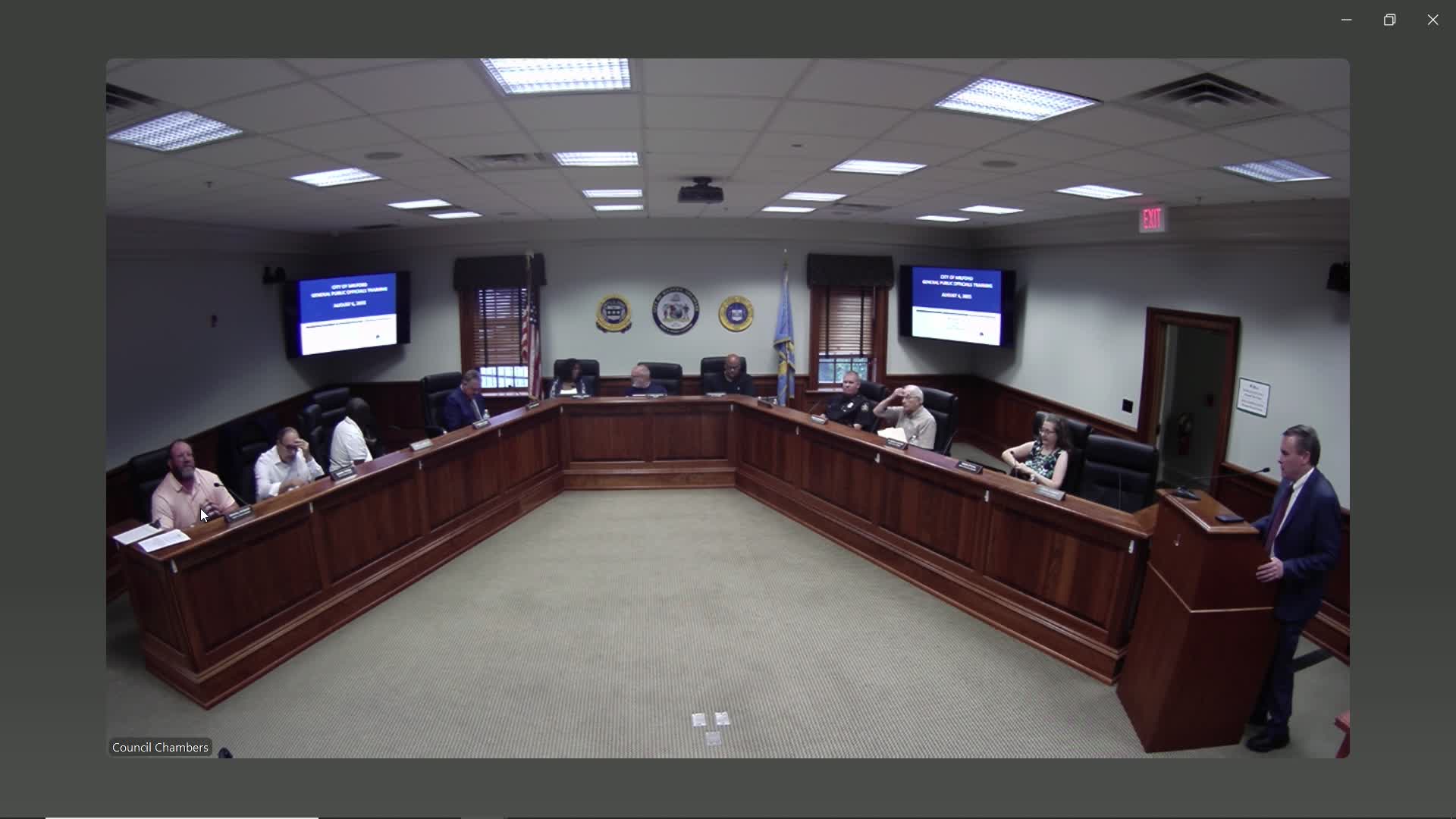
At a council workshop, Max Walton, a partner at Connolly Gallagher who chairs the firm’s government-defense practice, presented an extended overview of the Freedom of Information Act (FOIA), executive-session rules, public-records exemptions and state ethics enforcement via the Public Integrity Commission (PIC).
Walton reviewed the FOIA core elements: open meetings and open records, and underscored the broad definition of a “public body,” advising that any recurring committee, working group or panel that makes recommendations should be treated as a public body with posted agendas and minutes. He cautioned that informal subgroups with two or more members that advise the council can be found subject to FOIA and recommended erring on the side of openness.
On executive sessions, Walton said councils must state the statutory basis for a closed session and must take votes in public, not in executive session; he described the standard for entering executive session on litigation or personnel matters as “reasonably foreseeable” litigation or where open deliberation would harm the public body’s position. He warned against straw polls in executive session and urged preserving meeting minutes and limiting discussion to posted topics.
Walton covered public records exemptions (attorney-client privilege, personnel/medical files, law-enforcement investigatory files, trade secrets) and explained production procedures, requester specificity, and allowable administrative fees. He explained that municipal governments currently lack a statutory right to appeal AG FOIA decisions and encouraged advocacy for judicial-review rights.
On ethics and the PIC, Walton summarized conflict standards, the appearance-of-impropriety standard used by the commission, recusal guidance, post-employment restrictions, and penalties that can include administrative sanctions or fines. He encouraged officials to seek advisory opinions for borderline situations and to avoid using public office for private gain.
Council asked clarifying questions during and after the presentation; Walton said the presentation would be useful both to elected officials and board members who participate on advisory committees. The workshop ended with staff and council acknowledging resources for FOIA compliance and ethics oversight.
Walton reviewed the FOIA core elements: open meetings and open records, and underscored the broad definition of a “public body,” advising that any recurring committee, working group or panel that makes recommendations should be treated as a public body with posted agendas and minutes. He cautioned that informal subgroups with two or more members that advise the council can be found subject to FOIA and recommended erring on the side of openness.
On executive sessions, Walton said councils must state the statutory basis for a closed session and must take votes in public, not in executive session; he described the standard for entering executive session on litigation or personnel matters as “reasonably foreseeable” litigation or where open deliberation would harm the public body’s position. He warned against straw polls in executive session and urged preserving meeting minutes and limiting discussion to posted topics.
Walton covered public records exemptions (attorney-client privilege, personnel/medical files, law-enforcement investigatory files, trade secrets) and explained production procedures, requester specificity, and allowable administrative fees. He explained that municipal governments currently lack a statutory right to appeal AG FOIA decisions and encouraged advocacy for judicial-review rights.
On ethics and the PIC, Walton summarized conflict standards, the appearance-of-impropriety standard used by the commission, recusal guidance, post-employment restrictions, and penalties that can include administrative sanctions or fines. He encouraged officials to seek advisory opinions for borderline situations and to avoid using public office for private gain.
Council asked clarifying questions during and after the presentation; Walton said the presentation would be useful both to elected officials and board members who participate on advisory committees. The workshop ended with staff and council acknowledging resources for FOIA compliance and ethics oversight.
View the Full Meeting & All Its Details
This article offers just a summary. Unlock complete video, transcripts, and insights as a Founder Member.
✓
Watch full, unedited meeting videos
✓
Search every word spoken in unlimited transcripts
✓
AI summaries & real-time alerts (all government levels)
✓
Permanent access to expanding government content
30-day money-back guarantee
