Gov. Newsom announces plan for temporary redistricting measure to counter Texas map changes
August 14, 2025 | Office of the Governor, Other State Agencies, Executive, California
This article was created by AI summarizing key points discussed. AI makes mistakes, so for full details and context, please refer to the video of the full meeting. Please report any errors so we can fix them. Report an error »
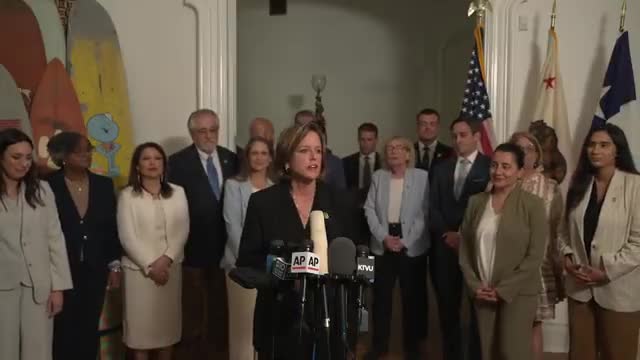
SACRAMENTO — Gov. Gavin Newsom announced that California will pursue a temporary statewide ballot measure to redraw congressional districts and add five seats, saying the move is a direct response to Republican-led redistricting in Texas.
Newsom said the state aims to place the measure on the ballot this year and that maps will be released next week. "We have till August 22. With the leadership behind me, they will get this on the ballot," Gov. Gavin Newsom said. He described the proposal as a transparent, temporary response that would seek voter approval in a special election in November that would coincide with municipal contests.
The announcement was made at a Sacramento event attended by state legislative leaders and members of a visiting Texas Democratic delegation. Assembly Speaker Robert Rivas and Senate President Pro Tem Mike McGuire joined Newsom in framing the measure as a defense of voting rights. "California is moving forward as a state that's larger than 21 state populations combined," Speaker Robert Rivas said, adding that the approach would preserve the state's independent redistricting commission and ask voters for their consent.
U.S. Rep. Zoe Lofgren, chair of the California Democratic Congressional Delegation, and former U.S. House Speaker Nancy Pelosi voiced support. "We cannot allow these elections to be rigged without a response," Lofgren said, describing the visit by Texas lawmakers as a catalyst for the state's action.
Texas Democrats who traveled to California described leaving the state to break quorum in protest of a proposed Texas congressional map. "We are running from nothing. We see the danger that is coming, and we are running straight for it," said Texas Democratic legislator Anne Johnson. State representative Gina Ina Hosan said the Texas attorney general had filed litigation seeking to remove lawmakers who left the state and that her office had received overwhelming constituent support for the quorum break.
Newsom framed the California measure as limited and temporary and said it would not abolish the state's independent redistricting commission. "We're doing it a temporary basis. We're doing it in a fully transparent way, and we're doing it by asking the people of the state of California for their consent and support," Newsom said. He also said maps used in the effort were familiar to the public because the independent commission had previously vetted many of them.
Newsom addressed concerns about process and timing in response to questions from reporters, saying maps are expected to be available next week and that voters will have "the opportunity to digest these maps, review them for weeks and months leading to this election." He added the legislature would have a short window once the proposal is in motion: "It's gonna be in their ballot box. It's gonna be on their ballot. So it's about as transparent as it gets." (Newsom did not provide a specific timetable for legislative actions beyond citing the Aug. 22 date.)
Speakers tied the California action to broader concerns about what they described as federal and state threats to democratic participation. Senate Committee on Elections and Constitutional Amendments Chair Sen. Sabrina Ceballos called California's citizens redistricting commission a "gold standard" and said the state would not "sit idle on the sidelines while our communities are torn apart."
Several speakers also raised non-redistricting concerns, including alleged federal immigration enforcement practices in California and threats faced by the Texas delegation. Newsom said California had sent search-and-rescue teams to help flood victims in Texas without political conditions and stated, "No conditions. No politics. We're all in this together." Texas lawmakers at the event described threats, litigation and arrest warrants issued by state officials in Texas against legislators who left the state to prevent a quorum.
The plan outlined by Newsom is an announcement of intent, not a formal legislative action or adopted policy. No vote or final text of a constitutional amendment or ballot measure was presented at the event, and Newsom acknowledged he had not seen final maps. Legal challenges are likely if the measure advances; speakers acknowledged the high stakes and potential for litigation.
What happens next: Newsom said maps would be released next week and that organizers would work to meet the Aug. 22 deadline to place the measure before voters in a November special election that would coincide with municipal contests. Supporters at the event said the proposal would be temporary and subject to voter approval.
Speakers (first reference includes role/title): Gov. Gavin Newsom; Assembly Speaker Robert Rivas; Sen. Sabrina Ceballos, chair of the California Senate Committee on Elections and Constitutional Amendments; Senate President Pro Tem Mike McGuire; U.S. Rep. Zoe Lofgren, chair of the California Democratic Congressional Delegation; former U.S. House Speaker Nancy Pelosi; Assembly member Isaac Bridal; Texas Democratic legislator Anne Johnson; state Rep. Gina Ina Hosan.
A number of timeline and process details remain unspecified in remarks at the event: the final draft of the ballot text, the precise legal mechanism for temporarily adding seats, and whether congressional approval or federal review would be sought. Newsom and legislative leaders said the approach is designed to preserve voters' consent and to operate transparently by placing proposed maps before the electorate.
— Reporting by the Office of the Governor event in Sacramento; quotes and details taken from on-the-record remarks at the event.
Newsom said the state aims to place the measure on the ballot this year and that maps will be released next week. "We have till August 22. With the leadership behind me, they will get this on the ballot," Gov. Gavin Newsom said. He described the proposal as a transparent, temporary response that would seek voter approval in a special election in November that would coincide with municipal contests.
The announcement was made at a Sacramento event attended by state legislative leaders and members of a visiting Texas Democratic delegation. Assembly Speaker Robert Rivas and Senate President Pro Tem Mike McGuire joined Newsom in framing the measure as a defense of voting rights. "California is moving forward as a state that's larger than 21 state populations combined," Speaker Robert Rivas said, adding that the approach would preserve the state's independent redistricting commission and ask voters for their consent.
U.S. Rep. Zoe Lofgren, chair of the California Democratic Congressional Delegation, and former U.S. House Speaker Nancy Pelosi voiced support. "We cannot allow these elections to be rigged without a response," Lofgren said, describing the visit by Texas lawmakers as a catalyst for the state's action.
Texas Democrats who traveled to California described leaving the state to break quorum in protest of a proposed Texas congressional map. "We are running from nothing. We see the danger that is coming, and we are running straight for it," said Texas Democratic legislator Anne Johnson. State representative Gina Ina Hosan said the Texas attorney general had filed litigation seeking to remove lawmakers who left the state and that her office had received overwhelming constituent support for the quorum break.
Newsom framed the California measure as limited and temporary and said it would not abolish the state's independent redistricting commission. "We're doing it a temporary basis. We're doing it in a fully transparent way, and we're doing it by asking the people of the state of California for their consent and support," Newsom said. He also said maps used in the effort were familiar to the public because the independent commission had previously vetted many of them.
Newsom addressed concerns about process and timing in response to questions from reporters, saying maps are expected to be available next week and that voters will have "the opportunity to digest these maps, review them for weeks and months leading to this election." He added the legislature would have a short window once the proposal is in motion: "It's gonna be in their ballot box. It's gonna be on their ballot. So it's about as transparent as it gets." (Newsom did not provide a specific timetable for legislative actions beyond citing the Aug. 22 date.)
Speakers tied the California action to broader concerns about what they described as federal and state threats to democratic participation. Senate Committee on Elections and Constitutional Amendments Chair Sen. Sabrina Ceballos called California's citizens redistricting commission a "gold standard" and said the state would not "sit idle on the sidelines while our communities are torn apart."
Several speakers also raised non-redistricting concerns, including alleged federal immigration enforcement practices in California and threats faced by the Texas delegation. Newsom said California had sent search-and-rescue teams to help flood victims in Texas without political conditions and stated, "No conditions. No politics. We're all in this together." Texas lawmakers at the event described threats, litigation and arrest warrants issued by state officials in Texas against legislators who left the state to prevent a quorum.
The plan outlined by Newsom is an announcement of intent, not a formal legislative action or adopted policy. No vote or final text of a constitutional amendment or ballot measure was presented at the event, and Newsom acknowledged he had not seen final maps. Legal challenges are likely if the measure advances; speakers acknowledged the high stakes and potential for litigation.
What happens next: Newsom said maps would be released next week and that organizers would work to meet the Aug. 22 deadline to place the measure before voters in a November special election that would coincide with municipal contests. Supporters at the event said the proposal would be temporary and subject to voter approval.
Speakers (first reference includes role/title): Gov. Gavin Newsom; Assembly Speaker Robert Rivas; Sen. Sabrina Ceballos, chair of the California Senate Committee on Elections and Constitutional Amendments; Senate President Pro Tem Mike McGuire; U.S. Rep. Zoe Lofgren, chair of the California Democratic Congressional Delegation; former U.S. House Speaker Nancy Pelosi; Assembly member Isaac Bridal; Texas Democratic legislator Anne Johnson; state Rep. Gina Ina Hosan.
A number of timeline and process details remain unspecified in remarks at the event: the final draft of the ballot text, the precise legal mechanism for temporarily adding seats, and whether congressional approval or federal review would be sought. Newsom and legislative leaders said the approach is designed to preserve voters' consent and to operate transparently by placing proposed maps before the electorate.
— Reporting by the Office of the Governor event in Sacramento; quotes and details taken from on-the-record remarks at the event.
View the Full Meeting & All Its Details
This article offers just a summary. Unlock complete video, transcripts, and insights as a Founder Member.
✓
Watch full, unedited meeting videos
✓
Search every word spoken in unlimited transcripts
✓
AI summaries & real-time alerts (all government levels)
✓
Permanent access to expanding government content
30-day money-back guarantee
