Utilities, legal staff flag water‑supply and legal questions after county moves to allow undoing of lot‑line vacations
August 13, 2025 | Pueblo West, Pueblo County, Colorado
This article was created by AI summarizing key points discussed. AI makes mistakes, so for full details and context, please refer to the video of the full meeting. Please report any errors so we can fix them. Report an error »
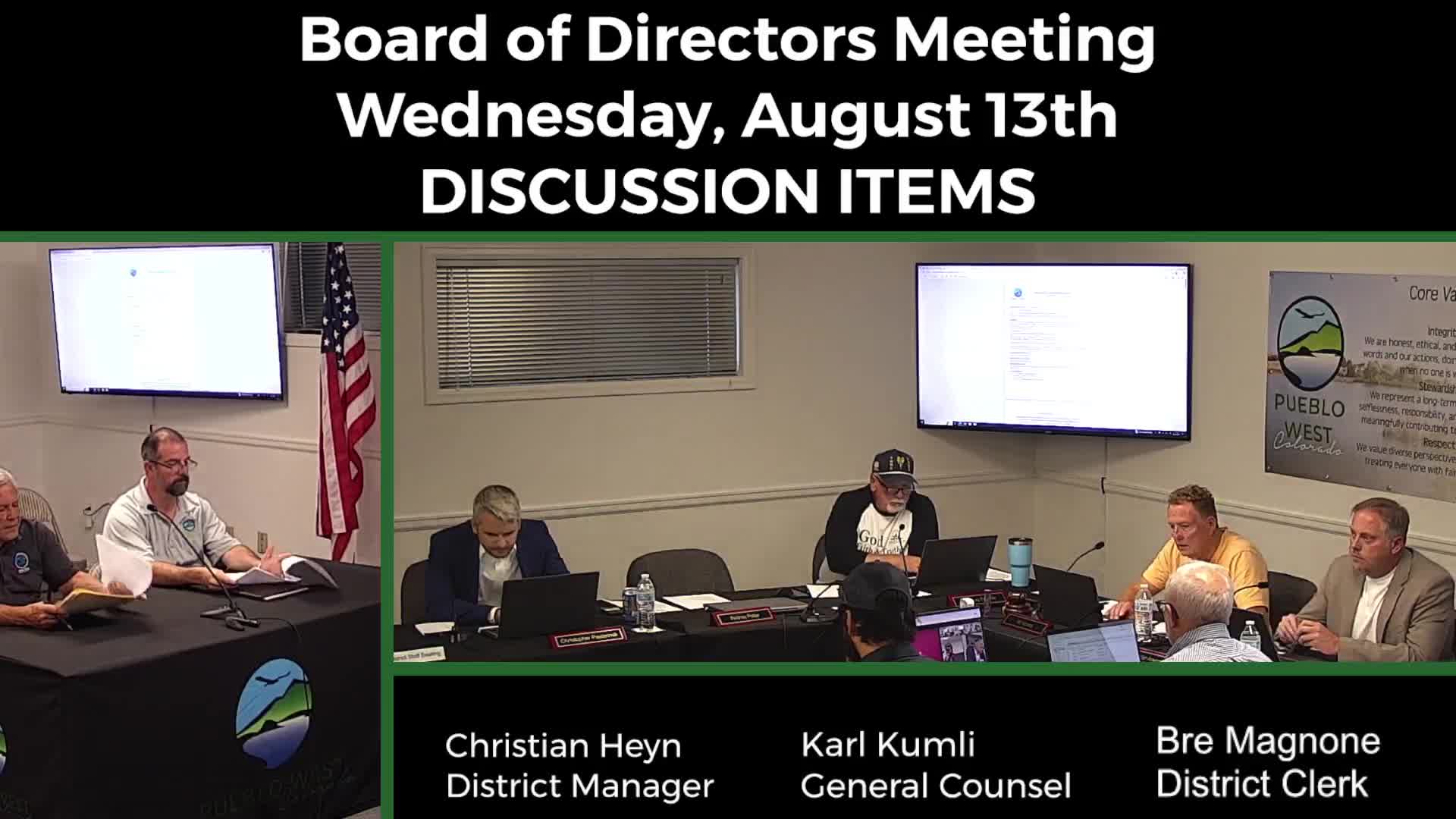
PUEBLO WEST, Colo. — District utilities and legal staff told the Board of Directors on Aug. 13 that a county zoning procedure now under consideration could permit re‑establishing interior lot lines that had been vacated in 2005, and that change could create additional water tap demand for parcels served by a single connection.
Jim Blazing, director of utilities, described a property at 653 East Industrial Boulevard where three lots had been consolidated into one larger parcel in 2005; the county’s revised zoning resolution now includes a mechanism that may allow reversing that prior action without a full subdivision review. Attorney Miguel told the board the county’s new process requires particular findings for a lot‑line reestablishment; he said he did not see evidence that the county made those findings in the earlier record and recommended further review.
Why it matters: Pueblo West’s rules require that new lots demonstrate adequate water resources before additional taps are authorized. Under a full subdivision review, water availability would be examined and the district could require infrastructure or limits. If county zoning changes permit reestablishing smaller lots outside the subdivision process, the district may confront new water‑supply demands without the usual pre‑conditions.
Key details from the meeting: Staff noted the parcel in question is roughly five acres and that earlier documents recorded language indicating the lot‑line vacation was irreversible except via subdivision. The county’s zoning change appears to create an alternate administrative path; counsel and utilities staff said they need to confirm whether the county followed required procedures and whether the new process can lawfully reestablish internal lot lines.
Discussion vs. decision: The agenda item was presented for discussion. The board did not take formal action; staff and legal counsel said they would perform additional due diligence and coordinate with county officials to clarify the legal effect and water‑supply implications.
Next steps: Utilities and legal staff will review title and recorded documents, consult with the county about the zoning change and required findings, and return to the board with recommendations.
Jim Blazing, director of utilities, described a property at 653 East Industrial Boulevard where three lots had been consolidated into one larger parcel in 2005; the county’s revised zoning resolution now includes a mechanism that may allow reversing that prior action without a full subdivision review. Attorney Miguel told the board the county’s new process requires particular findings for a lot‑line reestablishment; he said he did not see evidence that the county made those findings in the earlier record and recommended further review.
Why it matters: Pueblo West’s rules require that new lots demonstrate adequate water resources before additional taps are authorized. Under a full subdivision review, water availability would be examined and the district could require infrastructure or limits. If county zoning changes permit reestablishing smaller lots outside the subdivision process, the district may confront new water‑supply demands without the usual pre‑conditions.
Key details from the meeting: Staff noted the parcel in question is roughly five acres and that earlier documents recorded language indicating the lot‑line vacation was irreversible except via subdivision. The county’s zoning change appears to create an alternate administrative path; counsel and utilities staff said they need to confirm whether the county followed required procedures and whether the new process can lawfully reestablish internal lot lines.
Discussion vs. decision: The agenda item was presented for discussion. The board did not take formal action; staff and legal counsel said they would perform additional due diligence and coordinate with county officials to clarify the legal effect and water‑supply implications.
Next steps: Utilities and legal staff will review title and recorded documents, consult with the county about the zoning change and required findings, and return to the board with recommendations.
View the Full Meeting & All Its Details
This article offers just a summary. Unlock complete video, transcripts, and insights as a Founder Member.
✓
Watch full, unedited meeting videos
✓
Search every word spoken in unlimited transcripts
✓
AI summaries & real-time alerts (all government levels)
✓
Permanent access to expanding government content
30-day money-back guarantee
