Coos Bay Urban Renewal Agency approves FY25-26 downtown and Empire capital projects, pauses Front Street design
August 08, 2025 | Coos Bay, Coos County, Oregon
This article was created by AI summarizing key points discussed. AI makes mistakes, so for full details and context, please refer to the video of the full meeting. Please report any errors so we can fix them. Report an error »
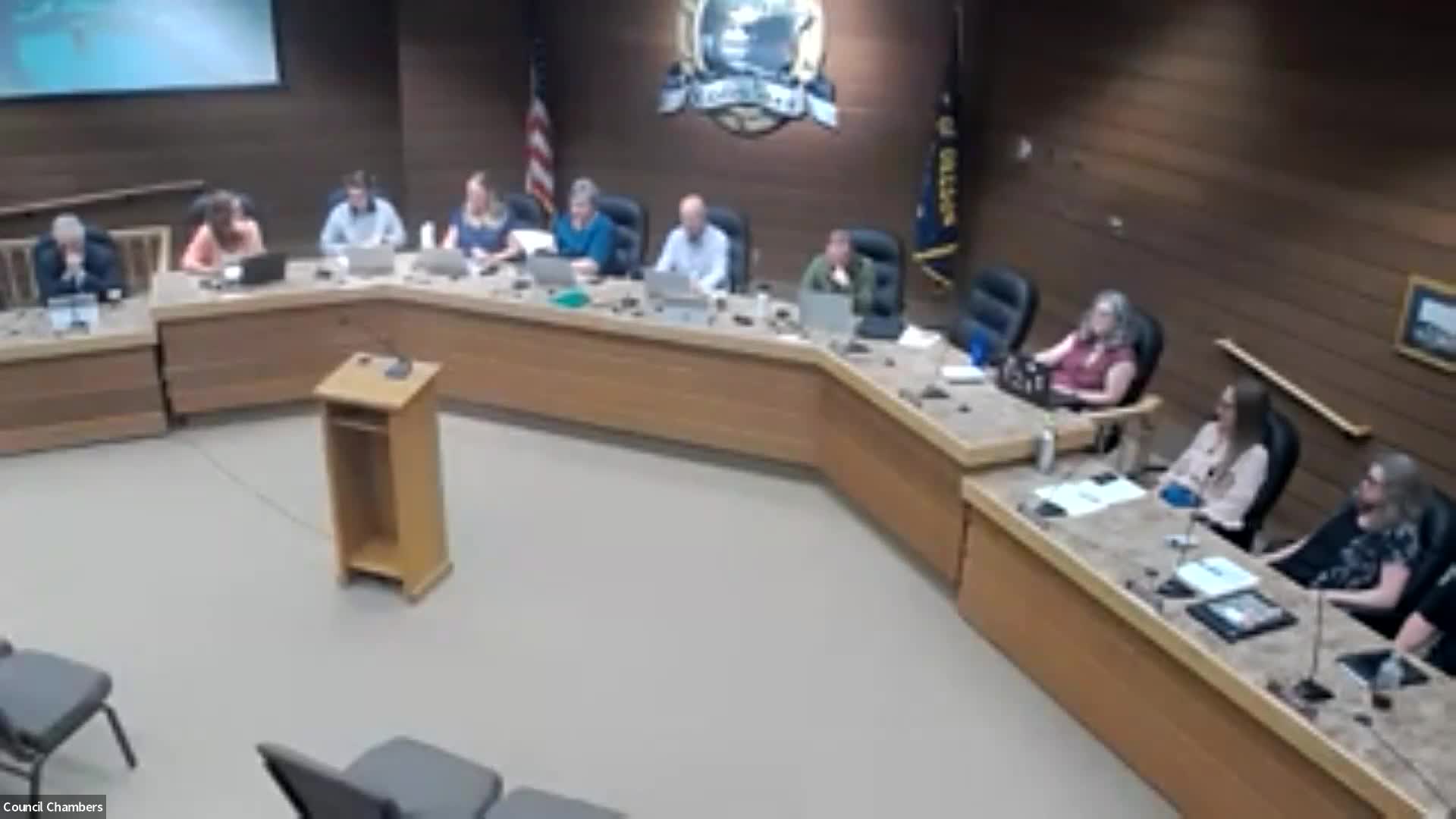
The Coos Bay Urban Renewal Agency voted to approve staff’s recommended fiscal year 2025–26 capital improvement projects for the Downtown and Empire urban renewal districts, but removed the proposed Front Street south design from the package pending further cost information and directed staff to return with a revised Front Street plan.
Agency staff presented a set of boardwalk, sidewalk and road projects for the Downtown URA and a set of road and design projects for the Empire URA before the agency took a voice vote to approve staff's recommendation with the Front Street south element excluded. The motion was made and seconded and carried by voice; the agency did not record a roll-call tally in the meeting transcript.
The Downtown boardwalk package includes four projects the staff says will improve safety and long-term resilience: reroofing three boardwalk pavilions with metal roofing to meet current wind and building standards; replacing roughly 925–936 linear feet of plastic chain-link-style handrail with a hal handrail consistent with recent work near the Coos History Museum; constructing a roughly 3-foot retaining wall south of the main ADA ramp with drainage features; and removing glass from one enclosed pavilion and replacing it with handrails to deter pigeons. Staff estimated the four boardwalk projects at about $433,000; the Downtown URA boardwalk capital fund has $250,000 budgeted, leaving a proposed draw of about $183,700 from an urban renewal projects account (GL ending in 3123). Staff noted all estimates include a 15% contingency. Greg, an agency staff presenter, said the new pavilion roofs would be “solar ready.”
For downtown sidewalks, staff proposed replacing the sidewalk, curb and gutter and installing one ADA ramp on Anderson Avenue between Fourth and Third streets, including removal and replacement of three trees and installation of three tree grates. The Downtown URA sidewalk fund is budgeted at $250,000; staff proposed using that allocation for the Anderson Avenue work.
Downtown road work proposed for FY25–26 includes a grind-and-inlay pavement repair on Commercial Avenue (between Third and Second streets) that would remove the top 2 inches of pavement and replace it with a 2-inch lift, repair approximately 12,135 square feet of roadway and add four ADA curb ramps, and a Lockhart Avenue project (between Front Street and South Broadway) that would regrade and regravel the driving surface and add stormwater detention swales and underground piping to improve drainage and water quality. Staff estimated the two downtown road projects at about $693,000 (Commercial Avenue about $343,000; Lockhart about $350,000). The Downtown URA street capital fund was shown with $750,000 allocated for FY26.
Staff proposed carrying Front Street’s south-half work forward as a base mapping and 30% design effort using a $750,000 Front Street allocation adopted in the FY26 budget. Several agency members questioned spending the full allocation now given uncertainty about potential rail-related changes and other development that could alter Front Street’s final configuration. Agency members suggested finishing the already-complete 30% design on the north half first and returning with more precise estimates for any south-half work. The agency removed the Front Street south design from the approval and directed staff to return with an adjusted amount and a plan for the north section’s final design and possible construction staging.
In the Empire URA, staff proposed three projects: grind-and-inlay repairs on Newmark Avenue (between Le Clerc Street and the URA’s eastern boundary) estimated at roughly $285,000 (about 31,345 square feet); a grind-and-inlay repair on South Marple (between Newmark and Michigan Avenue) estimated at about $202,000 (approximately 23,529 square feet); and advancing the previously started Empire roundabout project at Newmark and South Empire Boulevard from 30% design to final design and cost estimating at an estimated $150,000. The Empire URA capital fund for FY26 was shown with about $500,000; the three Empire projects were estimated at about $562,000, leaving a proposed $62,000 shortfall that staff noted could be covered from the urban renewal projects account (GL ending in 3123) or from unallocated URA reserves.
During discussion, agency members raised practical concerns about traffic and heavy vehicles near the proposed Empire roundabout, the low elevation and high-tide impacts on Lockhart Avenue, and the question of whether to use limited funds for full paving or targeted drainage and gravel improvements. Greg and other staff described the Lockhart work as intended to manage stormwater and lengthen the life of the gravel surface rather than as a full repaving; staff said the design is sized to handle a 24-hour, 25-year storm event but acknowledged extreme king-tide or storm events could still cause flooding.
The agency’s motion approved staff’s recommended FY25–26 capital improvement approach for both URAs with the explicit exclusion of the Front Street south design. The agency asked staff to bring back a revised Front Street proposal focused on final design for the north section, plus cost projections for possible construction phases.
The agency adjourned after the vote and thanked staff for the work compiling project lists and estimates.
Agency staff presented a set of boardwalk, sidewalk and road projects for the Downtown URA and a set of road and design projects for the Empire URA before the agency took a voice vote to approve staff's recommendation with the Front Street south element excluded. The motion was made and seconded and carried by voice; the agency did not record a roll-call tally in the meeting transcript.
The Downtown boardwalk package includes four projects the staff says will improve safety and long-term resilience: reroofing three boardwalk pavilions with metal roofing to meet current wind and building standards; replacing roughly 925–936 linear feet of plastic chain-link-style handrail with a hal handrail consistent with recent work near the Coos History Museum; constructing a roughly 3-foot retaining wall south of the main ADA ramp with drainage features; and removing glass from one enclosed pavilion and replacing it with handrails to deter pigeons. Staff estimated the four boardwalk projects at about $433,000; the Downtown URA boardwalk capital fund has $250,000 budgeted, leaving a proposed draw of about $183,700 from an urban renewal projects account (GL ending in 3123). Staff noted all estimates include a 15% contingency. Greg, an agency staff presenter, said the new pavilion roofs would be “solar ready.”
For downtown sidewalks, staff proposed replacing the sidewalk, curb and gutter and installing one ADA ramp on Anderson Avenue between Fourth and Third streets, including removal and replacement of three trees and installation of three tree grates. The Downtown URA sidewalk fund is budgeted at $250,000; staff proposed using that allocation for the Anderson Avenue work.
Downtown road work proposed for FY25–26 includes a grind-and-inlay pavement repair on Commercial Avenue (between Third and Second streets) that would remove the top 2 inches of pavement and replace it with a 2-inch lift, repair approximately 12,135 square feet of roadway and add four ADA curb ramps, and a Lockhart Avenue project (between Front Street and South Broadway) that would regrade and regravel the driving surface and add stormwater detention swales and underground piping to improve drainage and water quality. Staff estimated the two downtown road projects at about $693,000 (Commercial Avenue about $343,000; Lockhart about $350,000). The Downtown URA street capital fund was shown with $750,000 allocated for FY26.
Staff proposed carrying Front Street’s south-half work forward as a base mapping and 30% design effort using a $750,000 Front Street allocation adopted in the FY26 budget. Several agency members questioned spending the full allocation now given uncertainty about potential rail-related changes and other development that could alter Front Street’s final configuration. Agency members suggested finishing the already-complete 30% design on the north half first and returning with more precise estimates for any south-half work. The agency removed the Front Street south design from the approval and directed staff to return with an adjusted amount and a plan for the north section’s final design and possible construction staging.
In the Empire URA, staff proposed three projects: grind-and-inlay repairs on Newmark Avenue (between Le Clerc Street and the URA’s eastern boundary) estimated at roughly $285,000 (about 31,345 square feet); a grind-and-inlay repair on South Marple (between Newmark and Michigan Avenue) estimated at about $202,000 (approximately 23,529 square feet); and advancing the previously started Empire roundabout project at Newmark and South Empire Boulevard from 30% design to final design and cost estimating at an estimated $150,000. The Empire URA capital fund for FY26 was shown with about $500,000; the three Empire projects were estimated at about $562,000, leaving a proposed $62,000 shortfall that staff noted could be covered from the urban renewal projects account (GL ending in 3123) or from unallocated URA reserves.
During discussion, agency members raised practical concerns about traffic and heavy vehicles near the proposed Empire roundabout, the low elevation and high-tide impacts on Lockhart Avenue, and the question of whether to use limited funds for full paving or targeted drainage and gravel improvements. Greg and other staff described the Lockhart work as intended to manage stormwater and lengthen the life of the gravel surface rather than as a full repaving; staff said the design is sized to handle a 24-hour, 25-year storm event but acknowledged extreme king-tide or storm events could still cause flooding.
The agency’s motion approved staff’s recommended FY25–26 capital improvement approach for both URAs with the explicit exclusion of the Front Street south design. The agency asked staff to bring back a revised Front Street proposal focused on final design for the north section, plus cost projections for possible construction phases.
The agency adjourned after the vote and thanked staff for the work compiling project lists and estimates.
View the Full Meeting & All Its Details
This article offers just a summary. Unlock complete video, transcripts, and insights as a Founder Member.
✓
Watch full, unedited meeting videos
✓
Search every word spoken in unlimited transcripts
✓
AI summaries & real-time alerts (all government levels)
✓
Permanent access to expanding government content
30-day money-back guarantee
