Lee's Summit police describe co-responder program for mental-health calls
August 18, 2025 | Lee's Summit, Jackson County, Missouri
This article was created by AI summarizing key points discussed. AI makes mistakes, so for full details and context, please refer to the video of the full meeting. Please report any errors so we can fix them. Report an error »
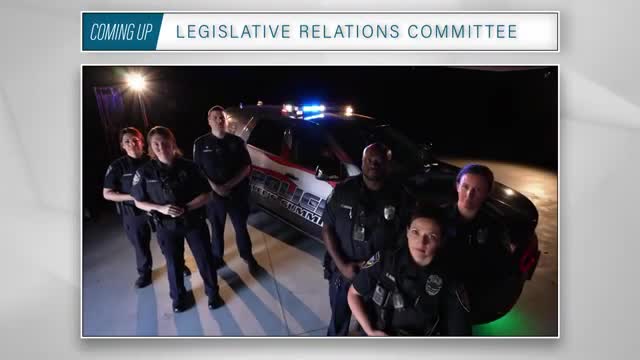
Lee's Summit police presented details of a crisis co-responder program that pairs crisis-intervention team officers with licensed behavioral‑health professionals to respond to mental‑health calls in the community. "We're here, we exist. All you have to do when you call 911 is ask for us," said Allison, a mental‑health co‑responder who described how the team is dispatched and how it works on scenes.
The program, officials said, grew in response to rising mental‑health calls for service. "In 2020, we had 722 mental‑health related calls for service. 2022, by that time, 1,479," Allison said to illustrate the increase. Co‑responders, she said, are licensed at the bachelor or master level, wear plain clothes, do not carry weapons and respond with officers when appropriate. "Like, hey. You know, my name's Allison. I'm a mental health professional. I'm here to help you. I'm not here to take you to jail or arrest you," she said.
On scene, co‑responders described performing safety planning, identifying support people, securing medications or sharp objects and arranging urgent‑care assessments or follow‑up behavioral‑health services if needed. Allison described a case in which the co‑response team helped a person who expressed suicidal ideation to find immediate supports, check on them within hours and connect them to ongoing weekly services: "I just took a person that really just thought they had nobody and nobody would show up for them and show them you do." Officials said the program aims both to connect people to services and to divert them from emergency rooms and jails.
Program staff also described operational details: co-responders monitor police radio channels for mental‑health keywords and have the ability to self‑dispatch to certain calls. The presenter urged residents to explicitly ask for a co‑responder when calling 911 if they want that response. The council did not take any new formal action on the program during the meeting.
City staff did not provide a staffing or budget authorization during the presentation; the speakers described existing practice and outcomes and encouraged residents and officers to use the co‑response option when appropriate.
The program, officials said, grew in response to rising mental‑health calls for service. "In 2020, we had 722 mental‑health related calls for service. 2022, by that time, 1,479," Allison said to illustrate the increase. Co‑responders, she said, are licensed at the bachelor or master level, wear plain clothes, do not carry weapons and respond with officers when appropriate. "Like, hey. You know, my name's Allison. I'm a mental health professional. I'm here to help you. I'm not here to take you to jail or arrest you," she said.
On scene, co‑responders described performing safety planning, identifying support people, securing medications or sharp objects and arranging urgent‑care assessments or follow‑up behavioral‑health services if needed. Allison described a case in which the co‑response team helped a person who expressed suicidal ideation to find immediate supports, check on them within hours and connect them to ongoing weekly services: "I just took a person that really just thought they had nobody and nobody would show up for them and show them you do." Officials said the program aims both to connect people to services and to divert them from emergency rooms and jails.
Program staff also described operational details: co-responders monitor police radio channels for mental‑health keywords and have the ability to self‑dispatch to certain calls. The presenter urged residents to explicitly ask for a co‑responder when calling 911 if they want that response. The council did not take any new formal action on the program during the meeting.
City staff did not provide a staffing or budget authorization during the presentation; the speakers described existing practice and outcomes and encouraged residents and officers to use the co‑response option when appropriate.
View the Full Meeting & All Its Details
This article offers just a summary. Unlock complete video, transcripts, and insights as a Founder Member.
✓
Watch full, unedited meeting videos
✓
Search every word spoken in unlimited transcripts
✓
AI summaries & real-time alerts (all government levels)
✓
Permanent access to expanding government content
30-day money-back guarantee
