Providers testify of payment delays, staffing cuts and alleged retaliation as fraud response continues
August 18, 2025 | Health and Human Services, Senate, Committees, Legislative, Arizona
This article was created by AI summarizing key points discussed. AI makes mistakes, so for full details and context, please refer to the video of the full meeting. Please report any errors so we can fix them. Report an error »
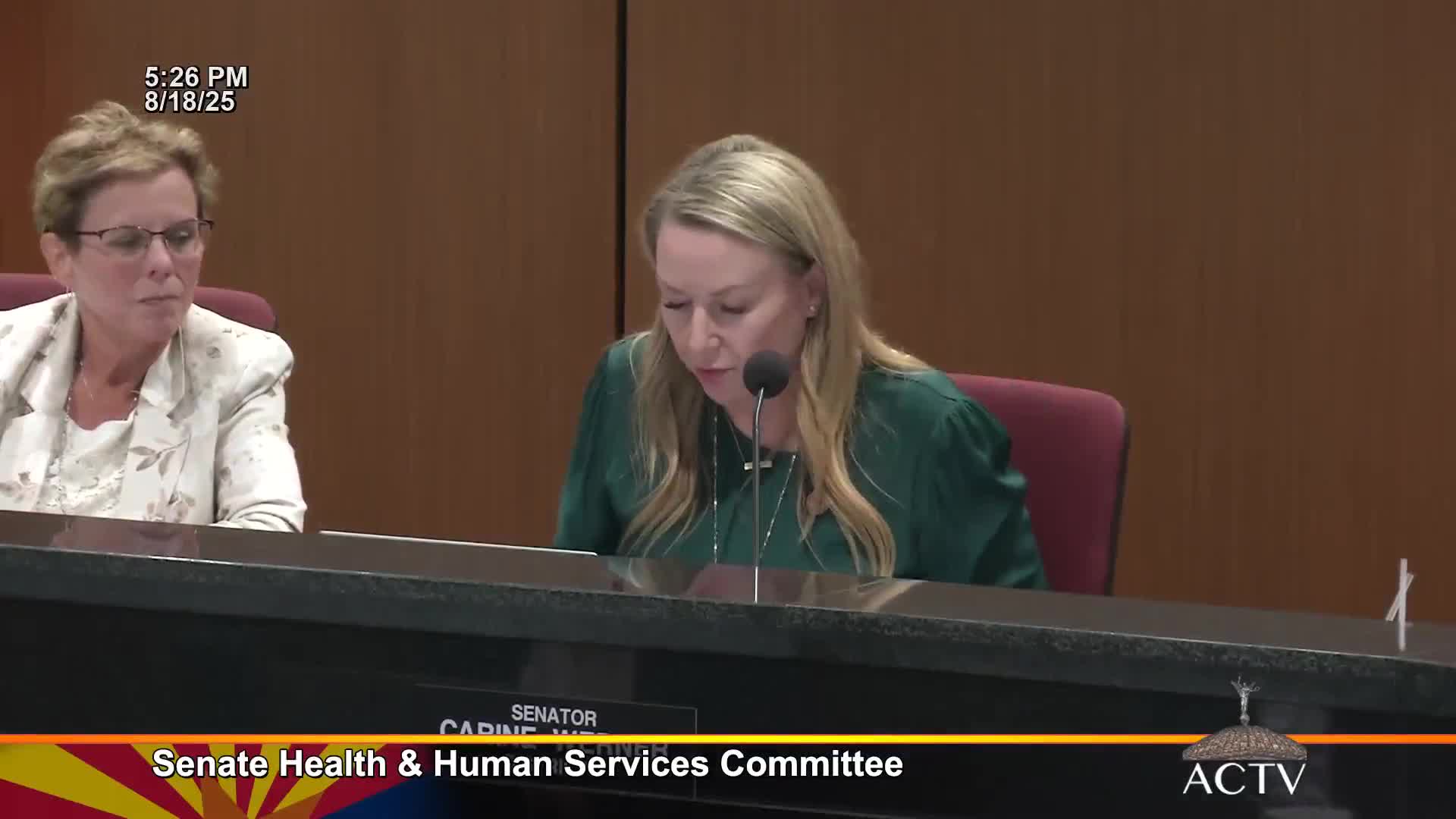
Several providers and health‑care advocates told the Senate Health and Human Services Committee they have struggled with delayed payments, new billing rules and what some described as retaliatory actions by state agencies.
Representative statements and written submissions
Senator Angus and other committee members read testimony and constituent letters describing casework from providers the senators said had been forced to close or to scale back services after payments were withheld. One provider named in committee materials — identified in testimony as Arizona Integrated Telepsychiatry and Telemedicine Services LLC (AZITTS) — said in a written letter read to the committee that Access had withheld payments totaling more than $1,500,000 and that the provider's staff count and clinical operations were severely reduced. The letter charged that Access had "diverted taxpayer funds to high priced attorneys" while withholding payments to a provider that it alleged had been a whistleblower.
A separate account read into the record by Senator Angus described a nonprofit behavioral health provider that sought legislative help after being denied payment and then faced an unannounced DHS inspection. The senator said the provider was then told it was the subject of a possible referral to the Attorney General — a claim agency officials said in the hearing is part of an investigatory process for some cases and may relate to evidence developed in parallel criminal inquiries. The provider closure, the senator said, followed those actions; the provider has disputed criminal wrongdoing and has sought administrative remedies.
Attorney and provider testimony
Holly Giesel, a criminal defense attorney who handles health‑care and white‑collar matters, briefed the committee on historical patterns of fraud and urged use of compliance programs modeled on federal 26‑point compliance plans to help legitimate providers reduce risk. Doctor Laurie Henderson, CEO of a statewide nonprofit behavioral‑health organization, described how an '8‑minute' billing rule change reduced revenue for case‑management services and said the combination of payment delays and new billing rules has forced provider staff reductions and service cuts. Henderson presented a provider survey showing widespread impact: reduced budgets, fewer services and staff losses across many community providers.
What providers asked for
Providers and their representatives asked the committee to require clearer communication from Access, better provider assistance from the agency, and safeguards for providers that report suspected fraud. Several witnesses asked the committee to ensure the state provides technical assistance, clear rules and timely payments while criminal and administrative enforcement actions continue.
Ending
Committee members recorded the providers' concerns and asked Access, DHS and the AG's office to supply documents that could corroborate individual provider claims, including lists of suspended providers, timelines for payment processing, and copies of training materials and billing‑policy notices. Lawmakers said they planned follow‑up hearings to track progress and to evaluate whether current enforcement balances fraud prevention and access to care.
Representative statements and written submissions
Senator Angus and other committee members read testimony and constituent letters describing casework from providers the senators said had been forced to close or to scale back services after payments were withheld. One provider named in committee materials — identified in testimony as Arizona Integrated Telepsychiatry and Telemedicine Services LLC (AZITTS) — said in a written letter read to the committee that Access had withheld payments totaling more than $1,500,000 and that the provider's staff count and clinical operations were severely reduced. The letter charged that Access had "diverted taxpayer funds to high priced attorneys" while withholding payments to a provider that it alleged had been a whistleblower.
A separate account read into the record by Senator Angus described a nonprofit behavioral health provider that sought legislative help after being denied payment and then faced an unannounced DHS inspection. The senator said the provider was then told it was the subject of a possible referral to the Attorney General — a claim agency officials said in the hearing is part of an investigatory process for some cases and may relate to evidence developed in parallel criminal inquiries. The provider closure, the senator said, followed those actions; the provider has disputed criminal wrongdoing and has sought administrative remedies.
Attorney and provider testimony
Holly Giesel, a criminal defense attorney who handles health‑care and white‑collar matters, briefed the committee on historical patterns of fraud and urged use of compliance programs modeled on federal 26‑point compliance plans to help legitimate providers reduce risk. Doctor Laurie Henderson, CEO of a statewide nonprofit behavioral‑health organization, described how an '8‑minute' billing rule change reduced revenue for case‑management services and said the combination of payment delays and new billing rules has forced provider staff reductions and service cuts. Henderson presented a provider survey showing widespread impact: reduced budgets, fewer services and staff losses across many community providers.
What providers asked for
Providers and their representatives asked the committee to require clearer communication from Access, better provider assistance from the agency, and safeguards for providers that report suspected fraud. Several witnesses asked the committee to ensure the state provides technical assistance, clear rules and timely payments while criminal and administrative enforcement actions continue.
Ending
Committee members recorded the providers' concerns and asked Access, DHS and the AG's office to supply documents that could corroborate individual provider claims, including lists of suspended providers, timelines for payment processing, and copies of training materials and billing‑policy notices. Lawmakers said they planned follow‑up hearings to track progress and to evaluate whether current enforcement balances fraud prevention and access to care.
Don't Miss a Word: See the Full Meeting!
Go beyond summaries. Unlock every video, transcript, and key insight with a Founder Membership.
✓
Get instant access to full meeting videos
✓
Search and clip any phrase from complete transcripts
✓
Receive AI-powered summaries & custom alerts
✓
Enjoy lifetime, unrestricted access to government data
30-day money-back guarantee
