Dallas council approves annexation of 415 SE Hawthorne, applies medium-density zoning after residents raise traffic and neighborhood concerns
August 18, 2025 | Dallas, Polk County, Oregon
This article was created by AI summarizing key points discussed. AI makes mistakes, so for full details and context, please refer to the video of the full meeting. Please report any errors so we can fix them. Report an error »
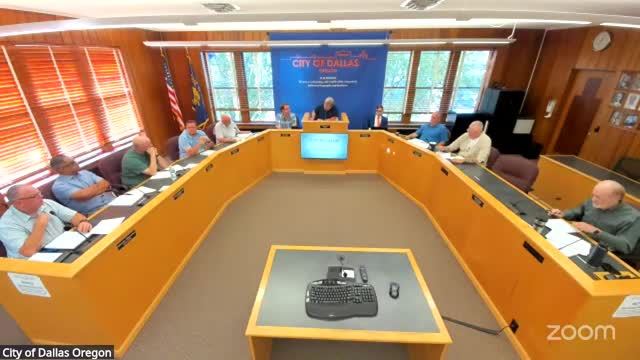
The Dallas City Council on Monday approved annexation of a one-acre parcel at 415 Southeast Hawthorne Avenue and applied a medium-density residential (RM) zone to the site, despite the applicant’s request for high-density zoning.
City Planner Chase Blue outlined the request at the land-use public hearing, saying the application seeks annexation and a zone change for a roughly one-acre parcel adjacent to city-owned land for a future Henkel Street extension and near an existing mobile home park. “This is a request for annexation and zone change of a property that's about 1 acre in size,” Blue said. He told council the city is extending sewer down Hawthorne and that public facilities can support development of the site.
The applicant, developer Brandon Fallman, described an early concept for a “cottage cluster” of small detached homes of roughly “7 or 800 square feet” organized around a common courtyard and shared parking. “I won't need 15 minutes… I have an idea but I don't want to be boxed into it…but I'll just explain what I'm thinking about right now and that's a cottage cluster,” Fallman told council during his presentation.
Neighbors raised concerns about traffic, roadway classification, drainage and the potential scale of development. One resident, identified in the record as Marty Freeman, said the proposed zone change would alter how the street is used and could threaten parking in front of existing garages. “When you talk about increasing the right of way and going 7 feet both sides of the existing right of way, you gotta realize that, like, my house… I can't park my car in front of the garage without the back end of it being in on the sidewalk,” Freeman said.
Council members and staff discussed how state and local rules shape the decision. Blue noted the city’s threshold for requiring a traffic impact analysis is roughly 300 average daily trips and said a one-acre site at the proposed density would not reach that threshold. He also explained the difference between current and “future” road classifications in the Transportation System Plan and that the city’s plan anticipates additional right-of-way and future connections that would change Hawthorne’s role over time.
Council deliberations focused on whether high-density zoning (the applicant’s request) or medium-density zoning better fit local policy and neighborhood context. Blue and other staff explained the city’s comprehensive-plan approval criteria and said the recently adopted Lockrail node master plan (adopted after the application was submitted) could affect the area’s future zoning but is not an approval criterion for this application. Council members pointed to concerns about current traffic and the many housing projects already in the permitting pipeline.
After debate, Councilor Shane moved to approve annexation and apply medium-density residential zoning "of 415 Hawthorne Avenue" and directed the city attorney to prepare an ordinance amending the Dallas zoning map. The motion was seconded by Councilor Holzapol and passed 7–1, with Council President Briggs voting no and all other councilors voting yes.
What the decision means next: the council’s action directs staff and the city attorney to draft an ordinance reflecting the annexation and the applied medium-density zoning. Any future development proposal on the property would return to the city through the normal permitting process (site plan, stormwater review, parking and other standards), and would be evaluated under the medium-density standards the council applied tonight.
Context: Under the city’s land‑use rules discussed in the hearing, residential density bands were explained as roughly: low density 4–7 dwellings/acre; medium density 6–16 dwellings/acre; high density 10–40 dwellings/acre. Staff also noted that multifamily trip generation is typically lower per dwelling than single-family, and that the Institute of Transportation Engineers trip-generation rates informed staff discussion of traffic impacts.
Council members and residents repeatedly emphasized that development approvals in the future will require engineering for stormwater, right-of-way dedication as parcels develop, and specific traffic analyses when a development proposal generates trips nearing thresholds that trigger a traffic-impact study.
Ending: The city will mail a written order reflecting the council’s decision to the applicant and participants in the record within 10 business days; the ordinance to enact the annexation and zone change will follow the city’s ordinance adoption process.
City Planner Chase Blue outlined the request at the land-use public hearing, saying the application seeks annexation and a zone change for a roughly one-acre parcel adjacent to city-owned land for a future Henkel Street extension and near an existing mobile home park. “This is a request for annexation and zone change of a property that's about 1 acre in size,” Blue said. He told council the city is extending sewer down Hawthorne and that public facilities can support development of the site.
The applicant, developer Brandon Fallman, described an early concept for a “cottage cluster” of small detached homes of roughly “7 or 800 square feet” organized around a common courtyard and shared parking. “I won't need 15 minutes… I have an idea but I don't want to be boxed into it…but I'll just explain what I'm thinking about right now and that's a cottage cluster,” Fallman told council during his presentation.
Neighbors raised concerns about traffic, roadway classification, drainage and the potential scale of development. One resident, identified in the record as Marty Freeman, said the proposed zone change would alter how the street is used and could threaten parking in front of existing garages. “When you talk about increasing the right of way and going 7 feet both sides of the existing right of way, you gotta realize that, like, my house… I can't park my car in front of the garage without the back end of it being in on the sidewalk,” Freeman said.
Council members and staff discussed how state and local rules shape the decision. Blue noted the city’s threshold for requiring a traffic impact analysis is roughly 300 average daily trips and said a one-acre site at the proposed density would not reach that threshold. He also explained the difference between current and “future” road classifications in the Transportation System Plan and that the city’s plan anticipates additional right-of-way and future connections that would change Hawthorne’s role over time.
Council deliberations focused on whether high-density zoning (the applicant’s request) or medium-density zoning better fit local policy and neighborhood context. Blue and other staff explained the city’s comprehensive-plan approval criteria and said the recently adopted Lockrail node master plan (adopted after the application was submitted) could affect the area’s future zoning but is not an approval criterion for this application. Council members pointed to concerns about current traffic and the many housing projects already in the permitting pipeline.
After debate, Councilor Shane moved to approve annexation and apply medium-density residential zoning "of 415 Hawthorne Avenue" and directed the city attorney to prepare an ordinance amending the Dallas zoning map. The motion was seconded by Councilor Holzapol and passed 7–1, with Council President Briggs voting no and all other councilors voting yes.
What the decision means next: the council’s action directs staff and the city attorney to draft an ordinance reflecting the annexation and the applied medium-density zoning. Any future development proposal on the property would return to the city through the normal permitting process (site plan, stormwater review, parking and other standards), and would be evaluated under the medium-density standards the council applied tonight.
Context: Under the city’s land‑use rules discussed in the hearing, residential density bands were explained as roughly: low density 4–7 dwellings/acre; medium density 6–16 dwellings/acre; high density 10–40 dwellings/acre. Staff also noted that multifamily trip generation is typically lower per dwelling than single-family, and that the Institute of Transportation Engineers trip-generation rates informed staff discussion of traffic impacts.
Council members and residents repeatedly emphasized that development approvals in the future will require engineering for stormwater, right-of-way dedication as parcels develop, and specific traffic analyses when a development proposal generates trips nearing thresholds that trigger a traffic-impact study.
Ending: The city will mail a written order reflecting the council’s decision to the applicant and participants in the record within 10 business days; the ordinance to enact the annexation and zone change will follow the city’s ordinance adoption process.
View the Full Meeting & All Its Details
This article offers just a summary. Unlock complete video, transcripts, and insights as a Founder Member.
✓
Watch full, unedited meeting videos
✓
Search every word spoken in unlimited transcripts
✓
AI summaries & real-time alerts (all government levels)
✓
Permanent access to expanding government content
30-day money-back guarantee
