County staff, commissioners debate building 2026 budget amid levy-lid uncertainty
August 25, 2025 | Clallam County, Washington
This article was created by AI summarizing key points discussed. AI makes mistakes, so for full details and context, please refer to the video of the full meeting. Please report any errors so we can fix them. Report an error »
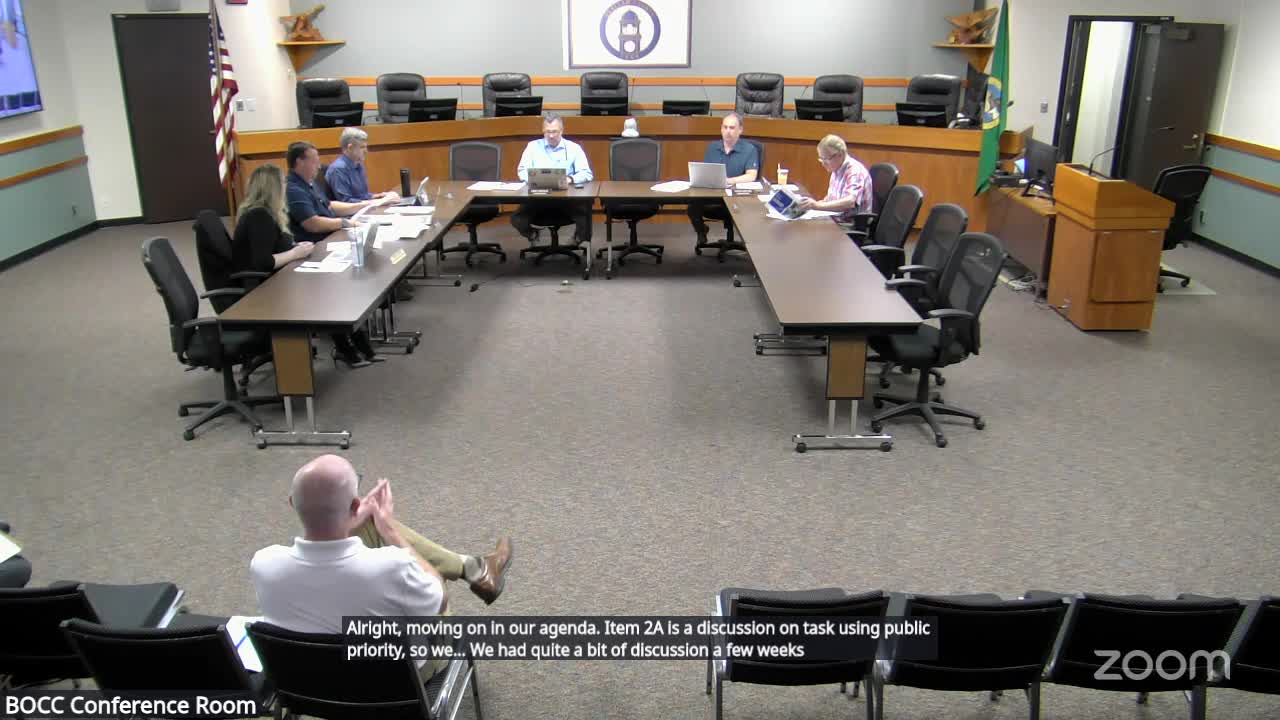
Clallam County staff and commissioners spent a large portion of the Aug. 25 work session discussing how to frame the 2026 budget while voters consider a levy-lid lift on the Nov. 4 ballot.
The county’s finance director and administrator told the board the county faces an operating gap in the $3.7 million to $4.5 million range in 2026 under current revenue assumptions and that departments have submitted about $1.68 million in requests not yet included in the preliminary budget. Staff presented a preliminary budget rollup and a target reserve level of 25 percent of expenditures.
Why it matters: Commissioners said the timing matters because departments must prepare for budget hearings before the Nov. 4 election outcome will be known. They discussed three broad approaches: (1) build a budget assuming the levy-lid lift passes (optimistic); (2) build a budget assuming no new levy revenue and plan cuts or reserve draws (pessimistic); or (3) prepare a hybrid with contingency measures and focused planning while leaning on reserves short term.
What commissioners asked staff to do: Commissioners and staff discussed the following options:
- Use reserves (the board discussed ending reserves near $12.6 million under the preliminary plan) to buy time for planning and to avoid abrupt staffing actions, with an expectation to identify and phase cuts during the first half of 2026 if the levy fails.
- Prepare department leaders to present contingency cuts and efficiency ideas at budget meetings, and prioritize protecting legally required and revenue-generating functions.
- Continue to pursue targeted revenue options, including the newly authorized one‑tenth of 1 percent criminal justice sales tax (subject to statutory eligibility) and rate/rate‑based revenues where appropriate.
Commissioners also highlighted caution about making “counterproductive” cuts that would reduce the county’s ability to generate revenue or meet statutory responsibilities — for example, cutting assessor or sheriff functions that protect revenue or public safety. Multiple elected officials present said staffing is near minimum levels for statutory duties and that further cuts would reduce service quality.
Next steps and deadlines: County staff will release the administrator’s recommended budget in early October as scheduled, continue department budget meetings and return with draft options. Commissioners signaled support for a strategy that may rely modestly on reserves to permit careful planning rather than forcing immediate, broad layoffs.
Ending: Commissioners emphasized that, whatever route they choose, they will need to continue work on multi-year structural changes, efficiencies and possible revenue measures beyond 2026 to address projected deficits in years two and three of the county’s forecast.
The county’s finance director and administrator told the board the county faces an operating gap in the $3.7 million to $4.5 million range in 2026 under current revenue assumptions and that departments have submitted about $1.68 million in requests not yet included in the preliminary budget. Staff presented a preliminary budget rollup and a target reserve level of 25 percent of expenditures.
Why it matters: Commissioners said the timing matters because departments must prepare for budget hearings before the Nov. 4 election outcome will be known. They discussed three broad approaches: (1) build a budget assuming the levy-lid lift passes (optimistic); (2) build a budget assuming no new levy revenue and plan cuts or reserve draws (pessimistic); or (3) prepare a hybrid with contingency measures and focused planning while leaning on reserves short term.
What commissioners asked staff to do: Commissioners and staff discussed the following options:
- Use reserves (the board discussed ending reserves near $12.6 million under the preliminary plan) to buy time for planning and to avoid abrupt staffing actions, with an expectation to identify and phase cuts during the first half of 2026 if the levy fails.
- Prepare department leaders to present contingency cuts and efficiency ideas at budget meetings, and prioritize protecting legally required and revenue-generating functions.
- Continue to pursue targeted revenue options, including the newly authorized one‑tenth of 1 percent criminal justice sales tax (subject to statutory eligibility) and rate/rate‑based revenues where appropriate.
Commissioners also highlighted caution about making “counterproductive” cuts that would reduce the county’s ability to generate revenue or meet statutory responsibilities — for example, cutting assessor or sheriff functions that protect revenue or public safety. Multiple elected officials present said staffing is near minimum levels for statutory duties and that further cuts would reduce service quality.
Next steps and deadlines: County staff will release the administrator’s recommended budget in early October as scheduled, continue department budget meetings and return with draft options. Commissioners signaled support for a strategy that may rely modestly on reserves to permit careful planning rather than forcing immediate, broad layoffs.
Ending: Commissioners emphasized that, whatever route they choose, they will need to continue work on multi-year structural changes, efficiencies and possible revenue measures beyond 2026 to address projected deficits in years two and three of the county’s forecast.
View the Full Meeting & All Its Details
This article offers just a summary. Unlock complete video, transcripts, and insights as a Founder Member.
✓
Watch full, unedited meeting videos
✓
Search every word spoken in unlimited transcripts
✓
AI summaries & real-time alerts (all government levels)
✓
Permanent access to expanding government content
30-day money-back guarantee
