Taos Pueblo leaders ask Legislative Finance Committee for continued state support for housing, education, water and wildfire programs
June 24, 2025 | Legislative Finance, Interim, Committees, Legislative, New Mexico
This article was created by AI summarizing key points discussed. AI makes mistakes, so for full details and context, please refer to the video of the full meeting. Please report any errors so we can fix them. Report an error »
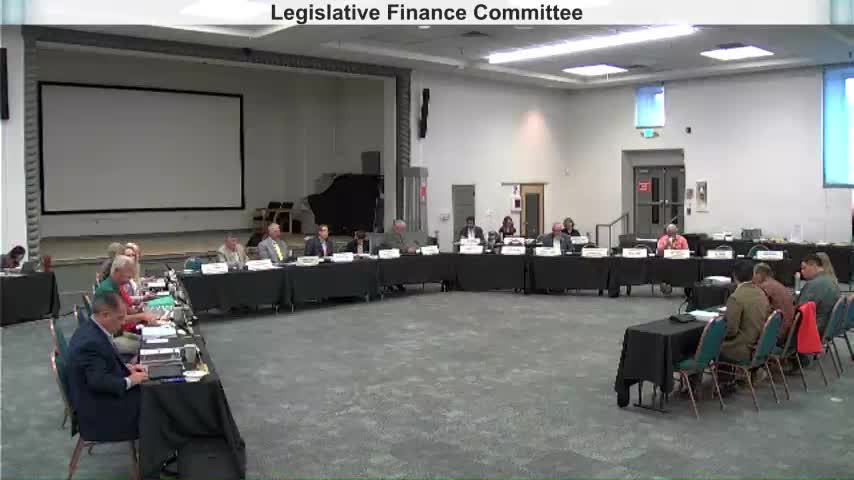
Taos Pueblo Governor Edwin Econcha and Tribal Secretary Jeremy Luhan told the Legislative Finance Committee in Taos that the Pueblo needs sustained state support to complete a slate of infrastructure and community projects, implement education remedies from the Yazzie‑Martinez litigation, and finish obligations tied to its water‑rights settlement.
The Pueblo leaders detailed near‑term projects and funding gaps and framed them as matters of tribal sovereignty and community survival. “We have over 2,500 tribal members living here at the Pueblo and in communities across the state and around the country,” Governor Edwin Econcha said, noting the Pueblo’s ongoing responsibilities for housing, public safety, courts and cultural preservation.
Why it matters: Taos Pueblo is a federally recognized sovereign government whose infrastructure and services affect both tribal citizens and neighboring communities. The Pueblo said state capital outlay and other appropriations have supported essential water, sewer and building repairs, but leaders said current needs—housing, a justice center, elder care, a wellness center and a new library—outstrip tribal resources and require recurring, targeted funding.
Officials described specific projects and shortfalls. Secretary Jeremy Luhan said the Pueblo is advancing a heritage center, a hotel and event complex located on roughly 14.74 acres within Pueblo land grant boundaries and operating under a 20‑year license; the site will require additional funding for construction, utilities and site work. Luhan noted a recent groundbreaking for 23 tribal homes — the Pueblo’s first major housing construction since 1989 — and said additional new subdivision water and sewer work remains to be funded.
On education, Governor Econcha and Secretary Luhan urged active consultation in the state’s response to the 2018 Yazzie‑Martinez court orders. “The Tribal Remedy Framework offers equitable, transformative solutions necessary to meet the needs of New Mexico’s Native children,” Luhan said. He reminded the committee that the Public Education Department must submit a draft action plan by Oct. 1 (a deadline mentioned in the session) and called for full Pueblo participation in drafting and implementing that plan.
Water and settlements: Tribal officials described the Pueblo’s Abeta Settlement — the water‑rights settlement the Pueblo reached with the state and Congress — and said inflation and cost‑escalation have created a funding shortfall for non‑tribal infrastructure elements the state agreed to fund (commonly described in settlement practice as the non‑Indian cost share). The Pueblo thanked lawmakers for recent supplemental funding but asked continued legislative attention to close remaining gaps.
Wildfire and public safety: Leaders asked for sustained wildfire mitigation funding, referencing the Tribal Forest Protection Act and recent state wildfire appropriations. The Pueblo thanked lawmakers for provisions in session legislation including the Wallace Wildfire Suppression and Preparedness Fund and a Wildfire Preparedness Fund, which tribal speakers said will help thinning and suppression work on tribal and adjacent lands. On policing, the Pueblo urged continued support for cross‑commissioning that would allow tribal police to enforce state law against non‑Indians on tribal lands and to operate off‑reservation in limited circumstances; tribal leaders said cross‑commissioning would improve response and reduce jurisdictional gaps.
Funding context and constraints: Officials acknowledged prior capital outlay appropriations the Legislature has provided and noted recent uses—water and sewer replacement and repairs, an elderly day center and construction starts on the justice and wellness centers—but said construction cost inflation and constrained federal formulas (for BIA funding) require state follow‑up and sustained appropriations.
What they asked for: Tribal leaders asked the committee to: (1) consider targeted, recurring funding to finish housing and infrastructure; (2) ensure the Public Education Department’s Yazzie‑Martinez plan fully consults and incorporates tribal remedies; (3) support wildfire mitigation funding and cross‑commissioning efforts; and (4) address remaining funding shortfalls in the Pueblo’s water‑settlement implementation.
The committee heard the presentation and offered time for questions; no formal votes were taken during the remarks.
The Pueblo leaders detailed near‑term projects and funding gaps and framed them as matters of tribal sovereignty and community survival. “We have over 2,500 tribal members living here at the Pueblo and in communities across the state and around the country,” Governor Edwin Econcha said, noting the Pueblo’s ongoing responsibilities for housing, public safety, courts and cultural preservation.
Why it matters: Taos Pueblo is a federally recognized sovereign government whose infrastructure and services affect both tribal citizens and neighboring communities. The Pueblo said state capital outlay and other appropriations have supported essential water, sewer and building repairs, but leaders said current needs—housing, a justice center, elder care, a wellness center and a new library—outstrip tribal resources and require recurring, targeted funding.
Officials described specific projects and shortfalls. Secretary Jeremy Luhan said the Pueblo is advancing a heritage center, a hotel and event complex located on roughly 14.74 acres within Pueblo land grant boundaries and operating under a 20‑year license; the site will require additional funding for construction, utilities and site work. Luhan noted a recent groundbreaking for 23 tribal homes — the Pueblo’s first major housing construction since 1989 — and said additional new subdivision water and sewer work remains to be funded.
On education, Governor Econcha and Secretary Luhan urged active consultation in the state’s response to the 2018 Yazzie‑Martinez court orders. “The Tribal Remedy Framework offers equitable, transformative solutions necessary to meet the needs of New Mexico’s Native children,” Luhan said. He reminded the committee that the Public Education Department must submit a draft action plan by Oct. 1 (a deadline mentioned in the session) and called for full Pueblo participation in drafting and implementing that plan.
Water and settlements: Tribal officials described the Pueblo’s Abeta Settlement — the water‑rights settlement the Pueblo reached with the state and Congress — and said inflation and cost‑escalation have created a funding shortfall for non‑tribal infrastructure elements the state agreed to fund (commonly described in settlement practice as the non‑Indian cost share). The Pueblo thanked lawmakers for recent supplemental funding but asked continued legislative attention to close remaining gaps.
Wildfire and public safety: Leaders asked for sustained wildfire mitigation funding, referencing the Tribal Forest Protection Act and recent state wildfire appropriations. The Pueblo thanked lawmakers for provisions in session legislation including the Wallace Wildfire Suppression and Preparedness Fund and a Wildfire Preparedness Fund, which tribal speakers said will help thinning and suppression work on tribal and adjacent lands. On policing, the Pueblo urged continued support for cross‑commissioning that would allow tribal police to enforce state law against non‑Indians on tribal lands and to operate off‑reservation in limited circumstances; tribal leaders said cross‑commissioning would improve response and reduce jurisdictional gaps.
Funding context and constraints: Officials acknowledged prior capital outlay appropriations the Legislature has provided and noted recent uses—water and sewer replacement and repairs, an elderly day center and construction starts on the justice and wellness centers—but said construction cost inflation and constrained federal formulas (for BIA funding) require state follow‑up and sustained appropriations.
What they asked for: Tribal leaders asked the committee to: (1) consider targeted, recurring funding to finish housing and infrastructure; (2) ensure the Public Education Department’s Yazzie‑Martinez plan fully consults and incorporates tribal remedies; (3) support wildfire mitigation funding and cross‑commissioning efforts; and (4) address remaining funding shortfalls in the Pueblo’s water‑settlement implementation.
The committee heard the presentation and offered time for questions; no formal votes were taken during the remarks.
View the Full Meeting & All Its Details
This article offers just a summary. Unlock complete video, transcripts, and insights as a Founder Member.
✓
Watch full, unedited meeting videos
✓
Search every word spoken in unlimited transcripts
✓
AI summaries & real-time alerts (all government levels)
✓
Permanent access to expanding government content
30-day money-back guarantee
