Taos to pilot 3D‑printed homeownership project using state capital outlay and ARPA funds
June 24, 2025 | Legislative Finance, Interim, Committees, Legislative, New Mexico
This article was created by AI summarizing key points discussed. AI makes mistakes, so for full details and context, please refer to the video of the full meeting. Please report any errors so we can fix them. Report an error »
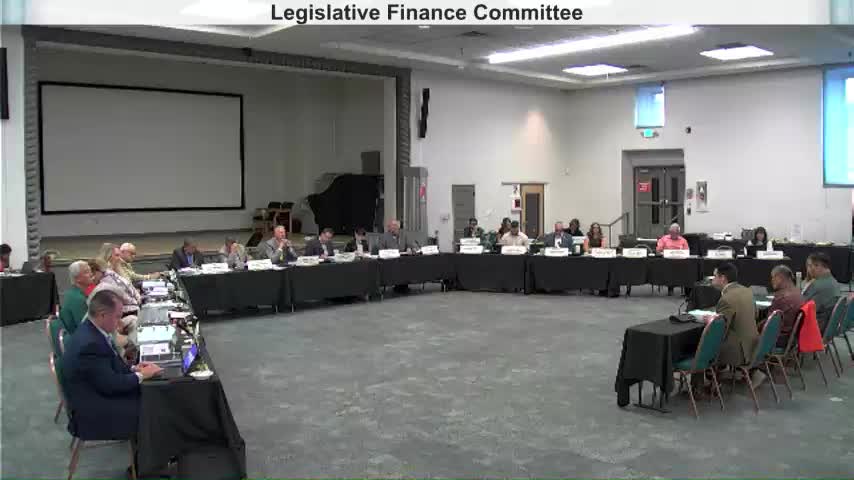
The town of Taos told the Legislative Finance Committee that it will break ground July 7 on a pilot project of seven 3D‑printed homes intended for sale at about $200,000 each, part of a broader effort to create pathways to homeownership in a market with a large supply shortfall.
Mayor Maestas said the pilot will use a combination of local partnerships, state capital outlay and federal ARPA dollars. “This project did include state dollars. There was a significant capital outlay appropriation for $3,200,000 as well as a $1,000,000 appropriation through the ARPA funds,” the mayor said, describing the financing. He said the town plans a second mortgage to cover the gap between sale price and median home value; the town intends that the second mortgage—about $250,000—would be forgiven after 20 years.
Why it matters: New Mexico faces a large housing deficit; senators and representatives on the committee noted the state needs models that deliver ownership rather than rental housing in rural and resort‑affected communities. The Taos project is positioned as a pilot to test construction speed and affordability and to prepare a repeatable model for other communities.
Project details and partnerships: Mayor Maestas said the first phase will build seven homes on town‑owned lots near the Youth and Family Center, within town limits and close to a regional bus route. The town formed a nonprofit, Taos Housing Partnership, with the county, philanthropy, UNM Taos and local banks to design financing and navigate constitutional restrictions like the anti‑donation clause. The mayor said the town also secured a $1.2 million congressional-directed spending allocation and is working with an experienced developer using 3D printing; the town estimates the pilot home can be built in roughly seven days under ideal conditions.
Timeline and constraints: Committee members pressed the mayor on time to completion and scalability. The mayor said the project took nearly four years of partnership building, fundraising, planning and procurement; as a practical result of supply and contractor shortages, he estimated future projects might take 1.5 to 3 years from appropriation to shovel‑ready status. He also told the committee that other town projects such as a new airport terminal encountered multiple failed bids and required alternate procurement paths.
What the town asked: While the mayor did not request a specific new appropriation during the hearing, he asked lawmakers to study the model, share lessons across municipalities and consider how state programs might reduce administrative delays between appropriation and construction. Committee members recommended follow‑up briefings showing the pilot’s final costs, unit sales contracts and forgiveness terms.
No formal vote was taken during this presentation; committee members asked clarifying questions about project financing, timelines and replicability.
Mayor Maestas said the pilot will use a combination of local partnerships, state capital outlay and federal ARPA dollars. “This project did include state dollars. There was a significant capital outlay appropriation for $3,200,000 as well as a $1,000,000 appropriation through the ARPA funds,” the mayor said, describing the financing. He said the town plans a second mortgage to cover the gap between sale price and median home value; the town intends that the second mortgage—about $250,000—would be forgiven after 20 years.
Why it matters: New Mexico faces a large housing deficit; senators and representatives on the committee noted the state needs models that deliver ownership rather than rental housing in rural and resort‑affected communities. The Taos project is positioned as a pilot to test construction speed and affordability and to prepare a repeatable model for other communities.
Project details and partnerships: Mayor Maestas said the first phase will build seven homes on town‑owned lots near the Youth and Family Center, within town limits and close to a regional bus route. The town formed a nonprofit, Taos Housing Partnership, with the county, philanthropy, UNM Taos and local banks to design financing and navigate constitutional restrictions like the anti‑donation clause. The mayor said the town also secured a $1.2 million congressional-directed spending allocation and is working with an experienced developer using 3D printing; the town estimates the pilot home can be built in roughly seven days under ideal conditions.
Timeline and constraints: Committee members pressed the mayor on time to completion and scalability. The mayor said the project took nearly four years of partnership building, fundraising, planning and procurement; as a practical result of supply and contractor shortages, he estimated future projects might take 1.5 to 3 years from appropriation to shovel‑ready status. He also told the committee that other town projects such as a new airport terminal encountered multiple failed bids and required alternate procurement paths.
What the town asked: While the mayor did not request a specific new appropriation during the hearing, he asked lawmakers to study the model, share lessons across municipalities and consider how state programs might reduce administrative delays between appropriation and construction. Committee members recommended follow‑up briefings showing the pilot’s final costs, unit sales contracts and forgiveness terms.
No formal vote was taken during this presentation; committee members asked clarifying questions about project financing, timelines and replicability.
View the Full Meeting & All Its Details
This article offers just a summary. Unlock complete video, transcripts, and insights as a Founder Member.
✓
Watch full, unedited meeting videos
✓
Search every word spoken in unlimited transcripts
✓
AI summaries & real-time alerts (all government levels)
✓
Permanent access to expanding government content
30-day money-back guarantee
