Kit Carson, Village of Questa and NMSU outline green hydrogen hub plan and ask for state support for solar build‑out
June 24, 2025 | Legislative Finance, Interim, Committees, Legislative, New Mexico
This article was created by AI summarizing key points discussed. AI makes mistakes, so for full details and context, please refer to the video of the full meeting. Please report any errors so we can fix them. Report an error »
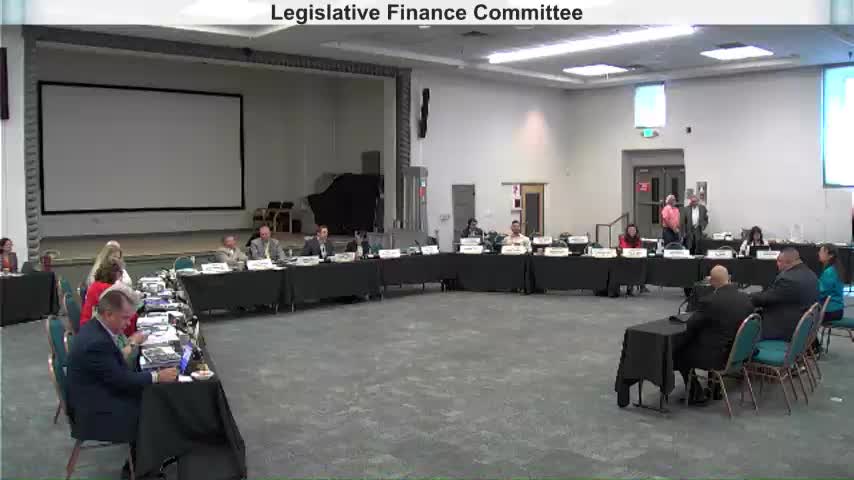
Kit Carson Electric Cooperative, the Village of Questa and researchers from New Mexico State University told the Legislative Finance Committee they are advancing a multi‑site green hydrogen hub in northern New Mexico that would combine local solar, battery storage, electrolyzers and hydrogen storage to provide long‑duration energy storage, grid resiliency and local economic development.
Kit Carson’s representative, Luis Reyes, told the committee that the cooperative won a federal award to support construction of three hydrogen facilities in its service territory and is negotiating site agreements with landholders and partners. Reyes described the Cuesta/Questa site as the largest of the three and said the Village of Questa seeks $50,000,000 in state assistance to complete the solar build‑out that would power the electrolyzers. “We are asking as the village of Questa for $50,000,000 to complete the solar build out for this project,” the mayor of the Village of Questa said in remarks introducing the project.
Why it matters: The proponents argue the hub would provide 24‑hour dispatchable energy for local microgrids, reduce wildfire‑related outage risk by enabling islanding of critical services and create construction and long‑term jobs in communities that lost mining employment.
Project scope and funding: Kit Carson said it won about $231,000,000 in federal funding to develop hydrogen facilities across its territory, including a major site adjacent to the former mine tailings near Questa (the Cuesta/Questa site), a 7.5 MW facility in Taos in partnership with the town and Taos Pueblo, and a 1.5 MW facility at Picuris Pueblo. The Village of Questa’s $50 million request would pay for solar capacity to feed the Cuesta electrolyzer; Kit Carson said the federal award and tax incentives (as currently structured at the federal level) are central to the project’s financial model. Reyes said the cooperative’s design aims for 24‑hour hydrogen‑derived electricity and eventually longer duration storage.
Water, technology and R&D: New Mexico State University Professor Pei Xu and colleagues described water treatment and research work needed to supply ultra‑pure water for electrolysis. NMSU estimated that a 25‑MW electrolysis plant would require on the order of 73,000 gallons of feed water per day (roughly 200–350 household water‑use equivalents, speaker estimate) and said water sourcing plans emphasize reclaimed municipal effluent, brackish groundwater and treated produced water rather than potable supply. NMSU also described an NMSU‑led $1.6 million pilot to test photocatalytic and solar‑driven hydrogen production using non‑ultrapure feeds and said the university is assessing produced‑water treatment trains and mineral recovery options to minimize discharged brine.
Jobs and local impacts: Arrowhead Center economic analysis cited by Kit Carson projected about 1,349 direct construction jobs during build‑out and a modest number of permanent operations jobs (the study’s reported direct long‑term employment for the Kit Carson footprint was 27 direct jobs and 77 total jobs); municipal sponsors said the Village of Questa could add civil‑service positions if the village secures recurring solar revenue.
Regulatory and permitting questions: Committee members asked about permitting, produced‑water standards, brine handling, transmission and lifecycle emissions. NMSU researchers said the state’s recently adopted reuse rules and the New Mexico Environment Department’s permitting processes will be central to implementation; they also described ongoing toxicity testing and techno‑economic assessments intended to inform regulators. Kit Carson said it is working through USDA RUS procedures for the federal award and is tracking federal hydrogen tax‑credit guidance under recent federal energy legislation; the cooperative expects to break ground on parts of the project if federal and other financing conditions are met.
Concerns and committee feedback: Legislators raised timeline, permitting and transmission questions, and urged project proponents to keep state regulators and local communities closely informed. Several members urged attention to workforce development and to ensure that R&D intellectual property and manufacturing benefits for new technologies be retained in New Mexico where feasible.
No formal committee action or vote was taken during the presentation; members reserved follow‑up questions and invited proponents to provide additional technical and economic documentation to staff.
Kit Carson’s representative, Luis Reyes, told the committee that the cooperative won a federal award to support construction of three hydrogen facilities in its service territory and is negotiating site agreements with landholders and partners. Reyes described the Cuesta/Questa site as the largest of the three and said the Village of Questa seeks $50,000,000 in state assistance to complete the solar build‑out that would power the electrolyzers. “We are asking as the village of Questa for $50,000,000 to complete the solar build out for this project,” the mayor of the Village of Questa said in remarks introducing the project.
Why it matters: The proponents argue the hub would provide 24‑hour dispatchable energy for local microgrids, reduce wildfire‑related outage risk by enabling islanding of critical services and create construction and long‑term jobs in communities that lost mining employment.
Project scope and funding: Kit Carson said it won about $231,000,000 in federal funding to develop hydrogen facilities across its territory, including a major site adjacent to the former mine tailings near Questa (the Cuesta/Questa site), a 7.5 MW facility in Taos in partnership with the town and Taos Pueblo, and a 1.5 MW facility at Picuris Pueblo. The Village of Questa’s $50 million request would pay for solar capacity to feed the Cuesta electrolyzer; Kit Carson said the federal award and tax incentives (as currently structured at the federal level) are central to the project’s financial model. Reyes said the cooperative’s design aims for 24‑hour hydrogen‑derived electricity and eventually longer duration storage.
Water, technology and R&D: New Mexico State University Professor Pei Xu and colleagues described water treatment and research work needed to supply ultra‑pure water for electrolysis. NMSU estimated that a 25‑MW electrolysis plant would require on the order of 73,000 gallons of feed water per day (roughly 200–350 household water‑use equivalents, speaker estimate) and said water sourcing plans emphasize reclaimed municipal effluent, brackish groundwater and treated produced water rather than potable supply. NMSU also described an NMSU‑led $1.6 million pilot to test photocatalytic and solar‑driven hydrogen production using non‑ultrapure feeds and said the university is assessing produced‑water treatment trains and mineral recovery options to minimize discharged brine.
Jobs and local impacts: Arrowhead Center economic analysis cited by Kit Carson projected about 1,349 direct construction jobs during build‑out and a modest number of permanent operations jobs (the study’s reported direct long‑term employment for the Kit Carson footprint was 27 direct jobs and 77 total jobs); municipal sponsors said the Village of Questa could add civil‑service positions if the village secures recurring solar revenue.
Regulatory and permitting questions: Committee members asked about permitting, produced‑water standards, brine handling, transmission and lifecycle emissions. NMSU researchers said the state’s recently adopted reuse rules and the New Mexico Environment Department’s permitting processes will be central to implementation; they also described ongoing toxicity testing and techno‑economic assessments intended to inform regulators. Kit Carson said it is working through USDA RUS procedures for the federal award and is tracking federal hydrogen tax‑credit guidance under recent federal energy legislation; the cooperative expects to break ground on parts of the project if federal and other financing conditions are met.
Concerns and committee feedback: Legislators raised timeline, permitting and transmission questions, and urged project proponents to keep state regulators and local communities closely informed. Several members urged attention to workforce development and to ensure that R&D intellectual property and manufacturing benefits for new technologies be retained in New Mexico where feasible.
No formal committee action or vote was taken during the presentation; members reserved follow‑up questions and invited proponents to provide additional technical and economic documentation to staff.
View the Full Meeting & All Its Details
This article offers just a summary. Unlock complete video, transcripts, and insights as a Founder Member.
✓
Watch full, unedited meeting videos
✓
Search every word spoken in unlimited transcripts
✓
AI summaries & real-time alerts (all government levels)
✓
Permanent access to expanding government content
30-day money-back guarantee
