Legislative interim committee opens statewide homelessness study after multi‑agency briefings
September 04, 2025 | Legislative, North Dakota
This article was created by AI summarizing key points discussed. AI makes mistakes, so for full details and context, please refer to the video of the full meeting. Please report any errors so we can fix them. Report an error »
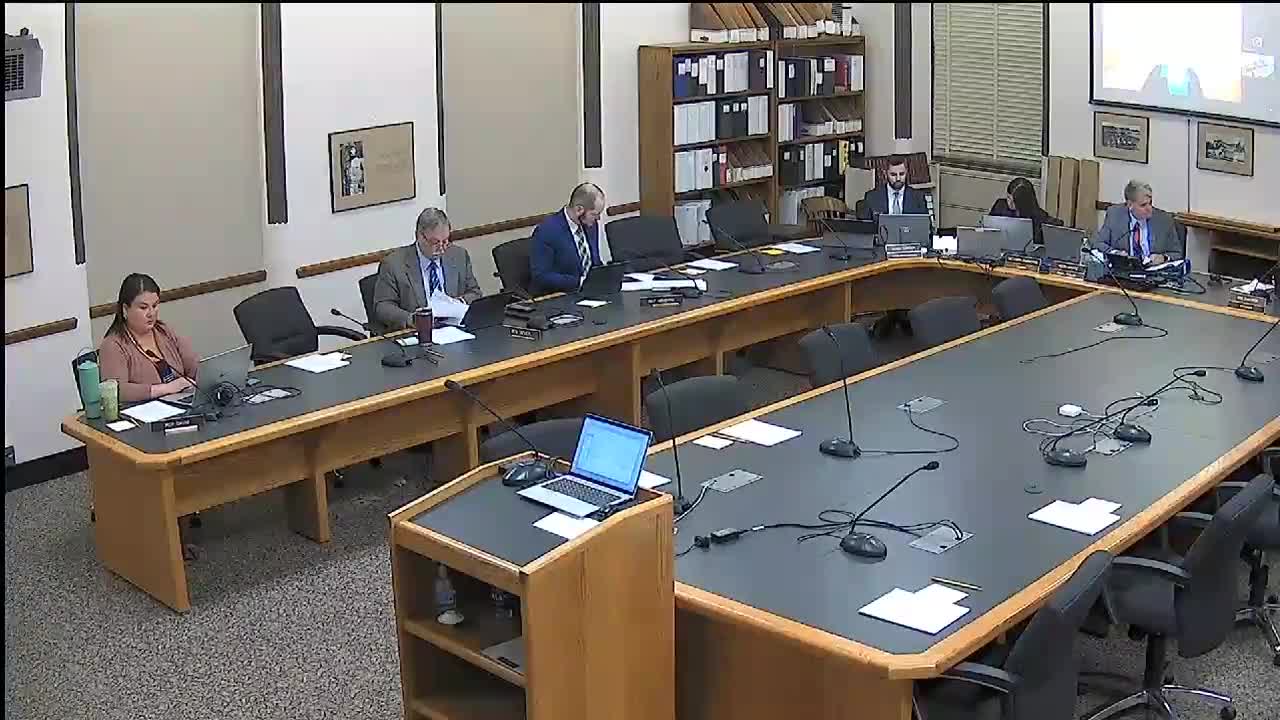
The North Dakota Legislative Management Human Services Interim Committee on Monday opened a months‑long study of homelessness after briefings from state agencies and community providers on the size of the population, funding available and where gaps remain.
Committee members heard data and program summaries from the North Dakota Housing Finance Agency; Department of Health and Human Services; the Department of Corrections and Rehabilitation; and community providers including the Center for Opportunity (Bismarck), Missouri Slope Area United Way’s Center for Opportunity and the Fargo‑Moorhead Coalition to End Homelessness.
The committee chair, Senator Keith Davison, said the panel would collect that information and “develop recommendations and any bill drafts necessary to implement the recommendations.” The committee’s next tentative meeting date mentioned during the session was Nov. 20.
Why it matters: Witnesses told the committee the state is seeing more people in crisis, a growing share of infants and toddlers seeking services and large variation across counties in the mix of shelter and in‑home providers. Those trends affect workforce participation, program costs and where limited state and federal dollars best can be spent to prevent or shorten episodes of homelessness.
What the agencies said
Jennifer Henderson, director of community housing and grants management at the North Dakota Housing Finance Agency (NDHFA), summarized federal and state housing supports used to address homelessness and the state’s continuum of care. Henderson said the NDHFA coordinates Emergency Solutions Grant (ESG), Continuum of Care (CoC) and state homeless grant dollars and that funding priorities in recent competitive awards shifted more toward rapid rehousing and homeless prevention when the Legislature provided a larger one‑time appropriation.
Henderson briefed the committee on program balances and recent appropriations: the housing incentive fund balance was reported as approximately $7.1 million on June 30, 2025, and the 2025 Legislature approved transfers, including roughly $9.85 million for homeless programs for the 2025–27 biennium and a $25 million transfer from the Strategic Investment Improvements Fund for housing projects. She told the committee that the NDHFA received roughly $486,005 in federal ESG funding for fiscal year 2025 and that the Continuum of Care allocation averaged about $3.3 million annually, among other figures.
Jessica Thomason, with the Department of Health and Human Services (DHHS), said state program experience with the “North Dakota Rent Help” rental assistance effort showed the program served roughly 31,000 unique households since May 2020. “We can document with certainty housing crisis and homelessness exists in a 100% of the counties in North Dakota,” Thomason said, and added that among households that applied to North Dakota Rent Help, about 13,000 were homeless at the time they applied and nearly one‑third included children under 18.
Thomason described how housing crisis can be episodic or chronic and said prevention interventions (eviction prevention, landlord mediation, targeted rental assistance and discharge planning from institutions) reduce the inflow into homelessness and thereby reduce total system costs.
Adam Anderson of the Department of Corrections and Rehabilitation (DOCR) told the committee DOCR records showed roughly 876 supervised parole or probation clients had been identified as homeless. He described DOCR reentry planning and said transitional residential partners are a key part of parole placements: “I can confidently stand up here today and say, we're not paroling anybody to homelessness,” Anderson said, noting this relies on contracts with transitional facilities that provide supervised placements and wraparound services.
Community providers and regional models
Jenna Gallo, executive director of Missouri Slope Area United Way, described the Center for Opportunity in Bismarck, a 24‑7 emergency shelter that opened a larger building in 2023. “We shelter approximately 100 different people each night,” Gallo said, and described onsite case management, behavioral health caseworkers and housing navigation that staff say reduced returns to homelessness for clients who receive comprehensive services.
Chandler Eslinger, executive director of the Fargo‑Moorhead Coalition to End Homelessness, described a regional “United to End Homelessness” initiative designed to identify people who are high users of emergency services and pair intensive case management and flexible housing supports. Eslinger summarized an approach to make homelessness “rare, brief and one time” by expanding prevention and rapid rehousing while also shortening shelter stays where they exist.
What the committee will do next
Committee staff and agency witnesses outlined a multi‑month plan for the study: the group will collect written materials, hold follow‑up hearings with agencies and providers, and use a public input process that includes surveys and regional meetings. Committee staff suggested the new advisory group created by the 2025 Legislature for childcare matters (a separate statutory requirement) will also be asked to supply membership and technical support where topics overlap with housing stability and workforce issues.
No formal votes or final policy actions were taken at the session. Committee members asked agencies for more granular data, including longitudinal counts and maps of where households with high housing cost burden and job concentrations overlap. Several members said they wanted more detailed counts for rural counties and for populations mentioned in testimony (children, veterans, people exiting institutions and tribal communities).
Ending note: The committee’s staff plan calls for monthly working sessions through spring so members can review program design, funding flows and evidence of effectiveness before preparing final recommendations to legislative management.
Committee members heard data and program summaries from the North Dakota Housing Finance Agency; Department of Health and Human Services; the Department of Corrections and Rehabilitation; and community providers including the Center for Opportunity (Bismarck), Missouri Slope Area United Way’s Center for Opportunity and the Fargo‑Moorhead Coalition to End Homelessness.
The committee chair, Senator Keith Davison, said the panel would collect that information and “develop recommendations and any bill drafts necessary to implement the recommendations.” The committee’s next tentative meeting date mentioned during the session was Nov. 20.
Why it matters: Witnesses told the committee the state is seeing more people in crisis, a growing share of infants and toddlers seeking services and large variation across counties in the mix of shelter and in‑home providers. Those trends affect workforce participation, program costs and where limited state and federal dollars best can be spent to prevent or shorten episodes of homelessness.
What the agencies said
Jennifer Henderson, director of community housing and grants management at the North Dakota Housing Finance Agency (NDHFA), summarized federal and state housing supports used to address homelessness and the state’s continuum of care. Henderson said the NDHFA coordinates Emergency Solutions Grant (ESG), Continuum of Care (CoC) and state homeless grant dollars and that funding priorities in recent competitive awards shifted more toward rapid rehousing and homeless prevention when the Legislature provided a larger one‑time appropriation.
Henderson briefed the committee on program balances and recent appropriations: the housing incentive fund balance was reported as approximately $7.1 million on June 30, 2025, and the 2025 Legislature approved transfers, including roughly $9.85 million for homeless programs for the 2025–27 biennium and a $25 million transfer from the Strategic Investment Improvements Fund for housing projects. She told the committee that the NDHFA received roughly $486,005 in federal ESG funding for fiscal year 2025 and that the Continuum of Care allocation averaged about $3.3 million annually, among other figures.
Jessica Thomason, with the Department of Health and Human Services (DHHS), said state program experience with the “North Dakota Rent Help” rental assistance effort showed the program served roughly 31,000 unique households since May 2020. “We can document with certainty housing crisis and homelessness exists in a 100% of the counties in North Dakota,” Thomason said, and added that among households that applied to North Dakota Rent Help, about 13,000 were homeless at the time they applied and nearly one‑third included children under 18.
Thomason described how housing crisis can be episodic or chronic and said prevention interventions (eviction prevention, landlord mediation, targeted rental assistance and discharge planning from institutions) reduce the inflow into homelessness and thereby reduce total system costs.
Adam Anderson of the Department of Corrections and Rehabilitation (DOCR) told the committee DOCR records showed roughly 876 supervised parole or probation clients had been identified as homeless. He described DOCR reentry planning and said transitional residential partners are a key part of parole placements: “I can confidently stand up here today and say, we're not paroling anybody to homelessness,” Anderson said, noting this relies on contracts with transitional facilities that provide supervised placements and wraparound services.
Community providers and regional models
Jenna Gallo, executive director of Missouri Slope Area United Way, described the Center for Opportunity in Bismarck, a 24‑7 emergency shelter that opened a larger building in 2023. “We shelter approximately 100 different people each night,” Gallo said, and described onsite case management, behavioral health caseworkers and housing navigation that staff say reduced returns to homelessness for clients who receive comprehensive services.
Chandler Eslinger, executive director of the Fargo‑Moorhead Coalition to End Homelessness, described a regional “United to End Homelessness” initiative designed to identify people who are high users of emergency services and pair intensive case management and flexible housing supports. Eslinger summarized an approach to make homelessness “rare, brief and one time” by expanding prevention and rapid rehousing while also shortening shelter stays where they exist.
What the committee will do next
Committee staff and agency witnesses outlined a multi‑month plan for the study: the group will collect written materials, hold follow‑up hearings with agencies and providers, and use a public input process that includes surveys and regional meetings. Committee staff suggested the new advisory group created by the 2025 Legislature for childcare matters (a separate statutory requirement) will also be asked to supply membership and technical support where topics overlap with housing stability and workforce issues.
No formal votes or final policy actions were taken at the session. Committee members asked agencies for more granular data, including longitudinal counts and maps of where households with high housing cost burden and job concentrations overlap. Several members said they wanted more detailed counts for rural counties and for populations mentioned in testimony (children, veterans, people exiting institutions and tribal communities).
Ending note: The committee’s staff plan calls for monthly working sessions through spring so members can review program design, funding flows and evidence of effectiveness before preparing final recommendations to legislative management.
View the Full Meeting & All Its Details
This article offers just a summary. Unlock complete video, transcripts, and insights as a Founder Member.
✓
Watch full, unedited meeting videos
✓
Search every word spoken in unlimited transcripts
✓
AI summaries & real-time alerts (all government levels)
✓
Permanent access to expanding government content
30-day money-back guarantee
