Interim committee launches study of accessibility for people who are deaf, hard of hearing or have hearing differences
September 04, 2025 | Legislative, North Dakota
This article was created by AI summarizing key points discussed. AI makes mistakes, so for full details and context, please refer to the video of the full meeting. Please report any errors so we can fix them. Report an error »
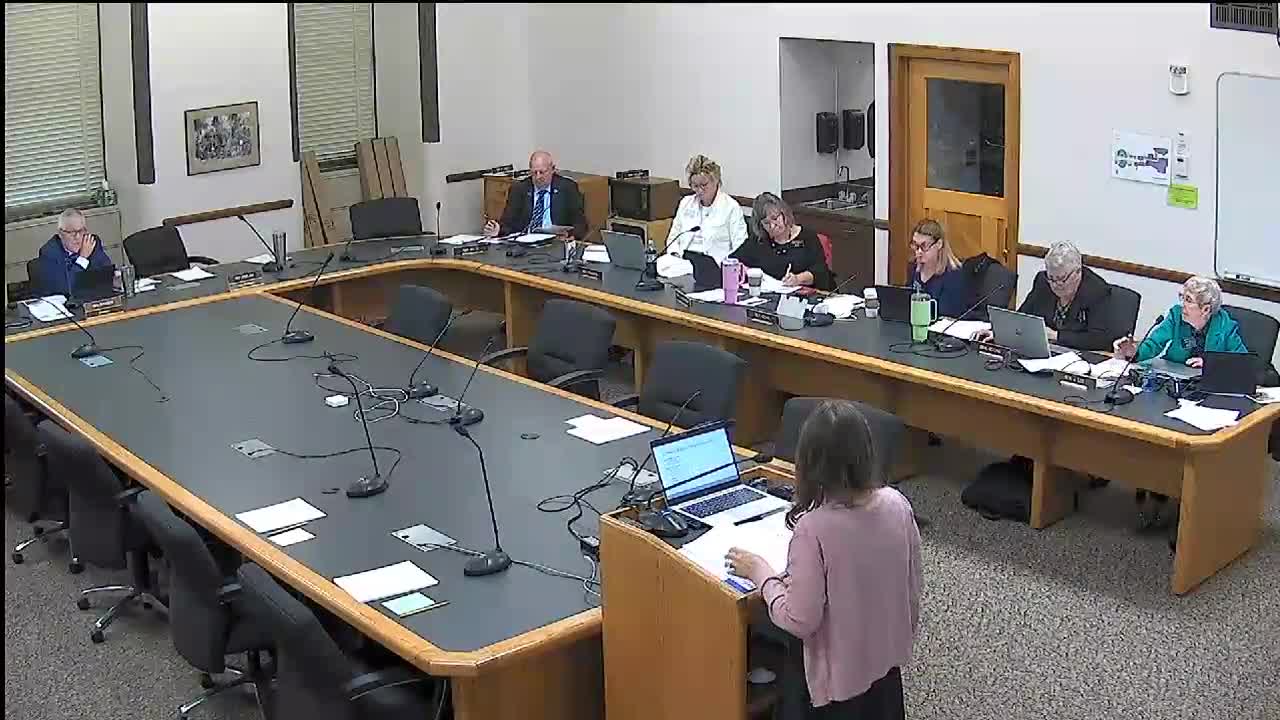
The Human Services Interim Committee opened a legislatively mandated study of accessibility for people who are deaf, hard of hearing or have hearing differences, receiving a background memorandum and briefings from state and nonprofit specialists on federal obligations, state services and assistive technology.
Why it matters: The 2025 Legislature directed a study of state and local government compliance with the Americans with Disabilities Act and other statutes, and asked the committee to identify barriers to effective communication and strategies for improvement. Witnesses emphasized that accessible communication affects access to public benefits, health care, education and court proceedings.
What the committee heard
Zach Greenberg, commissioner of the Department of Labor and Human Rights, reviewed the relevant legal framework. He reminded the panel that Title II of the Americans with Disabilities Act requires effective communication for people with communication disabilities and that auxiliary aids and services — for example interpreters, captioning or accessible technology — must be provided in the person’s preferred mode of communication or in a reasonable alternative. Greenberg said the department enforces nondiscrimination laws, investigates complaints and provides education and outreach to agencies and employers.
Kathy Freilich of the North Dakota School for the Deaf (NDSD) gave an overview of the school’s statewide resource role. She noted the state’s earlier 2009 legislative action that expanded the school’s role as a statewide resource and the importance of early language development for children who are deaf. “We need to start that process of language development before the age of 3,” Freilich said, underscoring the long‑term effects of early intervention and the need for timely referrals.
Mike (executive director) and Tammy Turnus of North Dakota Assistive demonstrated assistive devices and accessibility features that are currently available, including smartphone real‑time transcription apps, flip‑screen captioning tools that can display live text for meetings, pocket amplifiers and alerting systems that flash or shake a bed for people who cannot hear alarms. Tammy Turnus showed a live transcription app paired to a portable monitor to illustrate how real‑time captioning can be used for meetings or clinical encounters.
Key takeaways and gaps
Speakers and the committee identified several recurring barriers:
- A shortage of licensed American Sign Language interpreters in North Dakota (testimony placed the licensed interpreter pool in the low double digits), which limits in‑person interpreting options for courts, hospitals and large meetings. NDSD staff and other witnesses said interpreter availability is a statewide bottleneck.
- Limited internet or device access in some homes and facilities can prevent use of video‑relay services and real‑time captioning tools.
- Confusion about agency responsibilities and inconsistent accommodation procedures across state and local offices. Commissioner Greenberg suggested a statewide effective‑communication policy, clearer ADA guidance and regular training of agency ADA coordinators.
- Gaps in early identification and referral for children with hearing loss. NDSD presenters said timely referrals for services and language development programs are crucial for long‑term outcomes.
Next steps
The committee’s study language requires input from the Department of Labor and Human Rights, Department of Health and Human Services, the NDSD, interpreters and assistive‑technology providers. Committee staff will assemble written material and plan hearings that allow providers, educators, interpreters and consumers to testify. Committee members asked staff to assemble a master list of agency ADA coordinators and to gather examples of successful models from other states.
No formal policy actions or votes were taken at the hearing. Witnesses asked the committee to consider funding and policy steps that would support interpreter recruitment, technology adoption and training for public employees.
Why it matters: The 2025 Legislature directed a study of state and local government compliance with the Americans with Disabilities Act and other statutes, and asked the committee to identify barriers to effective communication and strategies for improvement. Witnesses emphasized that accessible communication affects access to public benefits, health care, education and court proceedings.
What the committee heard
Zach Greenberg, commissioner of the Department of Labor and Human Rights, reviewed the relevant legal framework. He reminded the panel that Title II of the Americans with Disabilities Act requires effective communication for people with communication disabilities and that auxiliary aids and services — for example interpreters, captioning or accessible technology — must be provided in the person’s preferred mode of communication or in a reasonable alternative. Greenberg said the department enforces nondiscrimination laws, investigates complaints and provides education and outreach to agencies and employers.
Kathy Freilich of the North Dakota School for the Deaf (NDSD) gave an overview of the school’s statewide resource role. She noted the state’s earlier 2009 legislative action that expanded the school’s role as a statewide resource and the importance of early language development for children who are deaf. “We need to start that process of language development before the age of 3,” Freilich said, underscoring the long‑term effects of early intervention and the need for timely referrals.
Mike (executive director) and Tammy Turnus of North Dakota Assistive demonstrated assistive devices and accessibility features that are currently available, including smartphone real‑time transcription apps, flip‑screen captioning tools that can display live text for meetings, pocket amplifiers and alerting systems that flash or shake a bed for people who cannot hear alarms. Tammy Turnus showed a live transcription app paired to a portable monitor to illustrate how real‑time captioning can be used for meetings or clinical encounters.
Key takeaways and gaps
Speakers and the committee identified several recurring barriers:
- A shortage of licensed American Sign Language interpreters in North Dakota (testimony placed the licensed interpreter pool in the low double digits), which limits in‑person interpreting options for courts, hospitals and large meetings. NDSD staff and other witnesses said interpreter availability is a statewide bottleneck.
- Limited internet or device access in some homes and facilities can prevent use of video‑relay services and real‑time captioning tools.
- Confusion about agency responsibilities and inconsistent accommodation procedures across state and local offices. Commissioner Greenberg suggested a statewide effective‑communication policy, clearer ADA guidance and regular training of agency ADA coordinators.
- Gaps in early identification and referral for children with hearing loss. NDSD presenters said timely referrals for services and language development programs are crucial for long‑term outcomes.
Next steps
The committee’s study language requires input from the Department of Labor and Human Rights, Department of Health and Human Services, the NDSD, interpreters and assistive‑technology providers. Committee staff will assemble written material and plan hearings that allow providers, educators, interpreters and consumers to testify. Committee members asked staff to assemble a master list of agency ADA coordinators and to gather examples of successful models from other states.
No formal policy actions or votes were taken at the hearing. Witnesses asked the committee to consider funding and policy steps that would support interpreter recruitment, technology adoption and training for public employees.
Don't Miss a Word: See the Full Meeting!
Go beyond summaries. Unlock every video, transcript, and key insight with a Founder Membership.
✓
Get instant access to full meeting videos
✓
Search and clip any phrase from complete transcripts
✓
Receive AI-powered summaries & custom alerts
✓
Enjoy lifetime, unrestricted access to government data
30-day money-back guarantee
