Fremont County coroner reports rise in accidental deaths, raises kratom safety and morgue facility concerns
August 19, 2025 | Fremont County, Wyoming
This article was created by AI summarizing key points discussed. AI makes mistakes, so for full details and context, please refer to the video of the full meeting. Please report any errors so we can fix them. Report an error »
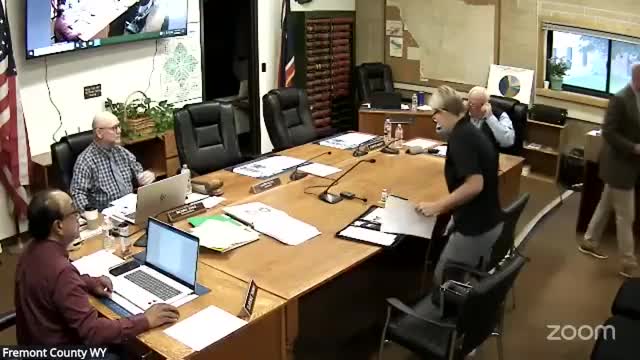
Fremont County Coroner delivered a briefing on case statistics, facility needs and drug-related fatalities at the Aug. 19 commission meeting, and asked the commission to consider next steps on kratom and the coroner’s facility project.
The presentation matters because it covered public-safety trends (an increase in accidental deaths), two recent fatalities involving kratom’s active compound, and workplace safety and capital-project delays for the coroner’s office that could affect service delivery.
The coroner said 97 total cases have been recorded so far this year compared with 92 at the same point last year; accidental deaths were 30 (10 more than the same time last year). She reported three suicides (down from six), three homicides (down from seven), one undetermined case and seven vehicular deaths this year compared with two previously. She said 25 autopsies were completed for Fremont County this calendar year and 30 for contracting counties; three cases were pending autopsy and toxicology at the time of the report.
On facilities, the coroner said the planning phase for a new coroner building had deadlines for final design decisions, but a project manager had not yet been retained. She described working conditions in the existing morgue as “austere,” saying temperatures in the autopsy room can top 100 degrees in summer and that ventilation from coolers can blow hot air into the space; she said fans or heaters are not practical during autopsies because they would disturb trace evidence.
The coroner also reported two recent deaths in the county involving mitragynine (a kratom alkaloid). She explained there are forms of the compound, including 7-hydroxymitragynine, that are more potent; she said the two local fatalities were from mitragynine itself and that Narcan (naloxone) can reverse a mitragynine overdose. She said kratom is widely available locally — citing Loaf 'N Jug and vape shops — and noted other jurisdictions have restricted or banned kratom, including an Aug. 1 state ban in Louisiana and local bans in places such as Denver and counties in other states. She asked the commission whether the county should explore restrictions and who they should consult to pursue that.
The coroner said the Corners Association (sic) will propose legislation to recognize coroners as peace officers/first responders; she said she plans to seek letters of support and would meet with associations during the upcoming WACo conference.
Commissioners and staff asked clarifying questions about project timelines and about which bodies would have authority to restrict kratom; coroner and commission members agreed more information was needed before the county could act. No formal county ordinance or regulatory change was proposed or adopted at the meeting.
The coroner asked for a project manager to be retained before finalizing immutable design decisions for the coroner building and said she would provide the commission with the grant application and additional details on her planning-phase submittals.
The presentation matters because it covered public-safety trends (an increase in accidental deaths), two recent fatalities involving kratom’s active compound, and workplace safety and capital-project delays for the coroner’s office that could affect service delivery.
The coroner said 97 total cases have been recorded so far this year compared with 92 at the same point last year; accidental deaths were 30 (10 more than the same time last year). She reported three suicides (down from six), three homicides (down from seven), one undetermined case and seven vehicular deaths this year compared with two previously. She said 25 autopsies were completed for Fremont County this calendar year and 30 for contracting counties; three cases were pending autopsy and toxicology at the time of the report.
On facilities, the coroner said the planning phase for a new coroner building had deadlines for final design decisions, but a project manager had not yet been retained. She described working conditions in the existing morgue as “austere,” saying temperatures in the autopsy room can top 100 degrees in summer and that ventilation from coolers can blow hot air into the space; she said fans or heaters are not practical during autopsies because they would disturb trace evidence.
The coroner also reported two recent deaths in the county involving mitragynine (a kratom alkaloid). She explained there are forms of the compound, including 7-hydroxymitragynine, that are more potent; she said the two local fatalities were from mitragynine itself and that Narcan (naloxone) can reverse a mitragynine overdose. She said kratom is widely available locally — citing Loaf 'N Jug and vape shops — and noted other jurisdictions have restricted or banned kratom, including an Aug. 1 state ban in Louisiana and local bans in places such as Denver and counties in other states. She asked the commission whether the county should explore restrictions and who they should consult to pursue that.
The coroner said the Corners Association (sic) will propose legislation to recognize coroners as peace officers/first responders; she said she plans to seek letters of support and would meet with associations during the upcoming WACo conference.
Commissioners and staff asked clarifying questions about project timelines and about which bodies would have authority to restrict kratom; coroner and commission members agreed more information was needed before the county could act. No formal county ordinance or regulatory change was proposed or adopted at the meeting.
The coroner asked for a project manager to be retained before finalizing immutable design decisions for the coroner building and said she would provide the commission with the grant application and additional details on her planning-phase submittals.
View the Full Meeting & All Its Details
This article offers just a summary. Unlock complete video, transcripts, and insights as a Founder Member.
✓
Watch full, unedited meeting videos
✓
Search every word spoken in unlimited transcripts
✓
AI summaries & real-time alerts (all government levels)
✓
Permanent access to expanding government content
30-day money-back guarantee
