Christian County commissioners, prosecutor and judge debate moving juvenile attorney from prosecutor's office to juvenile office; MOU, conflicts and budgetary ?
August 19, 2025 | Christian County, Missouri
This article was created by AI summarizing key points discussed. AI makes mistakes, so for full details and context, please refer to the video of the full meeting. Please report any errors so we can fix them. Report an error »
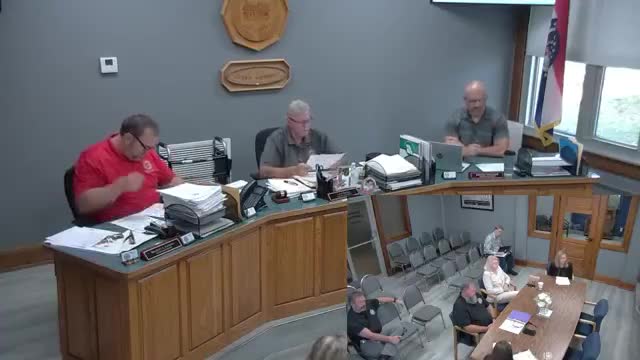
Presiding Commissioner Lynn Morris convened a work study on the Christian County juvenile office on Aug. 19, 2025, focusing on a request to move the county's juvenile attorney out of the Christian County Prosecutor's Office and place that role under the juvenile office.
The discussion centered on three practical issues: conflicts of interest when a prosecutor's office also staffs the juvenile office, the personnel classification and pay implications of moving a state-employed chief juvenile officer onto the county payroll, and whether the parties can document roles and responsibilities in a memorandum of understanding so operations and budget impacts are clear.
Judge Johnson told commissioners that the county's chief juvenile officer, Perry Barnes, brings "vast experience" and that Jeanette Beaulieu, the attorney assigned to the juvenile office, "performs absolutely no services for Miss Tuohy" and works solely for the juvenile office. That statement framed other participants' concerns about overlapping responsibilities and ethical conflicts.
Christian County Prosecuting Attorney Miss Tuohy said the law and Missouri Supreme Court rules allow the prosecutor to serve as attorney for the juvenile office but warned that "their interests are different than the interests of the prosecutor's office," creating recurring conflict situations when an assistant prosecutor is assigned to juvenile matters. Tuohy described an instance in which the juvenile-office attorney sought to move on a criminal-case bond matter, a step Tuohy said was the defense attorney's responsibility.
Commissioners said the county and the court should draft an MOU that clarifies supervision, conflict-resolution procedures and financial responsibilities. Presiding Commissioner Lynn Morris and Commissioner Bradley Jackson said the MOU should protect the court's independence while setting clear responsibilities for county payroll and benefits if the position moves to the county.
Officials said the transfer would not create a new position: the county would move an existing county position to staff the juvenile function and adjust pay. Morris said the increase in cost "is covered almost completely by grant money," and planning documents cited that grant revenue would pay most of the higher county salary level if the position shifts to county payroll. Participants emphasized, however, that relying on grants entails recurring administrative work and long-term uncertainty.
Commissioner Jackson said the prosecutor's office would not be left understaffed if Beaulieu moved to the juvenile office because she "is doing 0. 0 Mhmm. To assist her in the work of her office." Jackson and the judge both stressed that future prosecutor staffing needs would be determined by caseload and were not automatically linked to the juvenile attorney's reassignment.
No formal action was taken during the work study. Commissioners and officeholders agreed to draft and review an MOU, to continue the budget review that will record any salary changes, and to schedule a follow-up agenda item next week so the commission can consider funding and procedural language once counsel drafts a proposed MOU.
The work study was explicit that it was not a hiring decision and that any county payroll action would follow the county's hiring rules and the commission's formal agenda process. Participants said that, even if the MOU process takes time, county operations would continue and the commission would not withhold routine budget approvals solely on this item.
Morris said the commission's objective is to protect court independence while maintaining a professional working relationship among elected officials, and she directed staff and counsel to begin drafting an MOU to bring back for review.
Ending: Commissioners concluded the work study by instructing counsel and staff to prepare a memorandum of understanding and to return with budget figures and draft language for review at the next meeting; no vote or formal transfer occurred at the work study.
The discussion centered on three practical issues: conflicts of interest when a prosecutor's office also staffs the juvenile office, the personnel classification and pay implications of moving a state-employed chief juvenile officer onto the county payroll, and whether the parties can document roles and responsibilities in a memorandum of understanding so operations and budget impacts are clear.
Judge Johnson told commissioners that the county's chief juvenile officer, Perry Barnes, brings "vast experience" and that Jeanette Beaulieu, the attorney assigned to the juvenile office, "performs absolutely no services for Miss Tuohy" and works solely for the juvenile office. That statement framed other participants' concerns about overlapping responsibilities and ethical conflicts.
Christian County Prosecuting Attorney Miss Tuohy said the law and Missouri Supreme Court rules allow the prosecutor to serve as attorney for the juvenile office but warned that "their interests are different than the interests of the prosecutor's office," creating recurring conflict situations when an assistant prosecutor is assigned to juvenile matters. Tuohy described an instance in which the juvenile-office attorney sought to move on a criminal-case bond matter, a step Tuohy said was the defense attorney's responsibility.
Commissioners said the county and the court should draft an MOU that clarifies supervision, conflict-resolution procedures and financial responsibilities. Presiding Commissioner Lynn Morris and Commissioner Bradley Jackson said the MOU should protect the court's independence while setting clear responsibilities for county payroll and benefits if the position moves to the county.
Officials said the transfer would not create a new position: the county would move an existing county position to staff the juvenile function and adjust pay. Morris said the increase in cost "is covered almost completely by grant money," and planning documents cited that grant revenue would pay most of the higher county salary level if the position shifts to county payroll. Participants emphasized, however, that relying on grants entails recurring administrative work and long-term uncertainty.
Commissioner Jackson said the prosecutor's office would not be left understaffed if Beaulieu moved to the juvenile office because she "is doing 0. 0 Mhmm. To assist her in the work of her office." Jackson and the judge both stressed that future prosecutor staffing needs would be determined by caseload and were not automatically linked to the juvenile attorney's reassignment.
No formal action was taken during the work study. Commissioners and officeholders agreed to draft and review an MOU, to continue the budget review that will record any salary changes, and to schedule a follow-up agenda item next week so the commission can consider funding and procedural language once counsel drafts a proposed MOU.
The work study was explicit that it was not a hiring decision and that any county payroll action would follow the county's hiring rules and the commission's formal agenda process. Participants said that, even if the MOU process takes time, county operations would continue and the commission would not withhold routine budget approvals solely on this item.
Morris said the commission's objective is to protect court independence while maintaining a professional working relationship among elected officials, and she directed staff and counsel to begin drafting an MOU to bring back for review.
Ending: Commissioners concluded the work study by instructing counsel and staff to prepare a memorandum of understanding and to return with budget figures and draft language for review at the next meeting; no vote or formal transfer occurred at the work study.
View the Full Meeting & All Its Details
This article offers just a summary. Unlock complete video, transcripts, and insights as a Founder Member.
✓
Watch full, unedited meeting videos
✓
Search every word spoken in unlimited transcripts
✓
AI summaries & real-time alerts (all government levels)
✓
Permanent access to expanding government content
30-day money-back guarantee
