Arlington Heights board keeps 1% grocery tax, approves streaming tax to help fund fifth ambulance
August 19, 2025 | Arlington Heights, Cook County, Illinois
This article was created by AI summarizing key points discussed. AI makes mistakes, so for full details and context, please refer to the video of the full meeting. Please report any errors so we can fix them. Report an error »
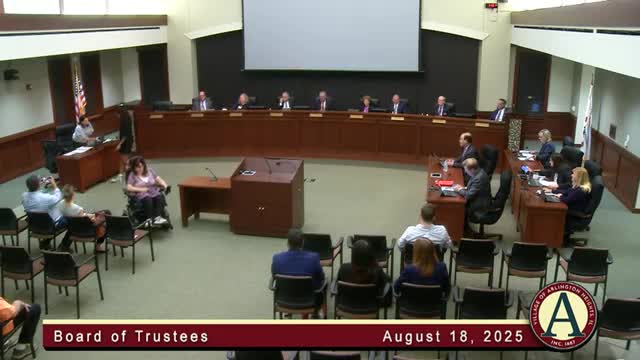
The Arlington Heights Village Board on Aug. 18 approved two ordinances that staff said are needed to meet revenue targets in the village’s 2026 budget plan: an ordinance to retain the municipal 1% grocery retailers’ occupation tax and a separate ordinance creating a streaming-amusements tax. The grocery ordinance passed 6-3; the streaming ordinance passed 7-2.
Board members and staff said the votes respond to shortfalls built into the village’s projection if the grocery tax is not retained and to funding needs for a fifth ambulance that staff plan to have fully staffed by Jan. 1, 2026. Director of Finance Melissa Gallagher and other staff told trustees the village estimates roughly $1,300,000 in annual general-fund revenue would be lost if the municipal grocery tax were eliminated; staff described the streaming tax as a partial revenue source tied to the ambulance expansion and estimated typical household impacts at about $41–$61 per year depending on service subscriptions.
Supporters said the measures preserve predictable revenue for core services. Trustee Shirley, among trustees who voted yes on both ordinances, argued the taxes are a continuation of longstanding local revenue streams and would reduce upward pressure on the property tax levy. Mayor (President) Tonali urged the board to retain the existing grocery tax and implement the streaming tax to meet the village’s service commitments.
Opponents framed the grocery tax as regressive and said the village should not add or keep taxes that fall more heavily on lower-income residents. Trustee Dunnington said she would vote no on the grocery tax, saying it disproportionately affects seniors and households who do not qualify for SNAP, and noted broad increases in household costs. As she told the board: “I will be voting no on the grocery tax tonight. I think it's a bad tax… low income households spend a much higher share of their income on food.” Trustee Manganaro said he opposed any tax increases this year and urged using reserves or other one‑time measures instead of new or retained revenue streams.
Board members also debated timing and details. Staff cautioned that, under Illinois law, municipalities that want to retain an existing municipal grocery tax must take affirmative action by specified deadlines or lose the ability to collect it without reauthorizing it later under a different schedule; staff said the board needed to decide before October to avoid losing six months of revenue. Staff also reiterated that the streaming tax would not fully fund the fifth ambulance and that other revenues or budget changes would still be required.
Amendment attempt: Trustee Dunnington offered a 24‑month sunset (automatic repeal unless reauthorized) for the grocery tax; that amendment failed on a roll call vote (4 in favor, 5 opposed). After defeat of the amendment the main grocery-tax ordinance passed on a roll call 6–3 (Yes: Trustees Bertucci, Shirley, Lebeds, Schwingbeck, Zick and President Tonali; No: Trustees Manganaro, Dunnington, Santa Maria). The streaming-tax ordinance passed later, 7–2 (Yes: Trustees Schwingbeck, Lebeds, Santa Maria, Bertucci, Shirley, Dunnington and President Tonali; No: Trustees Zick and Manganaro).
What it changes and next steps: If implemented as drafted in the ordinances, the grocery tax remains in place (no immediate consumer rate increase for residents) and the streaming tax would be added to local municipal receipts collected from streaming providers; staff said providers already collect analogous taxes for other jurisdictions and would remit local streaming tax receipts to the village. The streaming tax and retained grocery tax will be reflected in the draft 2026 budget the village presents to the board in the fall. Staff said the streaming-tax ordinance would become effective in line with the implementation schedule described in the draft ordinance (effective dates in the ordinance as drafted), and the grocery-tax retention must be acted on by the board before the statutory deadlines to preserve continuity.
Votes at a glance
- Ordinance to retain municipal grocery retailers/service occupation tax (amend Chapter 7): Motion by Trustee Bertucci; seconded by Trustee Shirley. Roll call: Yes—Bertucci, Shirley, Lebeds, Schwingbeck, Zick, President Tonali (6). No—Manganaro, Dunnington, Santa Maria (3). Outcome: approved.
- Amendment (sunset clause, 24 months) proposed by Trustee Dunnington: Roll call: Yes—Dunnington, Zick, Manganaro, Santa Maria (4). No—Shirley, Lebeds, Bertucci, Schwingbeck, President Tonali (5). Outcome: amendment failed.
- Ordinance establishing municipal streaming-amusements tax (for general fund, partial support for fifth ambulance): Motion by Trustee Schwingbeck; seconded by Trustee Lebeds. Roll call: Yes—Schwingbeck, Lebeds, Santa Maria, Bertucci, Shirley, Dunnington, President Tonali (7). No—Zick, Manganaro (2). Outcome: approved.
Why it mattered: Staff said the two measures together reduce pressure on the 2026 property-tax levy and help cover recurring costs for an additional ambulance and associated staffing that the village intends to have operating full-time in 2026. Opponents emphasized the grocery tax’s burden on households buying food and medicines and urged alternatives; supporters emphasized continuity of local services and comparability with neighboring municipalities.
Ending: The board approved both ordinances after extended discussion. Staff will incorporate the measures into the draft 2026 budget and return with implementation timing and administrative details as part of the budget process.
Board members and staff said the votes respond to shortfalls built into the village’s projection if the grocery tax is not retained and to funding needs for a fifth ambulance that staff plan to have fully staffed by Jan. 1, 2026. Director of Finance Melissa Gallagher and other staff told trustees the village estimates roughly $1,300,000 in annual general-fund revenue would be lost if the municipal grocery tax were eliminated; staff described the streaming tax as a partial revenue source tied to the ambulance expansion and estimated typical household impacts at about $41–$61 per year depending on service subscriptions.
Supporters said the measures preserve predictable revenue for core services. Trustee Shirley, among trustees who voted yes on both ordinances, argued the taxes are a continuation of longstanding local revenue streams and would reduce upward pressure on the property tax levy. Mayor (President) Tonali urged the board to retain the existing grocery tax and implement the streaming tax to meet the village’s service commitments.
Opponents framed the grocery tax as regressive and said the village should not add or keep taxes that fall more heavily on lower-income residents. Trustee Dunnington said she would vote no on the grocery tax, saying it disproportionately affects seniors and households who do not qualify for SNAP, and noted broad increases in household costs. As she told the board: “I will be voting no on the grocery tax tonight. I think it's a bad tax… low income households spend a much higher share of their income on food.” Trustee Manganaro said he opposed any tax increases this year and urged using reserves or other one‑time measures instead of new or retained revenue streams.
Board members also debated timing and details. Staff cautioned that, under Illinois law, municipalities that want to retain an existing municipal grocery tax must take affirmative action by specified deadlines or lose the ability to collect it without reauthorizing it later under a different schedule; staff said the board needed to decide before October to avoid losing six months of revenue. Staff also reiterated that the streaming tax would not fully fund the fifth ambulance and that other revenues or budget changes would still be required.
Amendment attempt: Trustee Dunnington offered a 24‑month sunset (automatic repeal unless reauthorized) for the grocery tax; that amendment failed on a roll call vote (4 in favor, 5 opposed). After defeat of the amendment the main grocery-tax ordinance passed on a roll call 6–3 (Yes: Trustees Bertucci, Shirley, Lebeds, Schwingbeck, Zick and President Tonali; No: Trustees Manganaro, Dunnington, Santa Maria). The streaming-tax ordinance passed later, 7–2 (Yes: Trustees Schwingbeck, Lebeds, Santa Maria, Bertucci, Shirley, Dunnington and President Tonali; No: Trustees Zick and Manganaro).
What it changes and next steps: If implemented as drafted in the ordinances, the grocery tax remains in place (no immediate consumer rate increase for residents) and the streaming tax would be added to local municipal receipts collected from streaming providers; staff said providers already collect analogous taxes for other jurisdictions and would remit local streaming tax receipts to the village. The streaming tax and retained grocery tax will be reflected in the draft 2026 budget the village presents to the board in the fall. Staff said the streaming-tax ordinance would become effective in line with the implementation schedule described in the draft ordinance (effective dates in the ordinance as drafted), and the grocery-tax retention must be acted on by the board before the statutory deadlines to preserve continuity.
Votes at a glance
- Ordinance to retain municipal grocery retailers/service occupation tax (amend Chapter 7): Motion by Trustee Bertucci; seconded by Trustee Shirley. Roll call: Yes—Bertucci, Shirley, Lebeds, Schwingbeck, Zick, President Tonali (6). No—Manganaro, Dunnington, Santa Maria (3). Outcome: approved.
- Amendment (sunset clause, 24 months) proposed by Trustee Dunnington: Roll call: Yes—Dunnington, Zick, Manganaro, Santa Maria (4). No—Shirley, Lebeds, Bertucci, Schwingbeck, President Tonali (5). Outcome: amendment failed.
- Ordinance establishing municipal streaming-amusements tax (for general fund, partial support for fifth ambulance): Motion by Trustee Schwingbeck; seconded by Trustee Lebeds. Roll call: Yes—Schwingbeck, Lebeds, Santa Maria, Bertucci, Shirley, Dunnington, President Tonali (7). No—Zick, Manganaro (2). Outcome: approved.
Why it mattered: Staff said the two measures together reduce pressure on the 2026 property-tax levy and help cover recurring costs for an additional ambulance and associated staffing that the village intends to have operating full-time in 2026. Opponents emphasized the grocery tax’s burden on households buying food and medicines and urged alternatives; supporters emphasized continuity of local services and comparability with neighboring municipalities.
Ending: The board approved both ordinances after extended discussion. Staff will incorporate the measures into the draft 2026 budget and return with implementation timing and administrative details as part of the budget process.
Don't Miss a Word: See the Full Meeting!
Go beyond summaries. Unlock every video, transcript, and key insight with a Founder Membership.
✓
Get instant access to full meeting videos
✓
Search and clip any phrase from complete transcripts
✓
Receive AI-powered summaries & custom alerts
✓
Enjoy lifetime, unrestricted access to government data
30-day money-back guarantee
