Council hears business owners and staff on video gaming cap, audits and transfers
August 19, 2025 | Bloomington, McLean County, Illinois
This article was created by AI summarizing key points discussed. AI makes mistakes, so for full details and context, please refer to the video of the full meeting. Please report any errors so we can fix them. Report an error »
City staff and council members reviewed Bloomington's video‑gaming rules and heard business owners call for action on license availability. The Committee of the Whole received public comments from local bar and restaurant owners and a brief staff overview of options; no change was adopted.
Why it matters: Video gaming generates material municipal revenue but also raises social concerns. City Manager Jeff Jurgens told the committee Bloomington currently caps licenses at 60; establishments in economic‑development agreements do not count against that cap. He said the city has collected more than $10 million in its 5% share since 2012 and that FY 2025 municipal receipts were about $1.3 million.
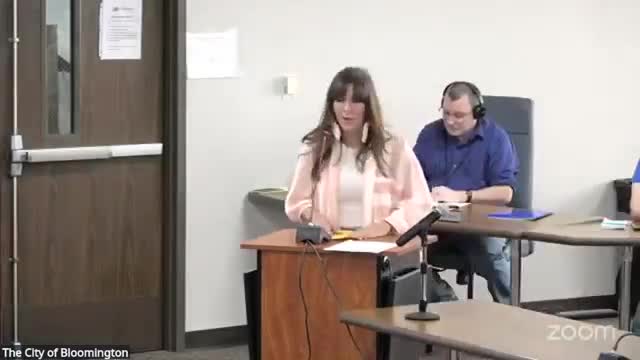
Business owners said the cap and the wait list harm long‑standing restaurants. Jill Whitaker, owner of Shake It Up cocktail lounge and eatery, said her business cannot compete with nearby establishments that already have video-gaming terminals and told the council: "Most of [our competitors] have video gaming, and we do not... The average bar restaurant that has video gaming... makes an extra $10,000 a month." She urged faster action so small local businesses can compete fairly.
Staff presented options that have been discussed: raise the cap (for example, from 60 to 72), remove the cap, limit terminals rather than establishments, or leave the current policy in place. Manager Jurgens also said the city will do another round of compliance reviews for signage and other code requirements regardless of cap decisions. He described the 50% rule that guides license renewal: no more than 50% of a holder's total business revenue may come from gaming, and annual renewals include affidavits and gross‑receipts submissions validated against Illinois Gaming Board reports.
Council debate and next steps: Members asked for more rigorous audits and consistent enforcement of the 50% rule and floor‑plan/seat requirements. Several members supported increasing the cap to reduce winners-and‑losers created by the current limit, while others cautioned against effectively subsidizing some businesses. No ordinance or code change was adopted; Council asked staff to return with detailed options, implementation issues and compliance findings.
Ending: Staff will prepare follow‑up material — including audit results, possible draft ordinances and sign‑code enforcement plans — for future council consideration. The council did not set a schedule for a vote at this meeting.
Why it matters: Video gaming generates material municipal revenue but also raises social concerns. City Manager Jeff Jurgens told the committee Bloomington currently caps licenses at 60; establishments in economic‑development agreements do not count against that cap. He said the city has collected more than $10 million in its 5% share since 2012 and that FY 2025 municipal receipts were about $1.3 million.
Business owners said the cap and the wait list harm long‑standing restaurants. Jill Whitaker, owner of Shake It Up cocktail lounge and eatery, said her business cannot compete with nearby establishments that already have video-gaming terminals and told the council: "Most of [our competitors] have video gaming, and we do not... The average bar restaurant that has video gaming... makes an extra $10,000 a month." She urged faster action so small local businesses can compete fairly.
Staff presented options that have been discussed: raise the cap (for example, from 60 to 72), remove the cap, limit terminals rather than establishments, or leave the current policy in place. Manager Jurgens also said the city will do another round of compliance reviews for signage and other code requirements regardless of cap decisions. He described the 50% rule that guides license renewal: no more than 50% of a holder's total business revenue may come from gaming, and annual renewals include affidavits and gross‑receipts submissions validated against Illinois Gaming Board reports.
Council debate and next steps: Members asked for more rigorous audits and consistent enforcement of the 50% rule and floor‑plan/seat requirements. Several members supported increasing the cap to reduce winners-and‑losers created by the current limit, while others cautioned against effectively subsidizing some businesses. No ordinance or code change was adopted; Council asked staff to return with detailed options, implementation issues and compliance findings.
Ending: Staff will prepare follow‑up material — including audit results, possible draft ordinances and sign‑code enforcement plans — for future council consideration. The council did not set a schedule for a vote at this meeting.
Don't Miss a Word: See the Full Meeting!
Go beyond summaries. Unlock every video, transcript, and key insight with a Founder Membership.
✓
Get instant access to full meeting videos
✓
Search and clip any phrase from complete transcripts
✓
Receive AI-powered summaries & custom alerts
✓
Enjoy lifetime, unrestricted access to government data
30-day money-back guarantee
