County highlights mental‑health programs, opioid‑settlement spending and new street‑drug risks
May 14, 2025 | Sussex County, New Jersey
This article was created by AI summarizing key points discussed. AI makes mistakes, so for full details and context, please refer to the video of the full meeting. Please report any errors so we can fix them. Report an error »
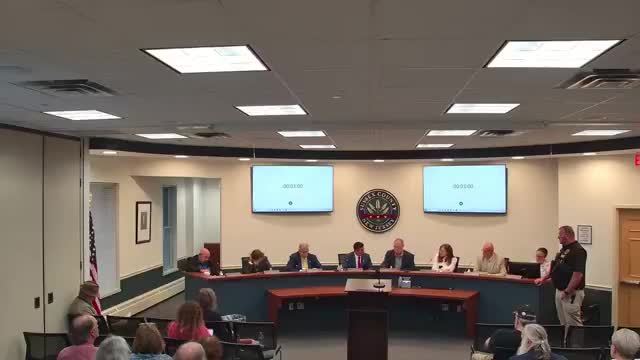
Sussex County officials on May 14 designated May 2025 as Mental Health Awareness Month and described local uses of opioid‑settlement funds, while county staff warned of new and more dangerous street drugs in circulation.
The declaration was read into the record by a county representative as the board formally recognized efforts to raise awareness and reduce stigma for people with mental illness. Gary Kramer, a member of the Sussex County Mental Health Board, described recent local programs and law‑enforcement training to distinguish behavioral health crises from criminal behavior: "...law enforcement are now trained in recognizing the difference between a call to a scene, someone who may be decompensating mentally as opposed to someone who is just a bad person," Kramer said.
Nut graf: County administrators told commissioners that opioid‑settlement money is being directed to prevention, treatment and drug‑trend monitoring, and that residents should be alert to newly circulating non‑opioid sedatives and very potent synthetic opioids that increase overdose risk and can complicate emergency response.
County Administrator Ron Tappan summarized recent opioid‑settlement committee activity and specific uses of the funds, including purchased equipment and community programs. "This handheld device will allow [the prosecutor's office narcotics task force] to immediately analyze a drug for its content... This device test[s] over 1,200 different drugs," Tappan said of a chemical testing unit purchased with settlement funds. He also said settlement money is funding prevention programs, support for individuals in recovery and a county Junior Police Academy in July.
Tappan gave a public‑safety warning about new substances encountered in local overdoses. "Since the beginning of this year there has been approximately 12 opium overdoses in Sussex County. 3 have been fatal," he said. He described a non‑opioid sedative being cut into other drugs that "does not respond to Narcan, causes skin ulcers, wounds on the body," and said the county has seen additional highly potent opioids and potent sedative agents on the street.
Discussion vs. decision: Commissioners received the report as information; no county ordinance or appropriation tied to this presentation was introduced during open session. Tappan said the county will open an annual online community portal each October for three weeks to solicit public input on opioid‑settlement spending.
Ending: Tappan and other county staff encouraged residents to follow public‑health guidance and contact local health agencies with concerns about suspected drug activity or to request resources; the county will publish additional outreach and surveillance results on its website.
The declaration was read into the record by a county representative as the board formally recognized efforts to raise awareness and reduce stigma for people with mental illness. Gary Kramer, a member of the Sussex County Mental Health Board, described recent local programs and law‑enforcement training to distinguish behavioral health crises from criminal behavior: "...law enforcement are now trained in recognizing the difference between a call to a scene, someone who may be decompensating mentally as opposed to someone who is just a bad person," Kramer said.
Nut graf: County administrators told commissioners that opioid‑settlement money is being directed to prevention, treatment and drug‑trend monitoring, and that residents should be alert to newly circulating non‑opioid sedatives and very potent synthetic opioids that increase overdose risk and can complicate emergency response.
County Administrator Ron Tappan summarized recent opioid‑settlement committee activity and specific uses of the funds, including purchased equipment and community programs. "This handheld device will allow [the prosecutor's office narcotics task force] to immediately analyze a drug for its content... This device test[s] over 1,200 different drugs," Tappan said of a chemical testing unit purchased with settlement funds. He also said settlement money is funding prevention programs, support for individuals in recovery and a county Junior Police Academy in July.
Tappan gave a public‑safety warning about new substances encountered in local overdoses. "Since the beginning of this year there has been approximately 12 opium overdoses in Sussex County. 3 have been fatal," he said. He described a non‑opioid sedative being cut into other drugs that "does not respond to Narcan, causes skin ulcers, wounds on the body," and said the county has seen additional highly potent opioids and potent sedative agents on the street.
Discussion vs. decision: Commissioners received the report as information; no county ordinance or appropriation tied to this presentation was introduced during open session. Tappan said the county will open an annual online community portal each October for three weeks to solicit public input on opioid‑settlement spending.
Ending: Tappan and other county staff encouraged residents to follow public‑health guidance and contact local health agencies with concerns about suspected drug activity or to request resources; the county will publish additional outreach and surveillance results on its website.
View the Full Meeting & All Its Details
This article offers just a summary. Unlock complete video, transcripts, and insights as a Founder Member.
✓
Watch full, unedited meeting videos
✓
Search every word spoken in unlimited transcripts
✓
AI summaries & real-time alerts (all government levels)
✓
Permanent access to expanding government content
30-day money-back guarantee
