Rescue groups, residents press Okanogan County for short-term shelter and coordinated response after large seizure
May 14, 2025 | Okanogan County, Washington
This article was created by AI summarizing key points discussed. AI makes mistakes, so for full details and context, please refer to the video of the full meeting. Please report any errors so we can fix them. Report an error »
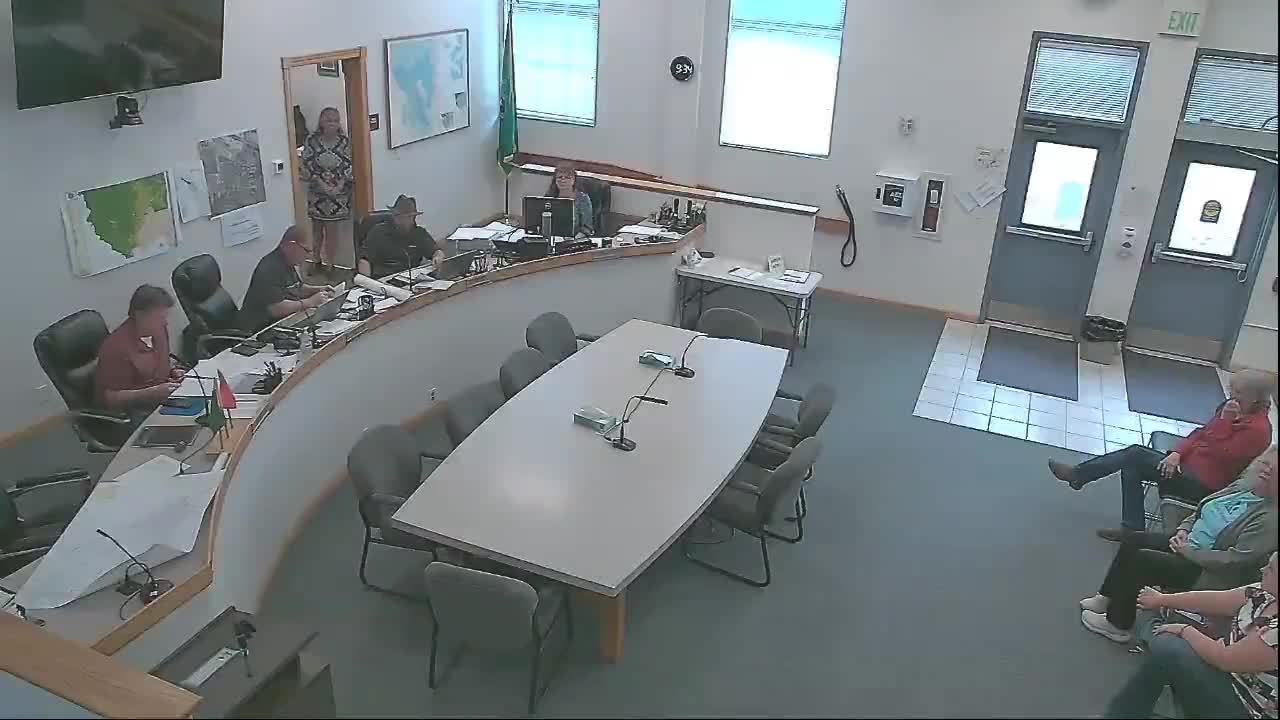
Okanogan County commissioners heard extended public comment and presentations on how the county and local rescue groups handled a recent large animal seizure and the broader, ongoing increase in stray and surrendered dogs.
The discussion centered on immediate needs — temporary holding space and case-management support — and longer-term options such as a volunteer incident-management team, contract arrangements with outside animal-control providers and a small county reserve to cover emergency veterinary costs.
Speakers described a rising intake volume and heavy reliance on volunteer foster networks. A community member who has assisted with large rescues told commissioners the county is seeing “about 2,000 dogs a year” entering foster or rescue channels — roughly “6 dogs a day” — and said volunteers and out-of-county organizations are currently shouldering most of the work. Linda Pierce, who helped coordinate a recent response, said follow-up and enforcement after seizures is a key gap and urged formation of a coordinated response team.
Tammy Tatum, treasurer for Rapazal Conagra Rescue, said her group is entirely foster based and cannot hold animals without available foster homes. "All 4 Paws is foster based," Tatum said. She described the husky response as a short-term fundraising success — the group raised "just shy of $5,000" to cover immediate wellness care — but said long-term capacity is limited without a holding location.
Kylie Korn, foster coordinator for All 4 Paws, told the board the organization's goal is to avoid long-term sheltering and to move animals quickly into fosters. "Our goal in general is not to have these dogs in a shelter facility," Korn said, adding that a short-term holding site would speed evaluation and placements and likely mobilize more volunteers.
Speakers and several community members outlined components they want a county-level plan to include: a short-term, temporary holding facility rather than a permanent kennel; a standardized process for vet exams and evidence collection to support prosecutions; formal partnerships or contracts with established animal-control providers; a volunteer "IMT"-style team for logistics, finances and public information in emergency seizures; and a possible small reserve fund or contract mechanism so the county can pay urgent veterinary bills without encumbering county general funds improperly.
Linda Pierce described the legal and fiscal limits the county faces, saying state law changes place specific short-term responsibilities on the county after a seizure and that individuals have a limited window to file for the return of animals. "The law has been changed significantly. So you have two weeks to oversee the animals," Pierce said, adding that the individual must pay care costs to petition for return and that euthanasia costs and certain vet costs initially fall to the county in those cases.
Speakers noted practical roadblocks: local veterinarians are busy and cannot always travel to an impound site to create the forensic documentation needed for criminal cases; the sheriff's office and county prosecutors have limited bandwidth to prepare and pursue cases; and volunteer burn-out constrains foster capacity.
Participants suggested immediate next steps: convene a volunteer work group, draft a policy framework the prosecutor and sheriff can review, identify possible grant sources and short-term grant-writing help, explore contracting with nearby animal-control providers, and define a modest reserve or emergency payment process for vet care. Several speakers said they are willing to serve on a work group and that rescue organizations can help with fundraising, foster recruitment and short-term operations.
No formal county action was taken at the meeting; presenters asked to return with a proposed plan and to brief the Board of Commissioners in a few weeks.
Community impact: speakers warned the county's inability to house or process seized animals promptly increases risk of animals staying in poor conditions, creates outstanding veterinary bills and places the burden on volunteer networks.
The county treasurer and staff acknowledged the fiscal and legal complexity and indicated county staff will work with volunteers and the sheriff's office to develop a proposal for commissioners to consider.
The discussion closed with volunteers and rescue coordinators offering to meet with county staff to draft next steps and an outline for a limited-duration holding facility and a multi-stakeholder work group.
The discussion centered on immediate needs — temporary holding space and case-management support — and longer-term options such as a volunteer incident-management team, contract arrangements with outside animal-control providers and a small county reserve to cover emergency veterinary costs.
Speakers described a rising intake volume and heavy reliance on volunteer foster networks. A community member who has assisted with large rescues told commissioners the county is seeing “about 2,000 dogs a year” entering foster or rescue channels — roughly “6 dogs a day” — and said volunteers and out-of-county organizations are currently shouldering most of the work. Linda Pierce, who helped coordinate a recent response, said follow-up and enforcement after seizures is a key gap and urged formation of a coordinated response team.
Tammy Tatum, treasurer for Rapazal Conagra Rescue, said her group is entirely foster based and cannot hold animals without available foster homes. "All 4 Paws is foster based," Tatum said. She described the husky response as a short-term fundraising success — the group raised "just shy of $5,000" to cover immediate wellness care — but said long-term capacity is limited without a holding location.
Kylie Korn, foster coordinator for All 4 Paws, told the board the organization's goal is to avoid long-term sheltering and to move animals quickly into fosters. "Our goal in general is not to have these dogs in a shelter facility," Korn said, adding that a short-term holding site would speed evaluation and placements and likely mobilize more volunteers.
Speakers and several community members outlined components they want a county-level plan to include: a short-term, temporary holding facility rather than a permanent kennel; a standardized process for vet exams and evidence collection to support prosecutions; formal partnerships or contracts with established animal-control providers; a volunteer "IMT"-style team for logistics, finances and public information in emergency seizures; and a possible small reserve fund or contract mechanism so the county can pay urgent veterinary bills without encumbering county general funds improperly.
Linda Pierce described the legal and fiscal limits the county faces, saying state law changes place specific short-term responsibilities on the county after a seizure and that individuals have a limited window to file for the return of animals. "The law has been changed significantly. So you have two weeks to oversee the animals," Pierce said, adding that the individual must pay care costs to petition for return and that euthanasia costs and certain vet costs initially fall to the county in those cases.
Speakers noted practical roadblocks: local veterinarians are busy and cannot always travel to an impound site to create the forensic documentation needed for criminal cases; the sheriff's office and county prosecutors have limited bandwidth to prepare and pursue cases; and volunteer burn-out constrains foster capacity.
Participants suggested immediate next steps: convene a volunteer work group, draft a policy framework the prosecutor and sheriff can review, identify possible grant sources and short-term grant-writing help, explore contracting with nearby animal-control providers, and define a modest reserve or emergency payment process for vet care. Several speakers said they are willing to serve on a work group and that rescue organizations can help with fundraising, foster recruitment and short-term operations.
No formal county action was taken at the meeting; presenters asked to return with a proposed plan and to brief the Board of Commissioners in a few weeks.
Community impact: speakers warned the county's inability to house or process seized animals promptly increases risk of animals staying in poor conditions, creates outstanding veterinary bills and places the burden on volunteer networks.
The county treasurer and staff acknowledged the fiscal and legal complexity and indicated county staff will work with volunteers and the sheriff's office to develop a proposal for commissioners to consider.
The discussion closed with volunteers and rescue coordinators offering to meet with county staff to draft next steps and an outline for a limited-duration holding facility and a multi-stakeholder work group.
Don't Miss a Word: See the Full Meeting!
Go beyond summaries. Unlock every video, transcript, and key insight with a Founder Membership.
✓
Get instant access to full meeting videos
✓
Search and clip any phrase from complete transcripts
✓
Receive AI-powered summaries & custom alerts
✓
Enjoy lifetime, unrestricted access to government data
30-day money-back guarantee
