Council recognizes Access Project and Cops vs. Youth program; speakers urge early intervention for youth
May 14, 2025 | Snohomish County, Washington
This article was created by AI summarizing key points discussed. AI makes mistakes, so for full details and context, please refer to the video of the full meeting. Please report any errors so we can fix them. Report an error »
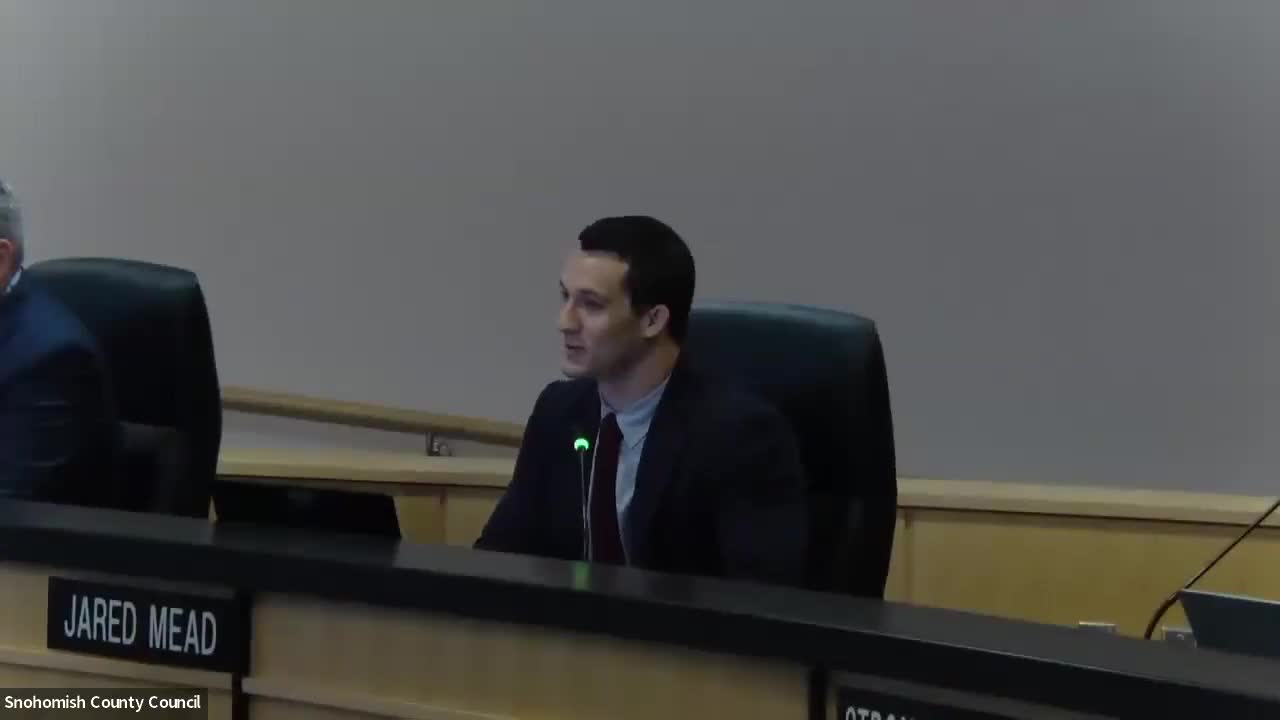
Snohomish County Council on Wednesday approved resolution 25-023 recognizing the Access Project and its Cops vs. Youth basketball program, which organizers say is designed to build positive relationships between law enforcement and young people.
Wally Webster accepted the resolution on behalf of the Access Project and described the program’s origins and goals. Webster said the initiative began in response to a rise in youth violence in South County after the Edmonds School District discontinued its school resource officer program in 2020. He told the council that since 2022 the community has suffered multiple violent incidents involving youth; he also described basketball events and postgame circles where youth and officers share stories and contact information to build trust. “These officers are meeting with these youth — planting trees today,” Webster said.
Deputy Moses, who participates in the events, told the council the program helps young people trust officers and that some officers have given youth personal contact information to be available when they need help. “It’s been great hearing the stories from the kids and then us in turn letting them…share our stories with them as well,” Deputy Moses said.
Council members praised the community effort, thanked organizers and law-enforcement participants, and approved the resolution by unanimous voice vote, 5–0.
Why it matters: supporters described Cops vs. Youth as a preventive, community-based intervention to build relationships and de-escalate tensions between young people and law enforcement. Speakers framed the events as one of several attempts to address youth mental-health and violence concerns through early engagement rather than reactive enforcement.
Supporting details: Webster credited a Lynnwood Municipal Court judge for an initial idea that led to the Access Project. He described the events as aiming to reach youth who are introverted or lack trusted adults, and said officers follow up after games. Deputy Moses emphasized the practical value of sports and relationship-building for youth at risk.
The council recognized the Access Project with a formal resolution; staff and several council members commended volunteer organizers and the sheriff’s office for participation.
Wally Webster accepted the resolution on behalf of the Access Project and described the program’s origins and goals. Webster said the initiative began in response to a rise in youth violence in South County after the Edmonds School District discontinued its school resource officer program in 2020. He told the council that since 2022 the community has suffered multiple violent incidents involving youth; he also described basketball events and postgame circles where youth and officers share stories and contact information to build trust. “These officers are meeting with these youth — planting trees today,” Webster said.
Deputy Moses, who participates in the events, told the council the program helps young people trust officers and that some officers have given youth personal contact information to be available when they need help. “It’s been great hearing the stories from the kids and then us in turn letting them…share our stories with them as well,” Deputy Moses said.
Council members praised the community effort, thanked organizers and law-enforcement participants, and approved the resolution by unanimous voice vote, 5–0.
Why it matters: supporters described Cops vs. Youth as a preventive, community-based intervention to build relationships and de-escalate tensions between young people and law enforcement. Speakers framed the events as one of several attempts to address youth mental-health and violence concerns through early engagement rather than reactive enforcement.
Supporting details: Webster credited a Lynnwood Municipal Court judge for an initial idea that led to the Access Project. He described the events as aiming to reach youth who are introverted or lack trusted adults, and said officers follow up after games. Deputy Moses emphasized the practical value of sports and relationship-building for youth at risk.
The council recognized the Access Project with a formal resolution; staff and several council members commended volunteer organizers and the sheriff’s office for participation.
Don't Miss a Word: See the Full Meeting!
Go beyond summaries. Unlock every video, transcript, and key insight with a Founder Membership.
✓
Get instant access to full meeting videos
✓
Search and clip any phrase from complete transcripts
✓
Receive AI-powered summaries & custom alerts
✓
Enjoy lifetime, unrestricted access to government data
30-day money-back guarantee
