Resident asks council for refund after water-service repair; CWLP, aldermen outline funding limits
August 19, 2025 | Springfield, Sangamon County, Illinois
This article was created by AI summarizing key points discussed. AI makes mistakes, so for full details and context, please refer to the video of the full meeting. Please report any errors so we can fix them. Report an error »
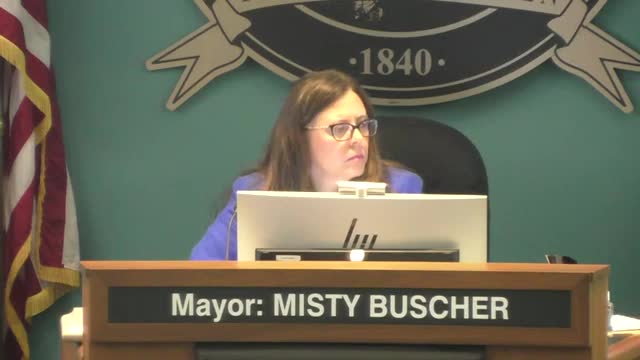
A Ward 6 homeowner told the City Council on Aug. 19 he paid $6,000 to repair a water service line that broke in a city easement and asked the council to reimburse him because the damaged run lay on city-owned property.
The homeowner, Alan Stuffings, said a June inspection confirmed the break was in the portion of the service line located in the city easement and that CWLP records flagged the main near his home as a lead service line; he said he was told by a CWLP representative that current grant funding was geo-targeted to certain census tracts (not including his Ward 6 address) and that he therefore had to pay the repair cost himself.
CWLP and aldermen’s response: Todd (CWLP representative) and council members explained that the state-used SRF (State Revolving Fund) and other federal/state grant programs now award funds using a scoring approach that prioritized certain low-income census tracts (notably in Wards 2 and 3). They said the SRF-derived funding parcels were geo-locked under recent program rules, limiting grant-supported replacements to the awarded census tracts. CWLP estimated the city’s full lead service-line replacement need at roughly $150 million (citywide estimate) and said the specific SRF/“bill” grant awards used a scoring system that prioritized certain census tracts. CWLP staff said they are verifying service-line inventories citywide and continuing outreach for grant-eligible properties.
What the council asked staff to do: Aldermen asked staff to look for any available funding or administrative remedies, and to follow up with the resident on reimbursement or other assistance possibilities. The mayor and council said they would explore all options, including discussing the matter with state legislators and reviewing grant flexibility and other local funds.
Authorities referenced: the resident cited an Illinois lead-service-line replacement notification act and CWLP staff referenced the State Revolving Fund grant rules and recent changes that prioritize certain census tracts for grant awards. Council members and staff said they would follow up and evaluate alternative local assistance if possible.
The homeowner, Alan Stuffings, said a June inspection confirmed the break was in the portion of the service line located in the city easement and that CWLP records flagged the main near his home as a lead service line; he said he was told by a CWLP representative that current grant funding was geo-targeted to certain census tracts (not including his Ward 6 address) and that he therefore had to pay the repair cost himself.
CWLP and aldermen’s response: Todd (CWLP representative) and council members explained that the state-used SRF (State Revolving Fund) and other federal/state grant programs now award funds using a scoring approach that prioritized certain low-income census tracts (notably in Wards 2 and 3). They said the SRF-derived funding parcels were geo-locked under recent program rules, limiting grant-supported replacements to the awarded census tracts. CWLP estimated the city’s full lead service-line replacement need at roughly $150 million (citywide estimate) and said the specific SRF/“bill” grant awards used a scoring system that prioritized certain census tracts. CWLP staff said they are verifying service-line inventories citywide and continuing outreach for grant-eligible properties.
What the council asked staff to do: Aldermen asked staff to look for any available funding or administrative remedies, and to follow up with the resident on reimbursement or other assistance possibilities. The mayor and council said they would explore all options, including discussing the matter with state legislators and reviewing grant flexibility and other local funds.
Authorities referenced: the resident cited an Illinois lead-service-line replacement notification act and CWLP staff referenced the State Revolving Fund grant rules and recent changes that prioritize certain census tracts for grant awards. Council members and staff said they would follow up and evaluate alternative local assistance if possible.
Don't Miss a Word: See the Full Meeting!
Go beyond summaries. Unlock every video, transcript, and key insight with a Founder Membership.
✓
Get instant access to full meeting videos
✓
Search and clip any phrase from complete transcripts
✓
Receive AI-powered summaries & custom alerts
✓
Enjoy lifetime, unrestricted access to government data
30-day money-back guarantee
