Council approves $400,000 in cannabis tax revenue for housing-rehab program after divided debate
August 19, 2025 | Waukegan, DuPage County, Illinois
This article was created by AI summarizing key points discussed. AI makes mistakes, so for full details and context, please refer to the video of the full meeting. Please report any errors so we can fix them. Report an error »
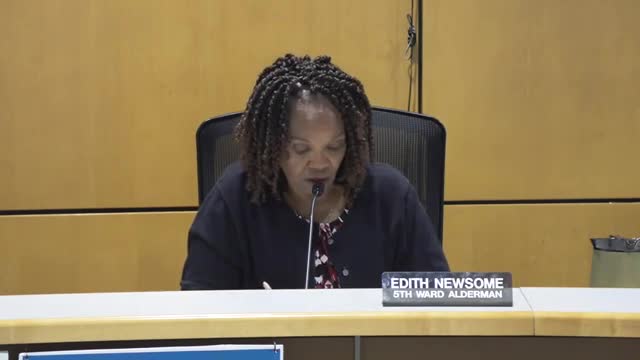
The Waukegan City Council on Aug. 18 approved an ordinance to assign $400,000 of projected cannabis tax revenue for fiscal 2025–26 to the Department of Community Development’s housing rehabilitation program, with the amount to be replaced in the budget by an equal increase in the city’s projected state income-tax distribution.
The measure, introduced during the Finance committee portion of the meeting, passed by roll-call vote after repeated questioning from several aldermen concerned about the timing and source of funds. Alderman Florian said during committee, “I don’t see the connection between the cannabis money and and this particular plan,” adding concern that the city could face large settlements and should “watch every penny” now.
Why it matters
Staff described the transfer as a way to fund local housing-rehab work immediately while the city awaits expected state- and federal grant reimbursements. Finance Director Juan told the committee that cannabis revenue “usually generates about $600,000 a year at the moment,” and that the proposed allocation represents a one-time assignment from projected cannabis receipts to start a local rehab program. Staff and several aldermen also noted that the city had not previously appropriated cannabis revenues for specific programs and that the budget process requires this action to take effect.
Debate and council action
Council debate focused on two themes: whether cannabis tax revenues were the appropriate source for the housing-rehab program, and whether the city could afford to set aside $400,000 given potential liability exposure.
- Alderman Florian (first reference) questioned the appropriateness of the revenue source and raised concerns about pending large settlements and the potential need to bond for those expenses. “When we bond money, that means we’re paying interest,” Florian said.
- Alderman Hayes asked for operational details about the staffing and program design; staff said the allocation would be used both for direct rehab grants and to support program administration. Larissa Jackson (staff member) described personnel changes tied to the appropriation: two existing part-time positions would move to full-time hours and a rehab coordinator post would be funded, with an estimated salary allocation of roughly $80,000–$100,000 of the $400,000.
- Finance Director Juan clarified the mechanics: the council action appropriates the cannabis revenue now and “replaces” it in the budget with an equal amendment to projected state income-tax distribution so the city’s budgets balance for the fiscal year.
Vote and next steps
The ordinance passed on a roll call with several no votes: the record shows Alderman Turner, Alderman Florian and Alderman Hayes voting no; the motion carried with the remaining aldermen voting aye. Staff said the program will begin policy development (eligibility, caps and administrative procedures) and that CDBG rules will continue to guide which specific repairs or rehabs are allowable. Staff also emphasized that the city will continue to pursue state grant funding to supplement this local allocation.
Ending
Council members stressed the need for clarity about ongoing costs and the sustainability of any positions funded by one-time revenue. Several aldermen said they supported the housing-rehab objectives but wanted clearer assurances on what would be sustained in future budgets. The CDBG office will return with program policy materials and implementation timelines for council review.
The measure, introduced during the Finance committee portion of the meeting, passed by roll-call vote after repeated questioning from several aldermen concerned about the timing and source of funds. Alderman Florian said during committee, “I don’t see the connection between the cannabis money and and this particular plan,” adding concern that the city could face large settlements and should “watch every penny” now.
Why it matters
Staff described the transfer as a way to fund local housing-rehab work immediately while the city awaits expected state- and federal grant reimbursements. Finance Director Juan told the committee that cannabis revenue “usually generates about $600,000 a year at the moment,” and that the proposed allocation represents a one-time assignment from projected cannabis receipts to start a local rehab program. Staff and several aldermen also noted that the city had not previously appropriated cannabis revenues for specific programs and that the budget process requires this action to take effect.
Debate and council action
Council debate focused on two themes: whether cannabis tax revenues were the appropriate source for the housing-rehab program, and whether the city could afford to set aside $400,000 given potential liability exposure.
- Alderman Florian (first reference) questioned the appropriateness of the revenue source and raised concerns about pending large settlements and the potential need to bond for those expenses. “When we bond money, that means we’re paying interest,” Florian said.
- Alderman Hayes asked for operational details about the staffing and program design; staff said the allocation would be used both for direct rehab grants and to support program administration. Larissa Jackson (staff member) described personnel changes tied to the appropriation: two existing part-time positions would move to full-time hours and a rehab coordinator post would be funded, with an estimated salary allocation of roughly $80,000–$100,000 of the $400,000.
- Finance Director Juan clarified the mechanics: the council action appropriates the cannabis revenue now and “replaces” it in the budget with an equal amendment to projected state income-tax distribution so the city’s budgets balance for the fiscal year.
Vote and next steps
The ordinance passed on a roll call with several no votes: the record shows Alderman Turner, Alderman Florian and Alderman Hayes voting no; the motion carried with the remaining aldermen voting aye. Staff said the program will begin policy development (eligibility, caps and administrative procedures) and that CDBG rules will continue to guide which specific repairs or rehabs are allowable. Staff also emphasized that the city will continue to pursue state grant funding to supplement this local allocation.
Ending
Council members stressed the need for clarity about ongoing costs and the sustainability of any positions funded by one-time revenue. Several aldermen said they supported the housing-rehab objectives but wanted clearer assurances on what would be sustained in future budgets. The CDBG office will return with program policy materials and implementation timelines for council review.
View the Full Meeting & All Its Details
This article offers just a summary. Unlock complete video, transcripts, and insights as a Founder Member.
✓
Watch full, unedited meeting videos
✓
Search every word spoken in unlimited transcripts
✓
AI summaries & real-time alerts (all government levels)
✓
Permanent access to expanding government content
30-day money-back guarantee
