City presents micro‑community engagement report; staff outlines six recommendations
September 11, 2025 | Santa Fe, Santa Fe County, New Mexico
This article was created by AI summarizing key points discussed. AI makes mistakes, so for full details and context, please refer to the video of the full meeting. Please report any errors so we can fix them. Report an error »
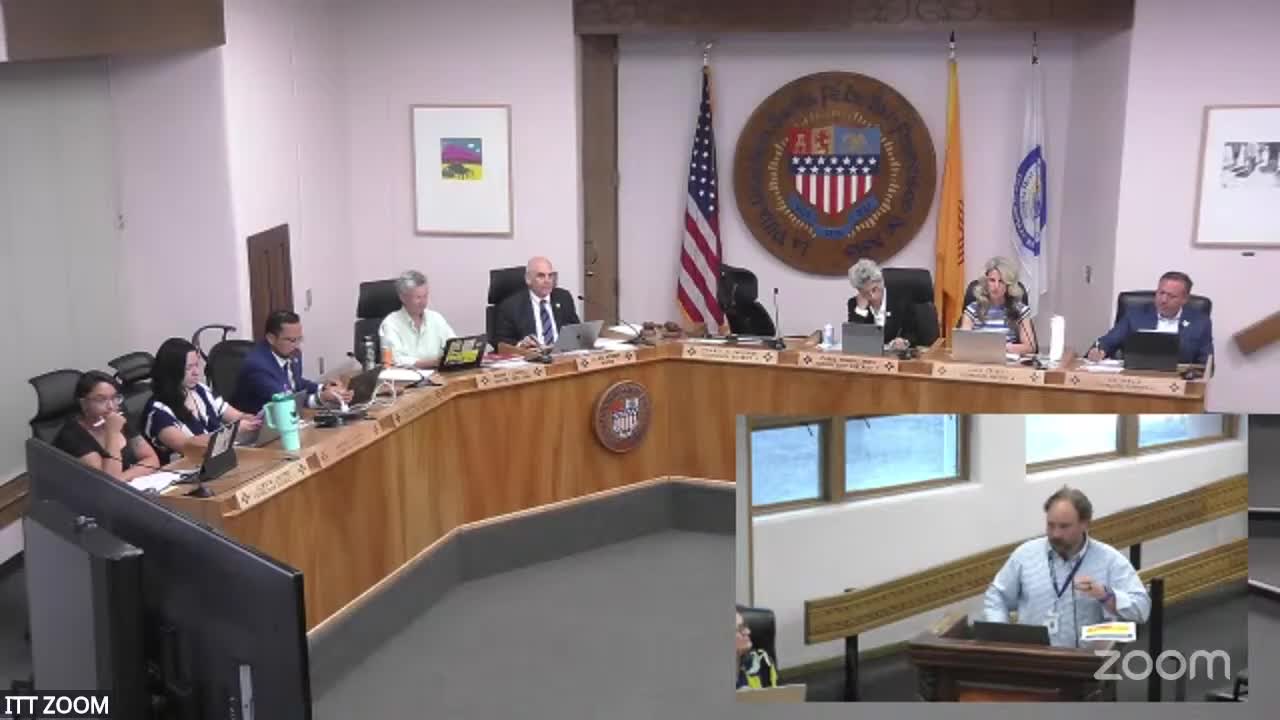
Henry Hammond Paul, director of the Community Health and Safety Department, presented a summary of the July community engagement event on micro communities and reviewed a staff report and six recommendations for moving forward.
The report, Paul said, was designed ‘‘to build trust through inclusive dialogue’’ and to capture both individual comments and facilitated table notes that staff later synthesized. Paul told the council that roughly 200 people registered for the event and about 128 attended; city staff provided at least two staff members at each table and more than 50 staff supported the event overall. ‘‘The outcome of that meeting was a very expansive set of notes,’’ Paul said. "We had at least two city staff at each table, and it was just a great show of support from city staff."
Why it matters: the micro community model is one part of the city’s broader homelessness response. Councilors and staff said community engagement and operational clarity are central to whether future sites will be accepted by neighborhoods and succeed as intended.
Key findings and recommendations
- Attendance and format: The session combined a roughly 45‑minute educational presentation with roundtable discussions. Paul said organizers used note takers at each table and collected both table summaries and handwritten comments to produce a verbatim record for analysis.
- What participants said: Participants expressed hopes that micro communities be "safe and dignified," culturally sensitive and distributed across the city. Concerns centered on crime and safety, property values, transparency and long‑term site sustainability. Participants also discussed what operators and neighbors could do to be good neighbors: keep sites clean, quiet and well managed; offer volunteer opportunities; and share accurate information.
- Six staff recommendations: create and share a clear plan; engage the public early and often; formalize good‑neighbor agreements; ensure quality site operations and services; encourage and facilitate community involvement (for example through community art and design challenges); and pursue broader housing investments in parallel. Paul said the recommendations ‘‘are things that we are actively already pursuing.’’
Operational details and next steps
- LifeLink operator and contracting: Paul said the city already has a contracted operator (LifeLink) in place and that the operator contract is established and funded.
- Policy and permitting: Paul said staff are working with the Planning and Land Use Department to make a good‑neighbor agreement a requirement under the land use code for micro community sites.
- Staffing and coordination: Paul noted a new human services director would start on the fifteenth and that the city had recently added three program manager positions to expand capacity in human services. He also said the city is coordinating with the state Department of Workforce Solutions for workforce and funding partnerships.
- Further engagement: Paul said staff are coordinating district‑level meetings for the Richards site in District 4 and that the engagement model used on July 1 is being replicated for other topics and sites. He listed two upcoming co‑sponsored public education sessions on homelessness: Friday, Oct. 3, and Monday, Nov. 3.
Councilor and public reaction
Councilors praised the design and turnout. Councilor Castro said the event was ‘‘amazing’’ and praised the community’s creativity. Councilor Faulkner called the format effective and urged community participation across all districts, noting that ‘‘District 1 is taking all of it right now, and that is unfair to District 1.’’ Councilor Cassett and others said the city should lift up existing successful smaller programs (for example, Consuelos) when discussing models for expansion.
Councilor Michael Garcia pressed Paul on how staff synthesized thousands of comments into six recommendations. Paul described a mixed method approach: verbatim table notes, individual written submissions that were transcribed into a spreadsheet, and qualitative theme analysis (including sentiment and pattern detection) conducted by staff to identify recurring themes and possible operational responses. Paul acknowledged the approach involved interpretation by staff and said the recommendations were intended to reflect common themes—not a formal vote by participants.
Public safety and transparency
Several councilors emphasized safety, transparency and communication. Paul confirmed that security requirements (including on‑site security) are part of the site expectations and said the purpose of listing them as recommendations was to show they were priorities raised by participants. He acknowledged gaps in public awareness about elements the city already plans to include and said staff must do a better job communicating those plans.
What the report does not decide
The presentation and discussion did not adopt any new ordinance or authorize a specific site; councilors said future sites would go through district‑level engagement and any required land‑use or permitting processes. Paul said that, beyond the Richards site in District 4 (which staff are actively engaging), no other new micro community site has been formally proposed.
Ending note
Paul closed by thanking staff and the governing body for support and reiterated that staff would use the event notes to shape more detailed plans and public reporting. "We got to be part of a conversation, as opposed to just hearing snippets of people's thoughts," he said. The council received the report and directed staff to continue district engagement and to return with implementation details as sites are proposed.
The report, Paul said, was designed ‘‘to build trust through inclusive dialogue’’ and to capture both individual comments and facilitated table notes that staff later synthesized. Paul told the council that roughly 200 people registered for the event and about 128 attended; city staff provided at least two staff members at each table and more than 50 staff supported the event overall. ‘‘The outcome of that meeting was a very expansive set of notes,’’ Paul said. "We had at least two city staff at each table, and it was just a great show of support from city staff."
Why it matters: the micro community model is one part of the city’s broader homelessness response. Councilors and staff said community engagement and operational clarity are central to whether future sites will be accepted by neighborhoods and succeed as intended.
Key findings and recommendations
- Attendance and format: The session combined a roughly 45‑minute educational presentation with roundtable discussions. Paul said organizers used note takers at each table and collected both table summaries and handwritten comments to produce a verbatim record for analysis.
- What participants said: Participants expressed hopes that micro communities be "safe and dignified," culturally sensitive and distributed across the city. Concerns centered on crime and safety, property values, transparency and long‑term site sustainability. Participants also discussed what operators and neighbors could do to be good neighbors: keep sites clean, quiet and well managed; offer volunteer opportunities; and share accurate information.
- Six staff recommendations: create and share a clear plan; engage the public early and often; formalize good‑neighbor agreements; ensure quality site operations and services; encourage and facilitate community involvement (for example through community art and design challenges); and pursue broader housing investments in parallel. Paul said the recommendations ‘‘are things that we are actively already pursuing.’’
Operational details and next steps
- LifeLink operator and contracting: Paul said the city already has a contracted operator (LifeLink) in place and that the operator contract is established and funded.
- Policy and permitting: Paul said staff are working with the Planning and Land Use Department to make a good‑neighbor agreement a requirement under the land use code for micro community sites.
- Staffing and coordination: Paul noted a new human services director would start on the fifteenth and that the city had recently added three program manager positions to expand capacity in human services. He also said the city is coordinating with the state Department of Workforce Solutions for workforce and funding partnerships.
- Further engagement: Paul said staff are coordinating district‑level meetings for the Richards site in District 4 and that the engagement model used on July 1 is being replicated for other topics and sites. He listed two upcoming co‑sponsored public education sessions on homelessness: Friday, Oct. 3, and Monday, Nov. 3.
Councilor and public reaction
Councilors praised the design and turnout. Councilor Castro said the event was ‘‘amazing’’ and praised the community’s creativity. Councilor Faulkner called the format effective and urged community participation across all districts, noting that ‘‘District 1 is taking all of it right now, and that is unfair to District 1.’’ Councilor Cassett and others said the city should lift up existing successful smaller programs (for example, Consuelos) when discussing models for expansion.
Councilor Michael Garcia pressed Paul on how staff synthesized thousands of comments into six recommendations. Paul described a mixed method approach: verbatim table notes, individual written submissions that were transcribed into a spreadsheet, and qualitative theme analysis (including sentiment and pattern detection) conducted by staff to identify recurring themes and possible operational responses. Paul acknowledged the approach involved interpretation by staff and said the recommendations were intended to reflect common themes—not a formal vote by participants.
Public safety and transparency
Several councilors emphasized safety, transparency and communication. Paul confirmed that security requirements (including on‑site security) are part of the site expectations and said the purpose of listing them as recommendations was to show they were priorities raised by participants. He acknowledged gaps in public awareness about elements the city already plans to include and said staff must do a better job communicating those plans.
What the report does not decide
The presentation and discussion did not adopt any new ordinance or authorize a specific site; councilors said future sites would go through district‑level engagement and any required land‑use or permitting processes. Paul said that, beyond the Richards site in District 4 (which staff are actively engaging), no other new micro community site has been formally proposed.
Ending note
Paul closed by thanking staff and the governing body for support and reiterated that staff would use the event notes to shape more detailed plans and public reporting. "We got to be part of a conversation, as opposed to just hearing snippets of people's thoughts," he said. The council received the report and directed staff to continue district engagement and to return with implementation details as sites are proposed.
View the Full Meeting & All Its Details
This article offers just a summary. Unlock complete video, transcripts, and insights as a Founder Member.
✓
Watch full, unedited meeting videos
✓
Search every word spoken in unlimited transcripts
✓
AI summaries & real-time alerts (all government levels)
✓
Permanent access to expanding government content
30-day money-back guarantee
