Anchorage outlines pre‑arrest diversion pilot as Narcan administrations climb
September 04, 2025 | Anchorage Municipality, Alaska
This article was created by AI summarizing key points discussed. AI makes mistakes, so for full details and context, please refer to the video of the full meeting. Please report any errors so we can fix them. Report an error »
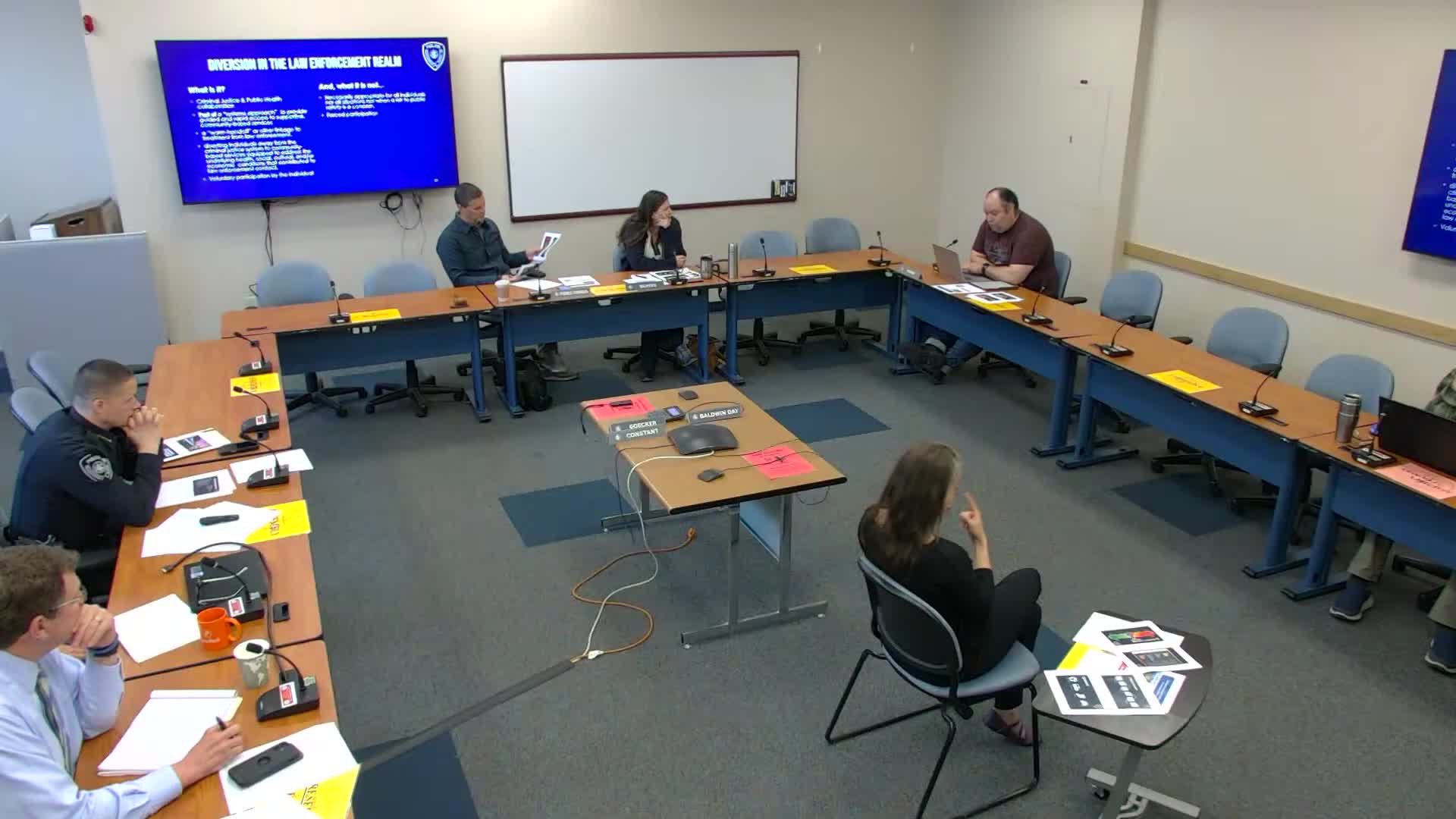
Anchorage officials on Sept. 3 presented a plan to pilot a pre‑arrest diversion program directed at low‑level, nonviolent offenses, saying the effort aims to connect people to treatment or community services rather than moving immediately through prosecution. The presenters said emergency responders and community partners have seen a sharp rise in overdose responses in recent years and that new treatment beds are coming online locally.
The program will initially be limited to specialty units — the Mobile Intervention Team (MIT), the Hope outreach team and a new Impact team — before a wider rollout to patrol, speakers said. "Diversion is creating opportunities outside the criminal‑justice system to change behavior," said Chief Sean Case of the Anchorage Police Department, who described diversion as an option that leaves traditional prosecution as an available path if diversion fails or if victims request prosecution.
Why it matters: presenters said public and responder data show increasing opioid and behavioral‑health incidents that are straining emergency resources. Officials argued diversion could reduce repeat arrests and lessen downstream impacts on courts and the Department of Corrections while connecting people to care.
APD and mayoral staff described local indicators they said show rising overdose responses: fire‑department data presented at the meeting show public Narcan administrations rose from about 50 incidents per year to nearly 450 between 2020 and 2024, and AFD transports for overdoses increased over the same period. Officials said APD dispatch receives roughly 20,000 calls a month and that hundreds of those are flagged as behavioral‑health calls; MIT and related mobile teams have absorbed an increasing share of those responses since MIT began in 2022. Presenters also said existing post‑arrest diversion programs (mental‑health court, veterans court and specialty felony courts) have a combined capacity of about 150 participants.
The Chelsea Inn federal case was cited as an example of local drug enforcement activity and a reason for continued outreach and treatment connections. "The Chelsea unit has been boarded, fenced and has cameras placed by the U.S. Marshals," Case said, and he said the federal seizure process could take about a year before the property is transferred to federal control. Case said the U.S. Marshals provide camera feeds for evidence and that APD would take enforcement action when footage documents trespass or damage.
Program features and limits: APD's diversion proposal focuses primarily on misdemeanors and nonviolent offenses but does not categorically exclude every felony — some felony diversionary pathways already exist in the state (for example, certain felony DUI/diversion programs and mental‑health court tracks). "We're going to stick mostly to misdemeanor crimes," said Case, while noting room for case‑by‑case judgment. Officers in the specialty units will explain diversion options to victims at the time of contact; victims who request prosecution would still be able to pursue charges through the standard private‑person arrest and prosecution process.
Funding and capacity concerns: assembly members pressed presenters on who will pay for treatment and community services. Thea Agnew, a special assistant to the mayor, said many treatment services are covered by Medicaid and that new providers are expanding capacity in Anchorage: True North Recovery, Anchorage Recovery Center and Salvation Army bed expansion were among entities named; a Lower‑48 provider, Emend (spelled E‑M‑E‑N‑D in the meeting), is exploring a downtown residential site. Agnew said the municipal administration is also converting city‑owned sites into recovery residences. Assembly members and Chief Case flagged continuing challenges: some people lack insurance or face enrollment barriers, and the state has recently reduced some grant funding and is conducting a behavioral‑health rate study with possible changes expected in the next three months.
Rollout and measurement: APD said the Impact team will begin with a small staffing footprint (a nine‑person start) and expand later; initial diversion activity will be measured against arrest and booking data, particularly the share of misdemeanor bookings. Presenters said they will contain the rollout to trained specialty units to reduce inconsistent application and will collect outcome data to evaluate recidivism, bed usage and program throughput. "When we invest in mobile intervention teams, we're getting better results for people in crisis and seeing patrol calls in that category go down," Thea Agnew said.
Questions and caveats: assembly members raised concerns about victims' rights, how diversion addresses incapacitated people (for example, those unable to consent due to mental‑health crisis), and whether diversion could be imposed when someone lacks capacity; presenters said MIT and Hope already conduct informal diversionary work and that outreach and repeated contacts are often needed to place people into treatment. Members also asked about enforcement overlap with the camping ordinance and about how diversion will relate to winter outreach and sheltering needs.
The city did not take a formal vote Sept. 3. Officials said the next steps will be limited pilot implementation through specialty units, continued engagement with state and nonprofit providers to expand capacity, and return reporting to the committee as the program is scaled.
The program will initially be limited to specialty units — the Mobile Intervention Team (MIT), the Hope outreach team and a new Impact team — before a wider rollout to patrol, speakers said. "Diversion is creating opportunities outside the criminal‑justice system to change behavior," said Chief Sean Case of the Anchorage Police Department, who described diversion as an option that leaves traditional prosecution as an available path if diversion fails or if victims request prosecution.
Why it matters: presenters said public and responder data show increasing opioid and behavioral‑health incidents that are straining emergency resources. Officials argued diversion could reduce repeat arrests and lessen downstream impacts on courts and the Department of Corrections while connecting people to care.
APD and mayoral staff described local indicators they said show rising overdose responses: fire‑department data presented at the meeting show public Narcan administrations rose from about 50 incidents per year to nearly 450 between 2020 and 2024, and AFD transports for overdoses increased over the same period. Officials said APD dispatch receives roughly 20,000 calls a month and that hundreds of those are flagged as behavioral‑health calls; MIT and related mobile teams have absorbed an increasing share of those responses since MIT began in 2022. Presenters also said existing post‑arrest diversion programs (mental‑health court, veterans court and specialty felony courts) have a combined capacity of about 150 participants.
The Chelsea Inn federal case was cited as an example of local drug enforcement activity and a reason for continued outreach and treatment connections. "The Chelsea unit has been boarded, fenced and has cameras placed by the U.S. Marshals," Case said, and he said the federal seizure process could take about a year before the property is transferred to federal control. Case said the U.S. Marshals provide camera feeds for evidence and that APD would take enforcement action when footage documents trespass or damage.
Program features and limits: APD's diversion proposal focuses primarily on misdemeanors and nonviolent offenses but does not categorically exclude every felony — some felony diversionary pathways already exist in the state (for example, certain felony DUI/diversion programs and mental‑health court tracks). "We're going to stick mostly to misdemeanor crimes," said Case, while noting room for case‑by‑case judgment. Officers in the specialty units will explain diversion options to victims at the time of contact; victims who request prosecution would still be able to pursue charges through the standard private‑person arrest and prosecution process.
Funding and capacity concerns: assembly members pressed presenters on who will pay for treatment and community services. Thea Agnew, a special assistant to the mayor, said many treatment services are covered by Medicaid and that new providers are expanding capacity in Anchorage: True North Recovery, Anchorage Recovery Center and Salvation Army bed expansion were among entities named; a Lower‑48 provider, Emend (spelled E‑M‑E‑N‑D in the meeting), is exploring a downtown residential site. Agnew said the municipal administration is also converting city‑owned sites into recovery residences. Assembly members and Chief Case flagged continuing challenges: some people lack insurance or face enrollment barriers, and the state has recently reduced some grant funding and is conducting a behavioral‑health rate study with possible changes expected in the next three months.
Rollout and measurement: APD said the Impact team will begin with a small staffing footprint (a nine‑person start) and expand later; initial diversion activity will be measured against arrest and booking data, particularly the share of misdemeanor bookings. Presenters said they will contain the rollout to trained specialty units to reduce inconsistent application and will collect outcome data to evaluate recidivism, bed usage and program throughput. "When we invest in mobile intervention teams, we're getting better results for people in crisis and seeing patrol calls in that category go down," Thea Agnew said.
Questions and caveats: assembly members raised concerns about victims' rights, how diversion addresses incapacitated people (for example, those unable to consent due to mental‑health crisis), and whether diversion could be imposed when someone lacks capacity; presenters said MIT and Hope already conduct informal diversionary work and that outreach and repeated contacts are often needed to place people into treatment. Members also asked about enforcement overlap with the camping ordinance and about how diversion will relate to winter outreach and sheltering needs.
The city did not take a formal vote Sept. 3. Officials said the next steps will be limited pilot implementation through specialty units, continued engagement with state and nonprofit providers to expand capacity, and return reporting to the committee as the program is scaled.
Don't Miss a Word: See the Full Meeting!
Go beyond summaries. Unlock every video, transcript, and key insight with a Founder Membership.
✓
Get instant access to full meeting videos
✓
Search and clip any phrase from complete transcripts
✓
Receive AI-powered summaries & custom alerts
✓
Enjoy lifetime, unrestricted access to government data
30-day money-back guarantee
