Outdoor fires spike; fire chief says ordinance AO 2025‑61 has shown no clear deterrent effect
September 04, 2025 | Anchorage Municipality, Alaska
This article was created by AI summarizing key points discussed. AI makes mistakes, so for full details and context, please refer to the video of the full meeting. Please report any errors so we can fix them. Report an error »
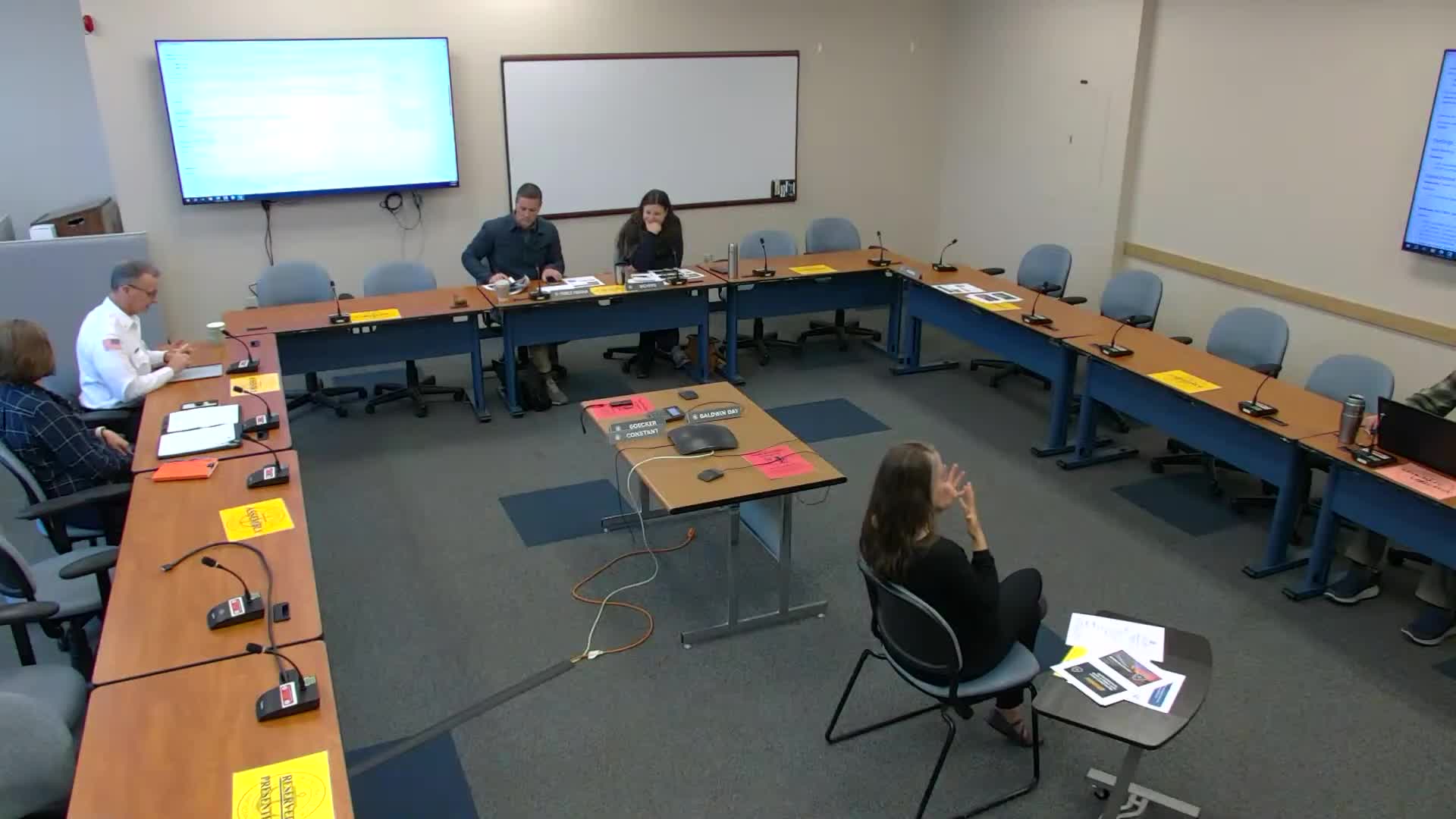
The Anchorage Fire Department told the Assembly Public Safety Committee on Sept. 3 that outdoor fires have increased sharply compared with the same period last year, and that the recently adopted outdoor‑burn ordinance (AO 2025‑61) has not yet produced a measurable deterrent effect.
Chief Shrong (Anchorage Fire Department) said the department reviewed outdoor‑fire incidents and found 637 outdoor fires through Aug. 31, 2024; during the same period in 2025 the department recorded a roughly 70% increase in outdoor fires. The chief highlighted May and July comparisons: May 2024 had 120 outdoor fires while May 2025 had 159 (+33%); July 2024 had 109 and July 2025 had 257 (+36%). "Outdoor fires have become our leading fire call type," the chief said.
Policy and enforcement process: Chief Shrong outlined the department’s practice: when firefighters determine a fire is unauthorized and there are identifiable people on scene, the fire department will request APD to respond; if no person is present who could be held responsible, APD is not routinely called. Shrong said the U.S. Marshals placement of cameras at a seized property (the Chelsea Inn) is for evidence collection and does not equate to active public monitoring.
APD response and citation levels: Committee members asked APD how many citations or arrests had resulted from enforcement of AO 2025‑61. Chief Sean Case told the committee the number of APD citations for unauthorized burning is "very low" and may be zero or a handful. Both departments noted logistical limits: fire incidents are often stabilized by arrival of firefighters, reducing the immediate public‑safety risk, and APD priorities in the dispatch stack can limit timely enforcement follow‑up.
Assembly questions and next steps: Members asked whether APD could stage targeted enforcement events similar to traffic speed enforcement to increase deterrence. APD representatives said proactive enforcement of camps or repeated rounds of targeted enforcement are possible but raise concerns about equitable application and resource tradeoffs. Fire and APD staff said they will share more detailed incident data with the committee to help prioritize response locations.
No formal vote was taken. The fire department agreed to provide the underlying incident data to the committee at the chair’s request.
Chief Shrong (Anchorage Fire Department) said the department reviewed outdoor‑fire incidents and found 637 outdoor fires through Aug. 31, 2024; during the same period in 2025 the department recorded a roughly 70% increase in outdoor fires. The chief highlighted May and July comparisons: May 2024 had 120 outdoor fires while May 2025 had 159 (+33%); July 2024 had 109 and July 2025 had 257 (+36%). "Outdoor fires have become our leading fire call type," the chief said.
Policy and enforcement process: Chief Shrong outlined the department’s practice: when firefighters determine a fire is unauthorized and there are identifiable people on scene, the fire department will request APD to respond; if no person is present who could be held responsible, APD is not routinely called. Shrong said the U.S. Marshals placement of cameras at a seized property (the Chelsea Inn) is for evidence collection and does not equate to active public monitoring.
APD response and citation levels: Committee members asked APD how many citations or arrests had resulted from enforcement of AO 2025‑61. Chief Sean Case told the committee the number of APD citations for unauthorized burning is "very low" and may be zero or a handful. Both departments noted logistical limits: fire incidents are often stabilized by arrival of firefighters, reducing the immediate public‑safety risk, and APD priorities in the dispatch stack can limit timely enforcement follow‑up.
Assembly questions and next steps: Members asked whether APD could stage targeted enforcement events similar to traffic speed enforcement to increase deterrence. APD representatives said proactive enforcement of camps or repeated rounds of targeted enforcement are possible but raise concerns about equitable application and resource tradeoffs. Fire and APD staff said they will share more detailed incident data with the committee to help prioritize response locations.
No formal vote was taken. The fire department agreed to provide the underlying incident data to the committee at the chair’s request.
Don't Miss a Word: See the Full Meeting!
Go beyond summaries. Unlock every video, transcript, and key insight with a Founder Membership.
✓
Get instant access to full meeting videos
✓
Search and clip any phrase from complete transcripts
✓
Receive AI-powered summaries & custom alerts
✓
Enjoy lifetime, unrestricted access to government data
30-day money-back guarantee
