Assembly committee reviews ordinance to standardize public‑notice rules and records retention
August 28, 2025 | Anchorage Municipality, Alaska
This article was created by AI summarizing key points discussed. AI makes mistakes, so for full details and context, please refer to the video of the full meeting. Please report any errors so we can fix them. Report an error »
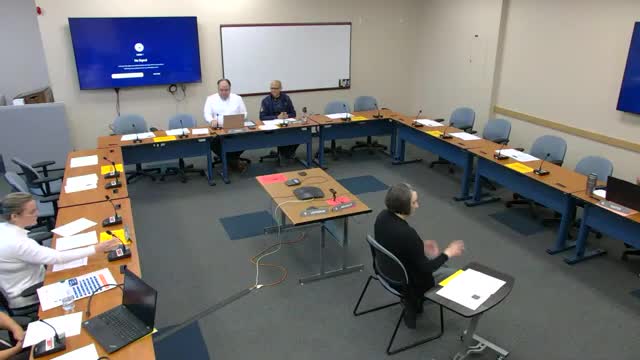
The Assembly Quality Municipal Services, Ethics and Elections Committee reviewed AO 2025‑91 on Aug. 27 at City Hall, a proposed ordinance to move public‑notice and meeting‑record rules into a consolidated chapter and to clarify staff duties for posting agendas, the municipal clerk said.
The measure would apply the clerk office’s notice and minute best practices across Title 1 for all boards, commissions, limited road service areas and the Anchorage School District, and would explicitly retain Open Meetings Act requirements, the clerk told the committee.
If adopted, the ordinance would add definitions (agenda, emergency special meeting, executive session, committee meeting), assign a staff duty to publish meeting notices and agendas, and lay out standard public‑notice timeframes: regular meetings seven days, work sessions 48 hours, special meetings 24 hours and continued meetings a minimum of 24 hours. It also requires notice by noon on the last business day if a meeting occurs on a weekend or municipal holiday.
The ordinance would also change emergency meeting language to require "an attempt to give notice" before an emergency special meeting, replacing an older phrasing that permitted convening without notice in limited cases. The clerk said the change is intended to preserve flexibility for true emergencies — for example, to extend an emergency declaration — while encouraging prior notice when feasible.
The proposal addresses records retention for meeting recordings. Current code requires that electronic recordings of regular and special meetings and all work sessions be retained permanently. The clerk asked the committee to remove the permanent retention requirement for work sessions and instead retain work‑session recordings under the records‑retention schedule (the clerk said that schedule sets a 10‑year retention period). The clerk explained the change as a cost and practicality decision: the municipality still holds hundreds of analog tapes and converting them and future obsolete media to new formats would require recurring expense.
Legal counsel told the committee that the evidentiary weight of work‑session materials in court would depend on the case—appeals or administrative reviews could rely on work‑session material if it relates to a decision under appeal—and noted that statute‑of‑limitations considerations typically align with a 10‑year retention horizon.
The ordinance would restate policy that meetings be open to the public except as provided by the Open Meetings Act and would place duties for public notice and minutes in a single chapter (1.25). It would absorb and reorganize existing Title 4 language, and the clerk said it would specifically apply to the Anchorage School District, limited road service boards and Girdwood Board of Supervisors when they act in certain capacities. The text also clarifies that community‑council meetings that address only community‑council business and not service‑area board functions would not be subject to chapter 1.25.
The clerk described implementation steps if the Assembly adopts AO 2025‑91: an updated municipal manual, multi‑department trainings on the Open Meetings Act and Robert’s Rules prepared by Mr. Frizzell, and a January 1 rollout to give departments time to acquire recorders or other equipment if needed. The clerk provided a back‑of‑the‑envelope estimate of about $3,500 muni‑wide (roughly $50 per recorder) if every board or commission needed a recorder, but said departments could share devices.
The committee did not take a vote; the clerk said the ordinance is scheduled to return to the Assembly on Sept. 9. No formal action was recorded at the committee meeting.
Why it matters: The measure standardizes how municipal bodies post agendas, hold executive sessions and retain recordings; changes to emergency‑meeting notice and to work‑session retention affect transparency, legal records and long‑term costs.
Implementation and outstanding questions include how the municipal charter and state law exclusions (for certain administrative meetings) will interact with the new language for limited road service boards and community councils, and whether the Anchorage School District has formally reviewed the exact text with its board (the clerk said district attorneys reviewed the draft but was not certain whether the board itself had seen it).
The measure would apply the clerk office’s notice and minute best practices across Title 1 for all boards, commissions, limited road service areas and the Anchorage School District, and would explicitly retain Open Meetings Act requirements, the clerk told the committee.
If adopted, the ordinance would add definitions (agenda, emergency special meeting, executive session, committee meeting), assign a staff duty to publish meeting notices and agendas, and lay out standard public‑notice timeframes: regular meetings seven days, work sessions 48 hours, special meetings 24 hours and continued meetings a minimum of 24 hours. It also requires notice by noon on the last business day if a meeting occurs on a weekend or municipal holiday.
The ordinance would also change emergency meeting language to require "an attempt to give notice" before an emergency special meeting, replacing an older phrasing that permitted convening without notice in limited cases. The clerk said the change is intended to preserve flexibility for true emergencies — for example, to extend an emergency declaration — while encouraging prior notice when feasible.
The proposal addresses records retention for meeting recordings. Current code requires that electronic recordings of regular and special meetings and all work sessions be retained permanently. The clerk asked the committee to remove the permanent retention requirement for work sessions and instead retain work‑session recordings under the records‑retention schedule (the clerk said that schedule sets a 10‑year retention period). The clerk explained the change as a cost and practicality decision: the municipality still holds hundreds of analog tapes and converting them and future obsolete media to new formats would require recurring expense.
Legal counsel told the committee that the evidentiary weight of work‑session materials in court would depend on the case—appeals or administrative reviews could rely on work‑session material if it relates to a decision under appeal—and noted that statute‑of‑limitations considerations typically align with a 10‑year retention horizon.
The ordinance would restate policy that meetings be open to the public except as provided by the Open Meetings Act and would place duties for public notice and minutes in a single chapter (1.25). It would absorb and reorganize existing Title 4 language, and the clerk said it would specifically apply to the Anchorage School District, limited road service boards and Girdwood Board of Supervisors when they act in certain capacities. The text also clarifies that community‑council meetings that address only community‑council business and not service‑area board functions would not be subject to chapter 1.25.
The clerk described implementation steps if the Assembly adopts AO 2025‑91: an updated municipal manual, multi‑department trainings on the Open Meetings Act and Robert’s Rules prepared by Mr. Frizzell, and a January 1 rollout to give departments time to acquire recorders or other equipment if needed. The clerk provided a back‑of‑the‑envelope estimate of about $3,500 muni‑wide (roughly $50 per recorder) if every board or commission needed a recorder, but said departments could share devices.
The committee did not take a vote; the clerk said the ordinance is scheduled to return to the Assembly on Sept. 9. No formal action was recorded at the committee meeting.
Why it matters: The measure standardizes how municipal bodies post agendas, hold executive sessions and retain recordings; changes to emergency‑meeting notice and to work‑session retention affect transparency, legal records and long‑term costs.
Implementation and outstanding questions include how the municipal charter and state law exclusions (for certain administrative meetings) will interact with the new language for limited road service boards and community councils, and whether the Anchorage School District has formally reviewed the exact text with its board (the clerk said district attorneys reviewed the draft but was not certain whether the board itself had seen it).
View the Full Meeting & All Its Details
This article offers just a summary. Unlock complete video, transcripts, and insights as a Founder Member.
✓
Watch full, unedited meeting videos
✓
Search every word spoken in unlimited transcripts
✓
AI summaries & real-time alerts (all government levels)
✓
Permanent access to expanding government content
30-day money-back guarantee
