Elections staff describe LanguageLink process, say Anchorage provides assistance though not federally required
August 28, 2025 | Anchorage Municipality, Alaska
This article was created by AI summarizing key points discussed. AI makes mistakes, so for full details and context, please refer to the video of the full meeting. Please report any errors so we can fix them. Report an error »
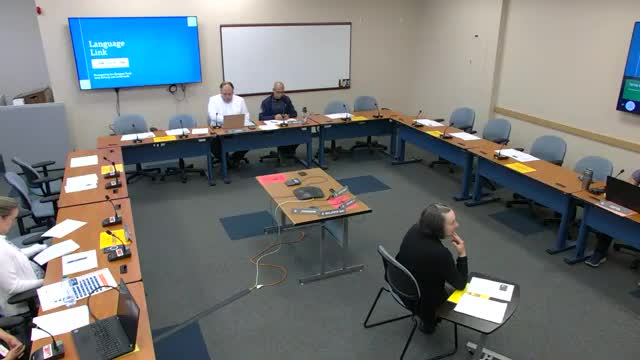
At a meeting of the Assembly Quality Municipal Services, Ethics and Elections Committee on Aug. 27, Election Administrator Liz Edwards and Deputy Election Administrator Amy Solberg described how the Municipality of Anchorage uses LanguageLink to provide phone interpretation and language‑access materials at vote centers.
Edwards said the federal Voting Rights Act requires translation or language assistance when more than 5 percent of the voting population in a jurisdiction is limited‑English proficient, and that the Alaska Division of Elections published determinations in December 2020 identifying which areas meet that threshold. Edwards said Anchorage has not met the 5 percent threshold but that the municipality has used LanguageLink since at least the 2021 regular election and provides the service as a courtesy.
Elections staff demonstrated the in‑person workflow: vote centers receive a poster with languages listed, pamphlets and worker instructions in a chair binder and a universal business card with the LanguageLink account and employee number. A voter who needs language help points to their language on the poster; a vote‑center worker then calls LanguageLink, follows prompts, and the worker, the interpreter and the voter take turns to complete translation. Edwards said LanguageLink covers more than 300 languages; staff identified Tagalog, Spanish, Hmong, Korean and Pacific Island languages as the most common needs locally.
Deputy Administrator Amy Solberg said the municipality has used the service at least once per election and that the most expensive single call the office saw in recent practice was a little over $7 (staff said the vendor charges per minute and that calls incur a per‑minute cost). Solberg said the municipality provides an alternative: a voter may bring a friend or family member to interpret and sign an assistant affidavit; the office keeps logs of assistant affidavits and can report counts if requested.
Committee members asked about privacy and data collection. Solberg said the LanguageLink workflow does not produce a list of voters nor require confidential information; the worker requests only the language choice and the interpreter reads ballot content. Members also asked whether the municipal Office of Equal Opportunity (OEJ) or consultant Amy Kaufman had reviewed elections‑department practices; Edwards said she attended an OEJ presentation and that Kaufman did a departmental presentation but did not conduct a deep department‑level review for the elections office.
The committee heard no proposed code changes; members said they would continue to explore data on usage and affidavit logs. The elections staff did not request immediate policy changes at the meeting.
Why it matters: Language access affects voters with limited English proficiency and the municipality’s compliance with federal requirements when thresholds are met; the presentation described current practice, costs and tracking mechanisms available to the elections office.
Edwards said the federal Voting Rights Act requires translation or language assistance when more than 5 percent of the voting population in a jurisdiction is limited‑English proficient, and that the Alaska Division of Elections published determinations in December 2020 identifying which areas meet that threshold. Edwards said Anchorage has not met the 5 percent threshold but that the municipality has used LanguageLink since at least the 2021 regular election and provides the service as a courtesy.
Elections staff demonstrated the in‑person workflow: vote centers receive a poster with languages listed, pamphlets and worker instructions in a chair binder and a universal business card with the LanguageLink account and employee number. A voter who needs language help points to their language on the poster; a vote‑center worker then calls LanguageLink, follows prompts, and the worker, the interpreter and the voter take turns to complete translation. Edwards said LanguageLink covers more than 300 languages; staff identified Tagalog, Spanish, Hmong, Korean and Pacific Island languages as the most common needs locally.
Deputy Administrator Amy Solberg said the municipality has used the service at least once per election and that the most expensive single call the office saw in recent practice was a little over $7 (staff said the vendor charges per minute and that calls incur a per‑minute cost). Solberg said the municipality provides an alternative: a voter may bring a friend or family member to interpret and sign an assistant affidavit; the office keeps logs of assistant affidavits and can report counts if requested.
Committee members asked about privacy and data collection. Solberg said the LanguageLink workflow does not produce a list of voters nor require confidential information; the worker requests only the language choice and the interpreter reads ballot content. Members also asked whether the municipal Office of Equal Opportunity (OEJ) or consultant Amy Kaufman had reviewed elections‑department practices; Edwards said she attended an OEJ presentation and that Kaufman did a departmental presentation but did not conduct a deep department‑level review for the elections office.
The committee heard no proposed code changes; members said they would continue to explore data on usage and affidavit logs. The elections staff did not request immediate policy changes at the meeting.
Why it matters: Language access affects voters with limited English proficiency and the municipality’s compliance with federal requirements when thresholds are met; the presentation described current practice, costs and tracking mechanisms available to the elections office.
Don't Miss a Word: See the Full Meeting!
Go beyond summaries. Unlock every video, transcript, and key insight with a Founder Membership.
✓
Get instant access to full meeting videos
✓
Search and clip any phrase from complete transcripts
✓
Receive AI-powered summaries & custom alerts
✓
Enjoy lifetime, unrestricted access to government data
30-day money-back guarantee
