Central Health to open medical respite at Brackenridge site, pushes integration with Community Care and Sendero as FY25 finances show planned reserve drawdown
June 12, 2025 | Travis County, Texas
This article was created by AI summarizing key points discussed. AI makes mistakes, so for full details and context, please refer to the video of the full meeting. Please report any errors so we can fix them. Report an error »
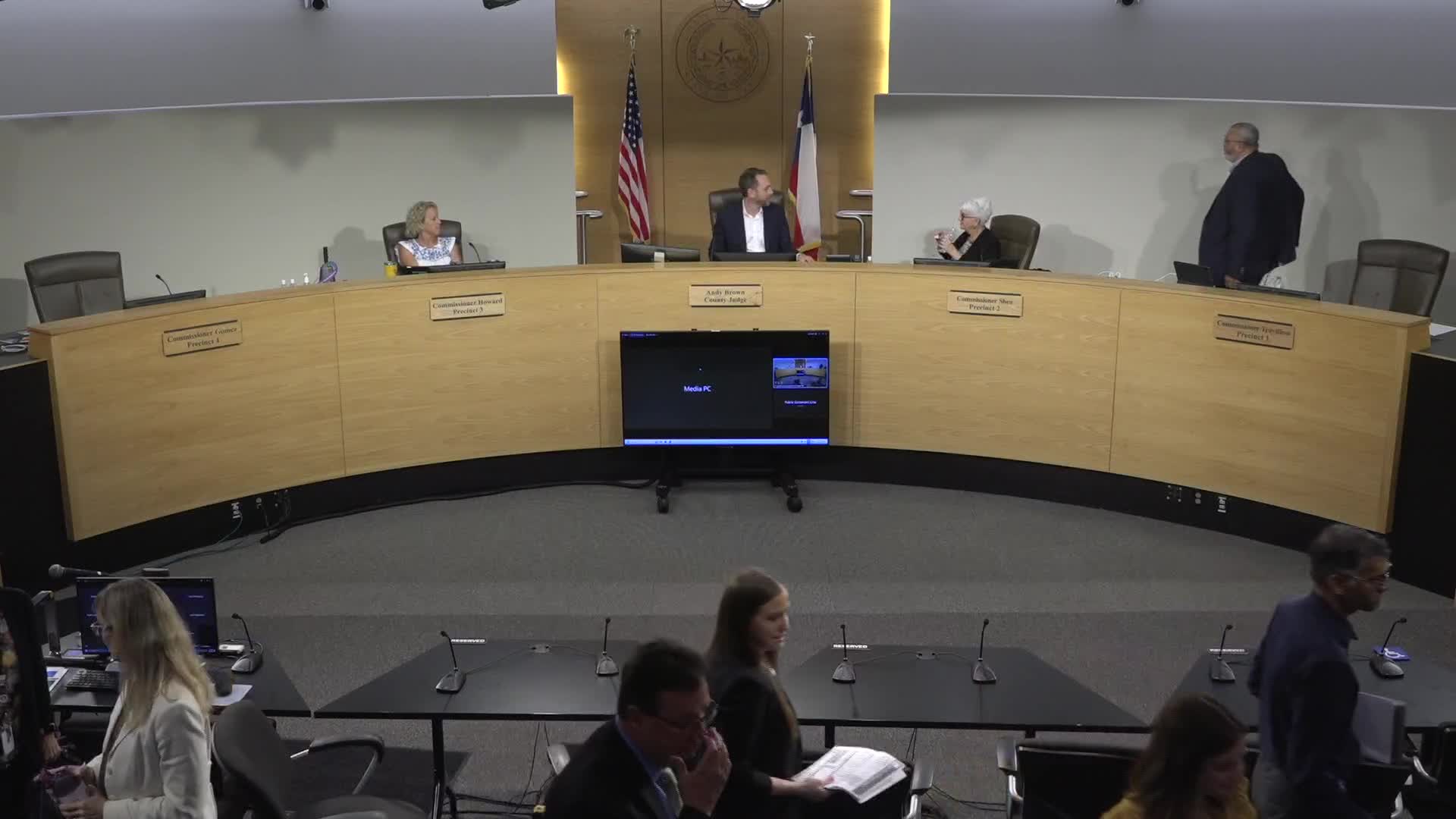
Central Health officials told the Travis County Commissioners Court that the agency will open a medical respite program with about 40–50 beds at the Clinical Education Center (the former Brackenridge children’s hospital) in late July, and that the system is moving toward closer operational integration with Community Care (CommunityCare) and Sendero to reduce fragmentation and shorten patient wait times.
Dr. Pat Lee, Central Health’s CEO, described the medical respite and a colocated clinic as adding “meaningful capacity for people experiencing homelessness to have a place to rest, recover, and heal,” and said the clinic will offer a broad array of services geared to the respite population including primary care, psychiatric and behavioral health, addiction services, wound care, pharmacy and physical therapy. Lee and other Central Health leaders said permitting delays pushed the opening back about a month, but the system remains on track for a late‑July start.
Financial snapshot and budget context: Jeff Knoedel, Central Health’s chief financial officer, presented April 2025 year‑to‑date financials (seven months into FY25). Key figures noted in the briefing:
• Property tax collections were at about 97.2% of the adjusted levy at the time of reporting.
• Year‑to‑date direct health care services spending was $19.6 million versus about $7 million the prior year.
• Central Health reported a Sendero high‑risk claims balance (amount financed for the Sendero high‑risk program) of $30.6 million; repayment is expected through risk‑adjustment payments but staff noted some systemic risk if payers or federal/state arrangements change.
• The FY25 budgeted sources are lower than planned uses, producing a budgeted reserves reduction of roughly $98.3 million for FY25 in the current plan (staff described this as an anticipated drawdown tied to planned investments and timing differences).
Operational integration and workforce efforts: Dr. Lee and Board Chair Anne Kitchen described a joint focus on “integration” across Central Health, CommunityCare and Sendero to simplify the patient’s journey and align incentives. Central Health plans to prioritize access as the FY26 theme — aiming to reduce appointment wait times and streamline referral pathways across the system. Programs highlighted include medical assistant apprenticeships with Austin Community College (36 graduates to date, 20 hired across Central Health and CommunityCare), a nursing residency program with the first cohort graduating in July, and expanded cardiology diagnostics (stress echocardiograms, detection monitors and future nuclear stress tests).
Quality and audits: Central Health provided an implementation crosswalk for the Mazars audit’s recommendations (115 recommendations in the Mazars report). The Mazars implementation matrix uses green/yellow/red status flags; Central Health representatives said 17 recommendations have been completed or advanced since the prior court update and that quarterly progress reports will be provided to the court. Central Health also said it has asked the University of Texas for cost data identified in the court’s amended financial order and expects to update the court in July.
Opioid‑related and other funding notes: Knoedel said Central Health had received an initial opioid settlement payment estimated at $4.6 million and an additional $1.1 million, and included preliminary planned opioid‑related expenditures for FY25. The briefing also covered Sendero and risk‑adjustment mechanics; staff said they expect Sendero‑related repayments to cover financed claims absent unforeseeable changes, while noting that prior experience shows some risk if payer contributions do not materialize.
Discussion vs. decision: the presentation was informational. Commissioners asked for further detail on the Mazars crosswalk, the UT affiliation/agreements and specifics about respite designation (questions focused on whether respite would be designated in HMIS or as a shelter so it would not interrupt housing pathways). Staff said they will follow up with specifics and tour opportunities for elected officials.
What’s next: Central Health plans a short tour for elected officials before the respite beds open, will continue board‑to‑board coordination with CommunityCare and Dell Medical School on agreed procedures, and will present an FY26 draft budget to its board in July and brief the court in a July quarterly update. Central Health also said it will provide the court the consultant/contractor spending breakdown the court requested in the amended financial order.
Ending: Commissioners praised the collaborative approach and asked for follow‑up materials (UT cost data, Mazars implementation timing, and details about respite housing designation). Central Health said it will return with requested documentation and continue joint planning with CommunityCare and other system partners.
Dr. Pat Lee, Central Health’s CEO, described the medical respite and a colocated clinic as adding “meaningful capacity for people experiencing homelessness to have a place to rest, recover, and heal,” and said the clinic will offer a broad array of services geared to the respite population including primary care, psychiatric and behavioral health, addiction services, wound care, pharmacy and physical therapy. Lee and other Central Health leaders said permitting delays pushed the opening back about a month, but the system remains on track for a late‑July start.
Financial snapshot and budget context: Jeff Knoedel, Central Health’s chief financial officer, presented April 2025 year‑to‑date financials (seven months into FY25). Key figures noted in the briefing:
• Property tax collections were at about 97.2% of the adjusted levy at the time of reporting.
• Year‑to‑date direct health care services spending was $19.6 million versus about $7 million the prior year.
• Central Health reported a Sendero high‑risk claims balance (amount financed for the Sendero high‑risk program) of $30.6 million; repayment is expected through risk‑adjustment payments but staff noted some systemic risk if payers or federal/state arrangements change.
• The FY25 budgeted sources are lower than planned uses, producing a budgeted reserves reduction of roughly $98.3 million for FY25 in the current plan (staff described this as an anticipated drawdown tied to planned investments and timing differences).
Operational integration and workforce efforts: Dr. Lee and Board Chair Anne Kitchen described a joint focus on “integration” across Central Health, CommunityCare and Sendero to simplify the patient’s journey and align incentives. Central Health plans to prioritize access as the FY26 theme — aiming to reduce appointment wait times and streamline referral pathways across the system. Programs highlighted include medical assistant apprenticeships with Austin Community College (36 graduates to date, 20 hired across Central Health and CommunityCare), a nursing residency program with the first cohort graduating in July, and expanded cardiology diagnostics (stress echocardiograms, detection monitors and future nuclear stress tests).
Quality and audits: Central Health provided an implementation crosswalk for the Mazars audit’s recommendations (115 recommendations in the Mazars report). The Mazars implementation matrix uses green/yellow/red status flags; Central Health representatives said 17 recommendations have been completed or advanced since the prior court update and that quarterly progress reports will be provided to the court. Central Health also said it has asked the University of Texas for cost data identified in the court’s amended financial order and expects to update the court in July.
Opioid‑related and other funding notes: Knoedel said Central Health had received an initial opioid settlement payment estimated at $4.6 million and an additional $1.1 million, and included preliminary planned opioid‑related expenditures for FY25. The briefing also covered Sendero and risk‑adjustment mechanics; staff said they expect Sendero‑related repayments to cover financed claims absent unforeseeable changes, while noting that prior experience shows some risk if payer contributions do not materialize.
Discussion vs. decision: the presentation was informational. Commissioners asked for further detail on the Mazars crosswalk, the UT affiliation/agreements and specifics about respite designation (questions focused on whether respite would be designated in HMIS or as a shelter so it would not interrupt housing pathways). Staff said they will follow up with specifics and tour opportunities for elected officials.
What’s next: Central Health plans a short tour for elected officials before the respite beds open, will continue board‑to‑board coordination with CommunityCare and Dell Medical School on agreed procedures, and will present an FY26 draft budget to its board in July and brief the court in a July quarterly update. Central Health also said it will provide the court the consultant/contractor spending breakdown the court requested in the amended financial order.
Ending: Commissioners praised the collaborative approach and asked for follow‑up materials (UT cost data, Mazars implementation timing, and details about respite housing designation). Central Health said it will return with requested documentation and continue joint planning with CommunityCare and other system partners.
Don't Miss a Word: See the Full Meeting!
Go beyond summaries. Unlock every video, transcript, and key insight with a Founder Membership.
✓
Get instant access to full meeting videos
✓
Search and clip any phrase from complete transcripts
✓
Receive AI-powered summaries & custom alerts
✓
Enjoy lifetime, unrestricted access to government data
30-day money-back guarantee
