Legislative committee studies tax treatment of inundated lands as Devil’s Lake and other basins remain partly underwater
September 11, 2025 | Legislative, North Dakota
This article was created by AI summarizing key points discussed. AI makes mistakes, so for full details and context, please refer to the video of the full meeting. Please report any errors so we can fix them. Report an error »
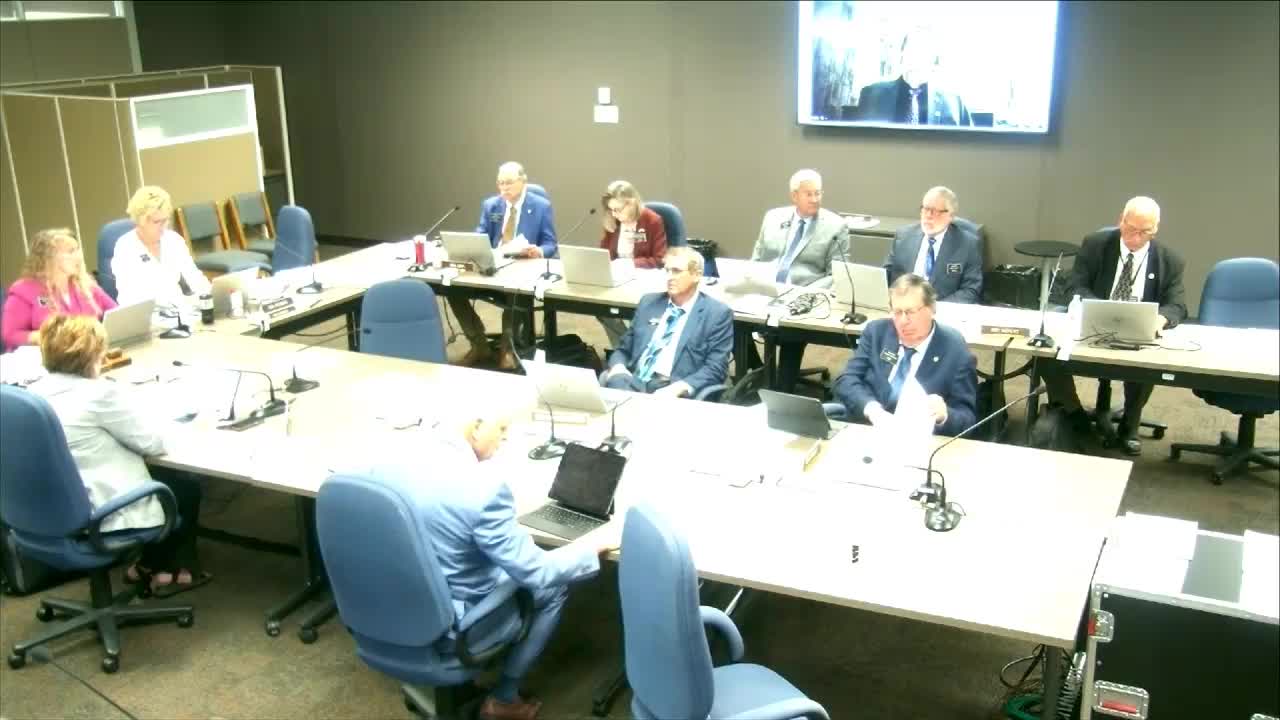
The Interim Agriculture and Water Management Committee met to review state law and local practice for taxing and managing inundated agricultural land and wetlands, and to hear local witnesses on the effects around Devil’s Lake and other North Dakota basins. Legislative Council staff told members the study (House Concurrent Resolution 3018) directs review of wetland regulations and the tax treatment of inundated lands. The committee received briefings from the Department of Water Resources, North Dakota State University (NDSU), county officials and local water boards.
Why it matters: millions of dollars in local tax revenue and the livelihoods of farmers and ranchers are affected when land is classified as "inundated" and assessed at a lower value. County assessors and state agencies described a process they said is intended for short‑term relief but is difficult to apply to long‑term inundation created by persistent high lake levels, federal easements and changing hydrology.
State and local officials described overlapping authorities. Aaron Carranza, director of the Regulatory Division at the North Dakota Department of Water Resources, reviewed sovereign‑lands doctrine and said the state holds beds and banks of navigable waters in trust for present and future residents. He told the committee the state’s “obligation for sound management” of those public trust lands is rooted in court decisions and state law and that the ordinary high‑water mark can move as water bodies shift. Carranza also said Devil’s Lake was about 60,000 acres at statehood and that the lake’s ordinary high‑water line has changed repeatedly; the department maintains delineations where it has identified them.
NDSU extension and tax specialists described how the state calculates agricultural values used in county assessments. Ron Haugen, extension farm management specialist, explained NDSU’s method to compute county average values for cropland, noncropland (pasture/range) and an ‘‘inundated’’ value (historically calculated as 10% of the noncropland value for parcels that meet county criteria). Haugen said counties must report inundated acres to the university, and the statewide figures are then certified by the Tax Commissioner, but that many counties do not report inundated acres even when landowners or local officials consider fields to be permanently or repeatedly under water.
County adjudication, local practices and the paperwork burden: Don Flaherty, Dickey County tax director, told the committee that his county classifies ‘‘old water’’—land under water for at least 10 years—and assesses it at a reduced rate (Dickey County uses roughly 25% of noncropland value for long‑term inundated acres). Flaherty said the statutory inundated‑land application is annual and paperwork‑intensive and therefore better suited to short‑term events. He recommended a separate, less frequent pathway for long‑term inundation to reduce taxpayer burden.
Local impacts around Devil’s Lake: Jeff Frith, manager of the Devil’s Lake Basin Joint Water Resource Board, described decades of large changes at Devil’s Lake. He summarized historic elevations and acreage and said the basin has moved from roughly 60,000 acres at statehood to periods in recent decades with more than 150,000 acres of surface water. Frith said the loss of productive acres “remain underwater, uninsurable and uncompensated,” stressing the human and economic consequences for families and rural communities.
Other themes and technical points: presenters and committee members discussed 1) U.S. Fish and Wildlife Service (FWS) wetland easements and their effect on local tax rolls, 2) the interaction between federal definitions of “waters of the United States” and state navigability doctrine, 3) the role of county commissioners in classifying inundated acres under North Dakota Century Code sections (for example 57‑02‑27.2, 57‑02‑10 and 57‑02‑08.4 were cited in testimony) and 4) uneven county reporting to NDSU. NDSU’s county‑by‑county data showed Ramsey, Kidder and Benson counties among those with the highest reported percentage of inundated acres; presenters also said some counties that have substantial surface water have reported little or no inundated acreage to the state because owners have not completed the statutory application.
What the committee did: the meeting provided technical background and local testimony; no policy or statutory changes were approved at the session. Committee members asked agencies and counties to provide more detailed maps, parcel‑level data and clarification of the long‑term options for owners of heavily inundated land.
Looking ahead: several county officials suggested the committee study a two‑track approach—retain the current annual inundated‑land application for short‑term events and create a distinct process (for example a 5‑ to 10‑year review) for permanent or long‑term inundation. Committee members asked staff to collect additional county parcel data, clarify interactions with federal easements administered by FWS and the NRCS, and provide an inventory of areas where state sovereign‑lands interest may overlap recorded county parcels.
Sources and attribution: statements and figures in this report come from testimony to the committee by Aaron Carranza (Director, Regulatory Division, North Dakota Department of Water Resources), Doug Goring (North Dakota Agriculture Commissioner), Ron Haugen (NDSU extension farm management specialist), Don Flaherty (Dickey County tax director), Jeff Frith (Devil's Lake Basin Joint Water Resource Board manager), Association of Counties representative Aaron Burst and Legislative Council staff. Direct speaker quotes used are from the official transcript provided to the committee.
Ending note: committee members signaled interest in follow‑up materials from the Department of Water Resources, NDSU and affected counties, and requested a subsequent briefing with more parcel mapping, county‑level tax impacts and options for statutory change to address long‑term inundation without unduly increasing paperwork burdens on landowners.
Why it matters: millions of dollars in local tax revenue and the livelihoods of farmers and ranchers are affected when land is classified as "inundated" and assessed at a lower value. County assessors and state agencies described a process they said is intended for short‑term relief but is difficult to apply to long‑term inundation created by persistent high lake levels, federal easements and changing hydrology.
State and local officials described overlapping authorities. Aaron Carranza, director of the Regulatory Division at the North Dakota Department of Water Resources, reviewed sovereign‑lands doctrine and said the state holds beds and banks of navigable waters in trust for present and future residents. He told the committee the state’s “obligation for sound management” of those public trust lands is rooted in court decisions and state law and that the ordinary high‑water mark can move as water bodies shift. Carranza also said Devil’s Lake was about 60,000 acres at statehood and that the lake’s ordinary high‑water line has changed repeatedly; the department maintains delineations where it has identified them.
NDSU extension and tax specialists described how the state calculates agricultural values used in county assessments. Ron Haugen, extension farm management specialist, explained NDSU’s method to compute county average values for cropland, noncropland (pasture/range) and an ‘‘inundated’’ value (historically calculated as 10% of the noncropland value for parcels that meet county criteria). Haugen said counties must report inundated acres to the university, and the statewide figures are then certified by the Tax Commissioner, but that many counties do not report inundated acres even when landowners or local officials consider fields to be permanently or repeatedly under water.
County adjudication, local practices and the paperwork burden: Don Flaherty, Dickey County tax director, told the committee that his county classifies ‘‘old water’’—land under water for at least 10 years—and assesses it at a reduced rate (Dickey County uses roughly 25% of noncropland value for long‑term inundated acres). Flaherty said the statutory inundated‑land application is annual and paperwork‑intensive and therefore better suited to short‑term events. He recommended a separate, less frequent pathway for long‑term inundation to reduce taxpayer burden.
Local impacts around Devil’s Lake: Jeff Frith, manager of the Devil’s Lake Basin Joint Water Resource Board, described decades of large changes at Devil’s Lake. He summarized historic elevations and acreage and said the basin has moved from roughly 60,000 acres at statehood to periods in recent decades with more than 150,000 acres of surface water. Frith said the loss of productive acres “remain underwater, uninsurable and uncompensated,” stressing the human and economic consequences for families and rural communities.
Other themes and technical points: presenters and committee members discussed 1) U.S. Fish and Wildlife Service (FWS) wetland easements and their effect on local tax rolls, 2) the interaction between federal definitions of “waters of the United States” and state navigability doctrine, 3) the role of county commissioners in classifying inundated acres under North Dakota Century Code sections (for example 57‑02‑27.2, 57‑02‑10 and 57‑02‑08.4 were cited in testimony) and 4) uneven county reporting to NDSU. NDSU’s county‑by‑county data showed Ramsey, Kidder and Benson counties among those with the highest reported percentage of inundated acres; presenters also said some counties that have substantial surface water have reported little or no inundated acreage to the state because owners have not completed the statutory application.
What the committee did: the meeting provided technical background and local testimony; no policy or statutory changes were approved at the session. Committee members asked agencies and counties to provide more detailed maps, parcel‑level data and clarification of the long‑term options for owners of heavily inundated land.
Looking ahead: several county officials suggested the committee study a two‑track approach—retain the current annual inundated‑land application for short‑term events and create a distinct process (for example a 5‑ to 10‑year review) for permanent or long‑term inundation. Committee members asked staff to collect additional county parcel data, clarify interactions with federal easements administered by FWS and the NRCS, and provide an inventory of areas where state sovereign‑lands interest may overlap recorded county parcels.
Sources and attribution: statements and figures in this report come from testimony to the committee by Aaron Carranza (Director, Regulatory Division, North Dakota Department of Water Resources), Doug Goring (North Dakota Agriculture Commissioner), Ron Haugen (NDSU extension farm management specialist), Don Flaherty (Dickey County tax director), Jeff Frith (Devil's Lake Basin Joint Water Resource Board manager), Association of Counties representative Aaron Burst and Legislative Council staff. Direct speaker quotes used are from the official transcript provided to the committee.
Ending note: committee members signaled interest in follow‑up materials from the Department of Water Resources, NDSU and affected counties, and requested a subsequent briefing with more parcel mapping, county‑level tax impacts and options for statutory change to address long‑term inundation without unduly increasing paperwork burdens on landowners.
View the Full Meeting & All Its Details
This article offers just a summary. Unlock complete video, transcripts, and insights as a Founder Member.
✓
Watch full, unedited meeting videos
✓
Search every word spoken in unlimited transcripts
✓
AI summaries & real-time alerts (all government levels)
✓
Permanent access to expanding government content
30-day money-back guarantee
