Committee reviews voluntary farm‑safety training and possible insurance premium discounts for producers
September 11, 2025 | Legislative, North Dakota
This article was created by AI summarizing key points discussed. AI makes mistakes, so for full details and context, please refer to the video of the full meeting. Please report any errors so we can fix them. Report an error »
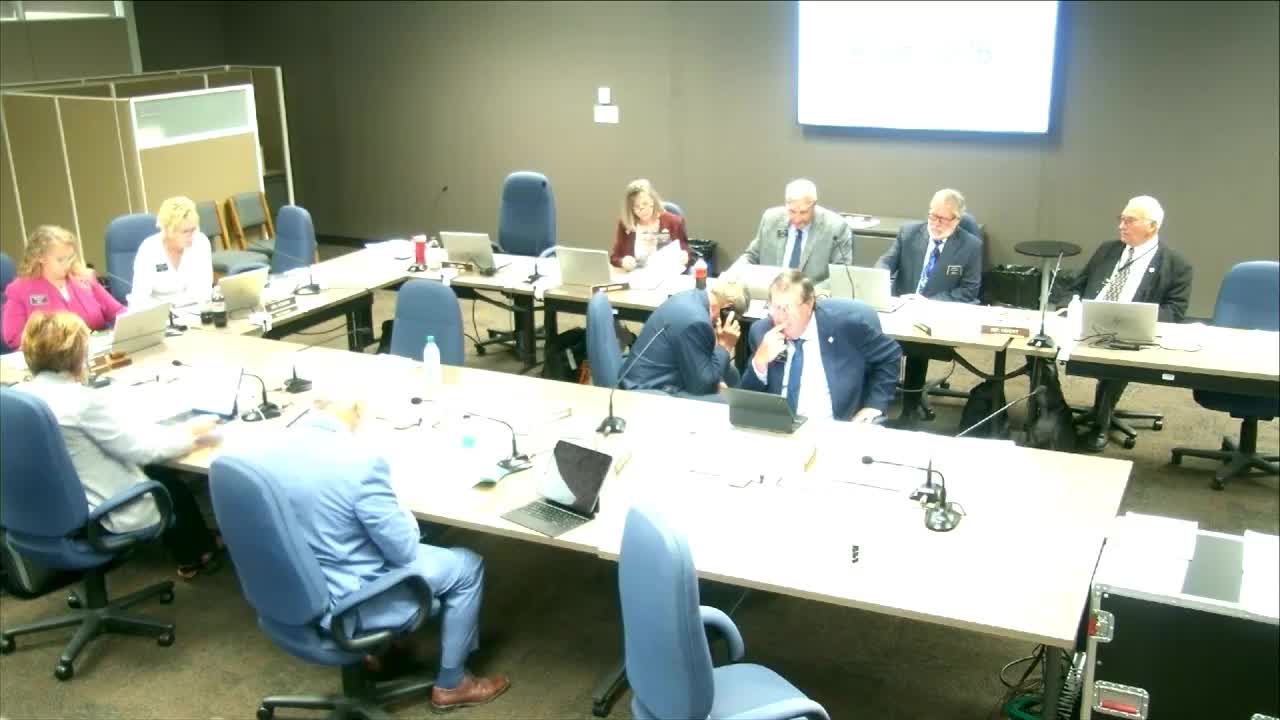
The Interim Agriculture and Water Management Committee reviewed options to encourage farm and ranch safety training linked to insurance premium discounts. Legislative Council staff summarized the study charge (Senate Bill 2157) to assess whether voluntary safety training could justify insurer discounts. Officials from the state Insurance Department, Workforce Safety & Insurance (WSI) and North Dakota State University described existing programs and how a state‑coordinated training approach might increase participation.
Nut graf: Committee members focused on whether incentives should be market‑driven or state‑endorsed, whether discounts would be actuarially justified, and how to reach seasonal and H‑2A workers. Presenters stressed the difference between voluntary safety encouragement and mandatory regulation.
What agencies told the committee: Blaine Bergstedt, property and casualty division director at the North Dakota Insurance and Securities Department, said the department supports incentives but would prefer market development rather than a mandated, uniform discount. He explained carriers submit actuarial justification when proposing discounts and that any rate filing must show sound data. Bergstedt said encouraging more carriers to adopt safety‑based discounts would be preferable to a statutory mandate.
Workforce Safety & Insurance (WSI) described an existing incentive program for employers that purchase WSI coverage. Benjamin Sand, WSI loss control program manager, said WSI policyholders can earn up to 25% back on premium: a 10% credit for meeting the agency’s Safety Management Program guidelines and up to 15% additional credit from a menu of 3 five‑percent options (examples include driver safety, drug‑free workplace policies, return‑to‑work programs and safety committees). Sand said WSI deploys regional safety consultants who will work on‑site with employers and that the program is designed to be consultative, not punitive. He also noted WSI’s statutory role as a monopolistic workers’ compensation carrier in the state.
Lynette Flage, associate director for NDSU Extension, described existing NDSU safety education work and proposed a structured, extension‑delivered training program that would be portable for seasonal hires. Flage described training pilots—farm safety camps for youth, RF‑DASH (training first responders), a Stop the Bleed rollout and a Farm First Aid kit pilot—and suggested a coordinated curriculum could be used to qualify participants for private‑sector or state‑backed discount programs.
Discussion points and data: committee members asked whether discounts would simply be offset by higher rates elsewhere and whether insurers had data showing training reduced claims. Bergstedt said insurers submit actuarial support when they propose discounts and that the Department reviews those filings; he offered to gather comparative data on outcomes in other states. Sand said WSI’s experience is that structured safety programs reduce claims over time and that policyholders already use WSI grants and credits; he said uptake among agricultural employers has been limited and encouraged outreach. Flage emphasized the workforce composition—over 3,600 H‑2A workers in 2023—and said a standardized, accessible training curriculum could reach seasonal labor and youth entering farm work.
Committee direction: members asked staff to gather more actuarial evidence and program cost‑benefit data and to explore options for a voluntary, state‑endorsed training curriculum that private insurers could accept for premium discounts. No formal policy or rule changes were approved at the meeting.
Selected quotes and sources: Commissioner Doug Goring (North Dakota Agriculture Commissioner), present earlier in the meeting, noted producers’ concerns about rising premiums, saying, “producers are frustrated with the increasing amount of premium that they're paying.” Aaron Carranza (Department of Water Resources) framed the state’s role when he said the state has “an obligation for sound management” of sovereign lands. From the Devil’s Lake Basin, Jeff Frith told members that losses of productive acres “remain underwater, uninsurable and uncompensated.” NDSU’s Haugen observed, “A lot of times NDSU gets blamed. You raised our taxes. Well, we didn't raise your taxes,” to emphasize counties apply certified values.
Ending: The committee asked agencies to return with more actuarial evidence, data on insurer programs in other states, and a draft of an accessible training curriculum that insurers could use to evaluate discount eligibility.
Nut graf: Committee members focused on whether incentives should be market‑driven or state‑endorsed, whether discounts would be actuarially justified, and how to reach seasonal and H‑2A workers. Presenters stressed the difference between voluntary safety encouragement and mandatory regulation.
What agencies told the committee: Blaine Bergstedt, property and casualty division director at the North Dakota Insurance and Securities Department, said the department supports incentives but would prefer market development rather than a mandated, uniform discount. He explained carriers submit actuarial justification when proposing discounts and that any rate filing must show sound data. Bergstedt said encouraging more carriers to adopt safety‑based discounts would be preferable to a statutory mandate.
Workforce Safety & Insurance (WSI) described an existing incentive program for employers that purchase WSI coverage. Benjamin Sand, WSI loss control program manager, said WSI policyholders can earn up to 25% back on premium: a 10% credit for meeting the agency’s Safety Management Program guidelines and up to 15% additional credit from a menu of 3 five‑percent options (examples include driver safety, drug‑free workplace policies, return‑to‑work programs and safety committees). Sand said WSI deploys regional safety consultants who will work on‑site with employers and that the program is designed to be consultative, not punitive. He also noted WSI’s statutory role as a monopolistic workers’ compensation carrier in the state.
Lynette Flage, associate director for NDSU Extension, described existing NDSU safety education work and proposed a structured, extension‑delivered training program that would be portable for seasonal hires. Flage described training pilots—farm safety camps for youth, RF‑DASH (training first responders), a Stop the Bleed rollout and a Farm First Aid kit pilot—and suggested a coordinated curriculum could be used to qualify participants for private‑sector or state‑backed discount programs.
Discussion points and data: committee members asked whether discounts would simply be offset by higher rates elsewhere and whether insurers had data showing training reduced claims. Bergstedt said insurers submit actuarial support when they propose discounts and that the Department reviews those filings; he offered to gather comparative data on outcomes in other states. Sand said WSI’s experience is that structured safety programs reduce claims over time and that policyholders already use WSI grants and credits; he said uptake among agricultural employers has been limited and encouraged outreach. Flage emphasized the workforce composition—over 3,600 H‑2A workers in 2023—and said a standardized, accessible training curriculum could reach seasonal labor and youth entering farm work.
Committee direction: members asked staff to gather more actuarial evidence and program cost‑benefit data and to explore options for a voluntary, state‑endorsed training curriculum that private insurers could accept for premium discounts. No formal policy or rule changes were approved at the meeting.
Selected quotes and sources: Commissioner Doug Goring (North Dakota Agriculture Commissioner), present earlier in the meeting, noted producers’ concerns about rising premiums, saying, “producers are frustrated with the increasing amount of premium that they're paying.” Aaron Carranza (Department of Water Resources) framed the state’s role when he said the state has “an obligation for sound management” of sovereign lands. From the Devil’s Lake Basin, Jeff Frith told members that losses of productive acres “remain underwater, uninsurable and uncompensated.” NDSU’s Haugen observed, “A lot of times NDSU gets blamed. You raised our taxes. Well, we didn't raise your taxes,” to emphasize counties apply certified values.
Ending: The committee asked agencies to return with more actuarial evidence, data on insurer programs in other states, and a draft of an accessible training curriculum that insurers could use to evaluate discount eligibility.
Don't Miss a Word: See the Full Meeting!
Go beyond summaries. Unlock every video, transcript, and key insight with a Founder Membership.
✓
Get instant access to full meeting videos
✓
Search and clip any phrase from complete transcripts
✓
Receive AI-powered summaries & custom alerts
✓
Enjoy lifetime, unrestricted access to government data
30-day money-back guarantee
