Massachusetts hearing spotlights FAIR Act to curb workplace AI surveillance and automated decisions
September 11, 2025 | 2025 Legislature MA, Massachusetts
This article was created by AI summarizing key points discussed. AI makes mistakes, so for full details and context, please refer to the video of the full meeting. Please report any errors so we can fix them. Report an error »
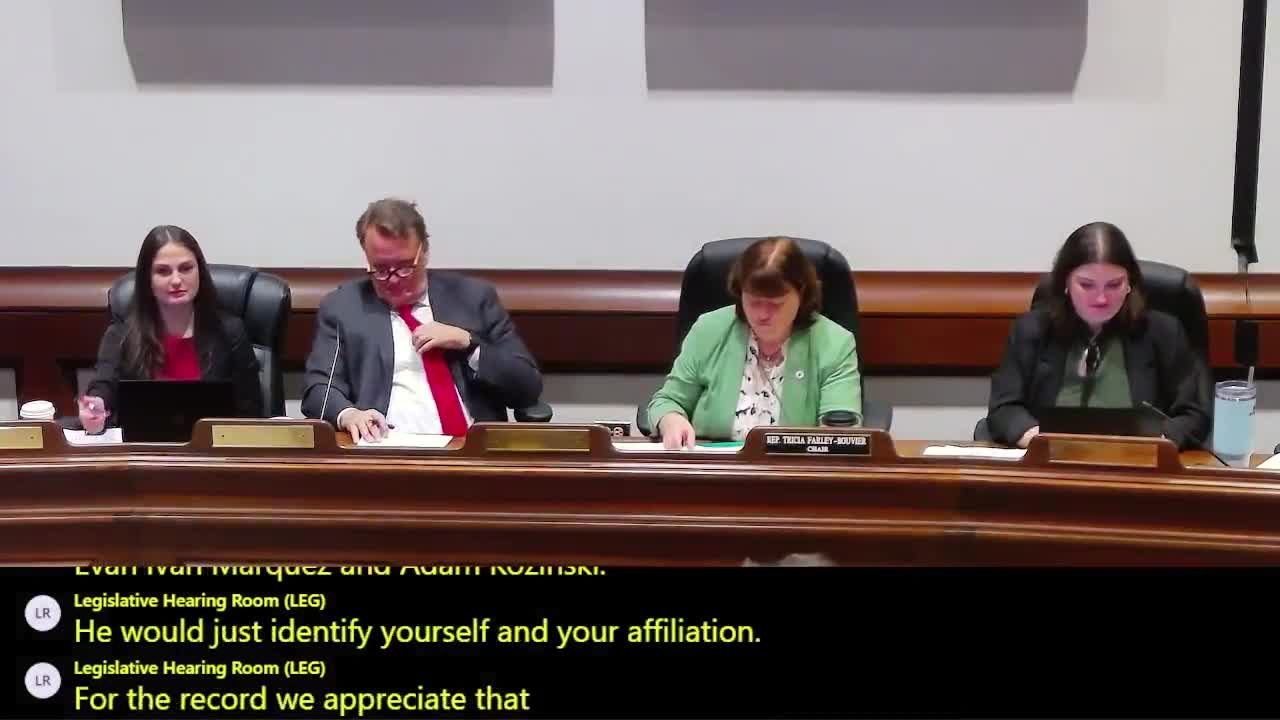
A hearing of the Joint Committee on Advanced Information Technology, the Internet, and Cybersecurity featured broad support for the FAIR Act (H77/S35) as labor leaders, worker representatives and national experts described how employer use of artificial intelligence is already disrupting pay, benefits and workplace safety.
Advocates said automation and so-called “bossware” — software that tracks employee behavior and feeds algorithmic decision systems — has led to denied medical claims, delayed wage replacement, rejected doctors’ notes and other problems that have real consequences for workers who live paycheck to paycheck.
The FAIR Act would limit intrusive employee data collection, require disclosure when employers use automated decision systems, mandate meaningful human review for employment decisions that rely on AI, and strengthen anti‑retaliation protections. The bill’s supporters told the committee that those protections are needed now because federal law does not address modern workplace surveillance.
Union leaders gave multiple examples of worker harm. "Our employers have rapidly and without notification implemented AI systems to cut costs and pad profits in short sighted ways that hurt workers, customers, and communities," said Adam Kasinski, president of IUE‑CWA Local 201, describing cases where algorithmic bots denied benefits or triggered premature preauthorizations that left workers without medication. Kasinski said some doctors refuse to treat patients because claim denials and automated prior authorization errors have made billing unreliable.
Chrissy Lynch, president of the Massachusetts AFL‑CIO, told the committee: "The FAIR Act starts this overdue conversation." She and other witnesses described how surveillance tools collect data for reasons beyond essential job functions and can chill protected activity and collective organizing.
National nonprofit and research witnesses echoed the workplace examples. "Workers who know little, if anything, about systems that are influencing major decisions about them can't protect themselves," said Matt Cherrer of the Center for Democracy and Technology, who highlighted polling and deliberative studies showing strong voter support for transparency and human review.
Researchers and labor advocates urged the committee to pair transparency with enforceable limits. Irene Tong of the National Employment Law Project noted an emerging pattern of continuous, second‑by‑second tracking — including webcams and biometric monitoring — that creates a climate of fear and physical stress for workers.
Unions representing a range of sectors — manufacturing, health care, education and public services — told personal stories about delayed benefits, rejected documentation and automated performance metrics that do not account for the realities of hands‑on work. Jim Durkin of AFSCME Council 93 and Dave Foley of SEIU Local 509 described the stakes for public‑sector employees who care for vulnerable populations.
Supporters urged the committee to report the FAIR Act favorably and recommended implementation details such as narrow definitions of permissible data collection, clear notice requirements, and meaningful appeal processes. Opposing concerns raised in the hearing centered on the potential breadth of new rules and their impact on innovation; a separate industry panel asked the committee to tailor rules sector by sector and to protect small developers.
The committee did not take a vote at the hearing. Supporters left written testimony and asked the chairs to work with stakeholders on technical language and enforcement mechanisms.
Less critical details: witnesses asked that the committee align Massachusetts’ approach with actions taken by other states and federal guidance where possible, and to avoid drafting that unintentionally exempts legitimate safety or risk‑mitigation systems.
Advocates said automation and so-called “bossware” — software that tracks employee behavior and feeds algorithmic decision systems — has led to denied medical claims, delayed wage replacement, rejected doctors’ notes and other problems that have real consequences for workers who live paycheck to paycheck.
The FAIR Act would limit intrusive employee data collection, require disclosure when employers use automated decision systems, mandate meaningful human review for employment decisions that rely on AI, and strengthen anti‑retaliation protections. The bill’s supporters told the committee that those protections are needed now because federal law does not address modern workplace surveillance.
Union leaders gave multiple examples of worker harm. "Our employers have rapidly and without notification implemented AI systems to cut costs and pad profits in short sighted ways that hurt workers, customers, and communities," said Adam Kasinski, president of IUE‑CWA Local 201, describing cases where algorithmic bots denied benefits or triggered premature preauthorizations that left workers without medication. Kasinski said some doctors refuse to treat patients because claim denials and automated prior authorization errors have made billing unreliable.
Chrissy Lynch, president of the Massachusetts AFL‑CIO, told the committee: "The FAIR Act starts this overdue conversation." She and other witnesses described how surveillance tools collect data for reasons beyond essential job functions and can chill protected activity and collective organizing.
National nonprofit and research witnesses echoed the workplace examples. "Workers who know little, if anything, about systems that are influencing major decisions about them can't protect themselves," said Matt Cherrer of the Center for Democracy and Technology, who highlighted polling and deliberative studies showing strong voter support for transparency and human review.
Researchers and labor advocates urged the committee to pair transparency with enforceable limits. Irene Tong of the National Employment Law Project noted an emerging pattern of continuous, second‑by‑second tracking — including webcams and biometric monitoring — that creates a climate of fear and physical stress for workers.
Unions representing a range of sectors — manufacturing, health care, education and public services — told personal stories about delayed benefits, rejected documentation and automated performance metrics that do not account for the realities of hands‑on work. Jim Durkin of AFSCME Council 93 and Dave Foley of SEIU Local 509 described the stakes for public‑sector employees who care for vulnerable populations.
Supporters urged the committee to report the FAIR Act favorably and recommended implementation details such as narrow definitions of permissible data collection, clear notice requirements, and meaningful appeal processes. Opposing concerns raised in the hearing centered on the potential breadth of new rules and their impact on innovation; a separate industry panel asked the committee to tailor rules sector by sector and to protect small developers.
The committee did not take a vote at the hearing. Supporters left written testimony and asked the chairs to work with stakeholders on technical language and enforcement mechanisms.
Less critical details: witnesses asked that the committee align Massachusetts’ approach with actions taken by other states and federal guidance where possible, and to avoid drafting that unintentionally exempts legitimate safety or risk‑mitigation systems.
Don't Miss a Word: See the Full Meeting!
Go beyond summaries. Unlock every video, transcript, and key insight with a Founder Membership.
✓
Get instant access to full meeting videos
✓
Search and clip any phrase from complete transcripts
✓
Receive AI-powered summaries & custom alerts
✓
Enjoy lifetime, unrestricted access to government data
30-day money-back guarantee
